
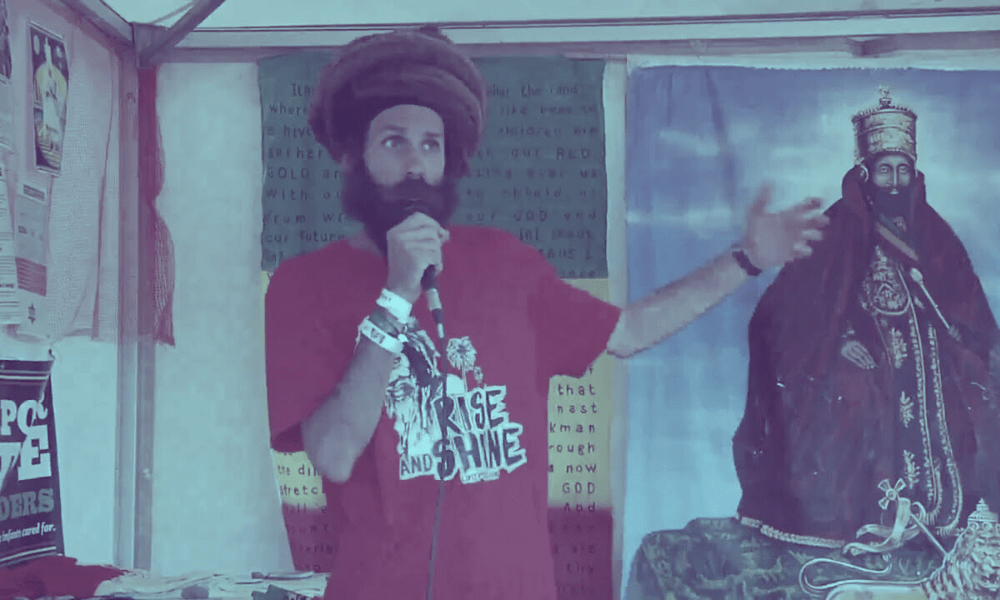
In this interview on Reggae Bloodlines, Ewket speaks with Ras Julio, director of the House of Rastafari at the Rototom Sunsplash festival, calling in from Rome, Italy. Ras Julio discusses his extensive work in promoting Rastafari culture through music, education, and humanitarian efforts. He shares insights into the 30th anniversary of Rototom Sunsplash—Europe’s largest reggae festival—highlighting its rich blend of musical performances, cultural seminars, and social initiatives. He also talks about an exciting new collaboration that will bring Ethiopian broadcasters to Spain to share Rastafari teachings with audiences back home. (Interview: 7/12/25)
Ewket: Greetings, Ras Julio, and thank you for joining us on today’s program. We are honored to have you here live, calling all the way from Rome, Italy.
Ras Julio: Lots of love, sister. Greetings and love—blessed, blessed, blessed. Thanks for having me. It’s a joy and a pleasure to be here with you, and thanks for the beautiful energy.
Ewket: Yes! You are involved in a lot of activities around the Rastafari movement. You are also the coordinator for Rototom Sunsplash, which is celebrating its 30th anniversary this year in Spain. You are also the author of Zion Train, and you do so much more.
Please, tell us about yourself and about your work with the Rototom Sunsplash Music Festival.
Ras Julio: Greetings and love to all the listeners, and thanks for having me. Maximum respect for keeping reggae music alive on your program for so many years.
There are many things on the table when it comes to Rastafari. I like to keep myself busy with different activities. One of the most important is the House of Rastafari at Rototom.
The House of Rastafari, since 2003, is the area within the festival in charge of Rastafari activities. That means we have a daily program centered on Rastafari culture. We host seminars, reasonings, and humanitarian work. We also have merchandise for sale to support Rastafari elders in need.
We work with an organization called Worth and Empower Collective. The aim of this organization is to support Rastafari elders in need.
Ewket: That’s amazing work you are doing. So, what can people expect at this festival? And in short, could you explain what Rastafari is, for our listeners who might not be familiar with it?
Ras Julio: Yes. Rastafari is a way of life. We don’t really use the word “religion”—we call it livity.
Livity is living the Rastafari way, connected with the Creator and the creation. The foundation of the Rastafari way of life is recognizing the divinity of His Imperial Majesty Haile Selassie I, as the returned Messiah.
We are spiritual people living in a material world, so we try to connect the spiritual and material in everything that we do. That’s a very brief summary.
Nyabinghi is the sacred music of the Rastafari tradition. Nyabinghi is also an order within the Rastafari movement—the oldest group, in fact. When we play the Nyabinghi chants and drums, we are offering sacred vibrations to the people at Rototom Sunsplash.
That’s how we build a connection with the public. It works very well—people love the Nyabinghi music and chants. Even if they’re not Rasta, they still feel the vibration very strongly.
Ewket: Mm-hmm. I know you are very international. The last time I saw you was in Ethiopia, traveling with Alvaro. Do you have any ongoing projects back in Ethiopia?
Ras Julio: The project is to bring Ethiopia to Rototom Sunsplash.
Ewket: Mm-hmm.
Ras Julio: That is where I’m focused right now. It was a vision, and actually you were part of it as well. That vision took shape when we were in the studio—you were also there with me and Guru at the time in Ethiopia last November.
That afternoon, I proposed to the bredren from Radaf if they would be willing to come to Europe, to the House of Rastafari in Spain, to broadcast the House of Rastafari activities for the Ethiopian public.
And that vision became reality. Now the paperwork is in place, and it’s happening. So basically, Ethiopian broadcasters will be coming to Spain to broadcast daily updates of what’s happening at the House of Rastafari—so that the Ethiopian public can also be aware and hear with their own ears the activities, the seminars, interviews, and reasonings from Sababa to the Rototom sound in Spain.
Ewket: I know Rototom started in Italy. Are you originally from Italy?
Ras Julio: Yes, I am.
Ewket: Were you involved in the founding of the festival?
Ras Julio: No, I was not among the originators of the festival. I came in later. I’m not one of the festival organizers—I’m the director of the House of Rastafari. I work closely with the festival team, but I’m not one of the original members.
Ewket: Okay. This festival has been running for 30 years—it started in Italy and later moved to Spain.
Who is playing at this year’s festival? It’s an eight-day music festival, right? One of the biggest in Europe?
Ras Julio: Yes, I think it’s the biggest reggae festival in Europe—and very possibly the biggest in the world.
A lot of people come—eight days, many thousands of people. The beauty of Rototom Sunsplash is not only the musical offering, but also the cultural one.
Every afternoon, there are different areas within the festival where you can join lectures, seminars, and workshops, covering environmental issues, social science, and more.
Of course, there we are at the House of Rastafari. You can take music lessons. There’s entertainment for kids—even for young children.
All kinds of activities are welcome at Rototom Sunsplash, as long as they’re related to culture, not only musical culture, but also social and environmental culture.
Ewket: If people want to get more information about your work or about the festival, where should they go?
Ras Julio: They can find me on social media—Instagram and Facebook. Just search Ras Julio Livity and they’ll find me there.
I also have a YouTube channel where I upload my videos and reasonings.
And of course, if you’re passing through Rototom Sunsplash in one month, we can shake hands there!
Ewket: Yes! All right. Thank you, Ras Julio, for taking the time to come on Reggae Bloodlines. Keep up the good work you’re doing, and we’ll keep in touch.
Ras Julio: Wonderful. Thank you, sister, for having me on your beautiful program.
Keep spreading the message. Keep promoting the beautiful reggae vibrations on your Rebel Lines music show.
It’s one love. Hope to see you soon—yes, you never know!
Ewket: Possible! Yes. All right. Wonderful.
Ras Julio: Yes. God bless you, sister. Thank you. Blessed love.