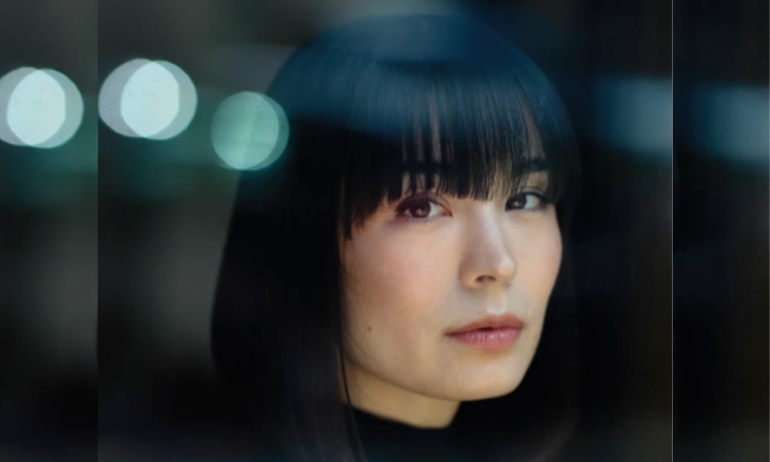

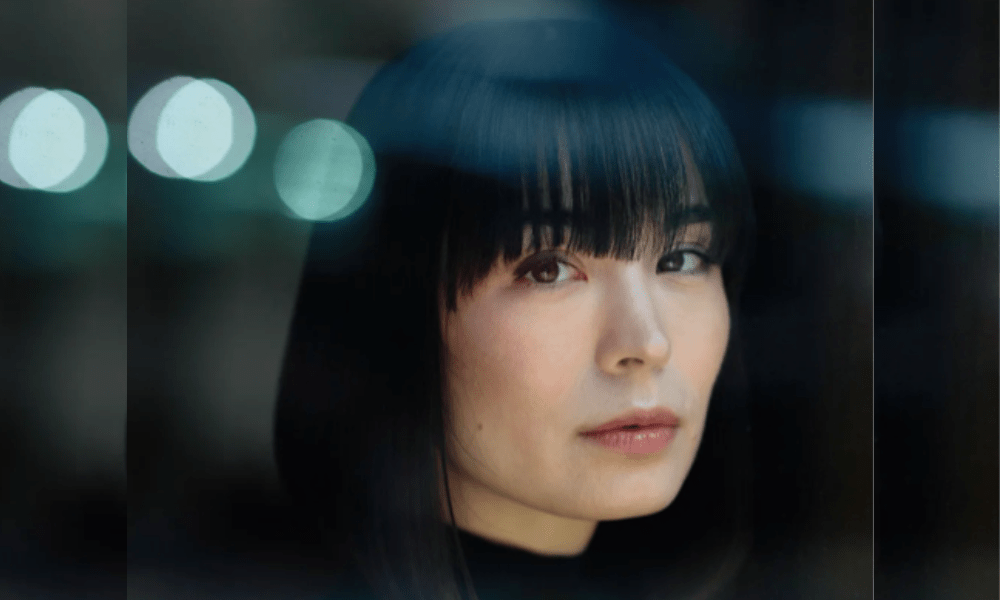
Pianist Alice Sara Ott joins Sanford Baran on KGNU to discuss her evolving artistic journey, from her early rise as a virtuoso to her work as a thoughtful interpreter and musical storyteller. She reflects on the power of music beyond words, the importance of silence and connection in performance, and how she has found her own voice through carefully chosen projects.
Ott also shares her passion for rediscovering overlooked composers, including John Field, whose nocturnes inspired her latest recording, and discusses bringing the music of Jóhann Jóhannsson to the piano. She talks about collaboration, creativity, and the ways both forgotten and contemporary composers continue to shape how we experience music (Air Date 7/20/26).
Listen to the interview here:
Transcript:
Sanford Baran: It is a great pleasure to be speaking to pianist Alice Sara Ott. She arrived on the international stage in 19 with a Liszt recording that left critics searching for superlatives. In the years since Alice has quietly become something rarer than a virtuoso, a musical thinker, someone who uses the piano the way a poet uses silence, not just to fill space but to mean something in it. Born in Munich, she has spent her career asking questions most pianists don’t. Which composers have been forgotten that shouldn’t be? What can music do that language simply can’t? And what does it mean to bring a deceased composer back to life through your fingers? On her most recent album, she brings thirty of Johann Johansson’s most beloved works to the piano for the first time, world premiere recordings of a composer she never had the chance to meet. Alice, welcome.
Alice Sara Ott: Well, thank you for having me.
Sanford: So to begin, you’ve said that music became the language for you that went beyond words that as a child you realized this was how you needed to communicate. When you sit down to play now, decades later, and at the top of your career, is that original impulse still the engine or has what music means to you shifted?
Alice Sara Ott: No, although, I mean, you know, when I decided that I wanted to become a pianist or play the piano, it was, I mean, I was three years old, so I wanted probably, I wanted to be heard. I wanted to be understood. And somehow I thought that playing the piano would help me. So it was a very simple urge I had at that time. But I think it’s still, for me, a special kind of communication tool that still to this day is something that goes beyond words. I mean, for me, words have become more and more important. I care very much about words that people choose and language, I think, is a very powerful tool. But there’s nothing like music where people are coming together, together who are basically strangers and they are united in this collective act of listening. And that is something that is so valuable and also rare in our world in which everybody tries to overpower one another with more volume and noise. And I, you know, whenever I play something very soft in a concert these days, and I usually like to do that, especially as an encore, the fewer notes you have, the more you are really dependent on everybody inside the hall working together. And there is, for me, nothing more powerful than enduring silence together with 2,000 people. And that’s really the moment where I am still thinking I am just so grateful and privileged that I get to, you know, be a musician and experience this on a daily basis.
Sanford Baran: Your recording career has really been fascinating, from the Liszt Transcendental Etudes in 2009, which announced you as a virtuoso of the first order, through Chopin and Grieg, and then into the French Impressionists, and now John Field and Johann Johansson. Looking back, does that arc feel like it was intentional or is it more like following a scent you couldn’t quite identify at the time?
Alice Sara Ott: So, yes, I remember when I got signed to Deutsche Grammophon and when I was asked what would you like to record, I knew that the first album is going to be the 12th Etudes d’Execution Transcendente. And I also knew at that time already that I wanted to record all the Chopin Waltzes, so that was very clear for me. But then followed a period where I experienced quite a long and intense crisis as an artist. And I feel like now looking at those recordings, they were not intentional, and I do not identify with those. I’m always touched when people come to me and tell me how they like one of those recordings, but this is a time in my career where things were very difficult and I, you know, there were many questions I was facing. And then slowly towards the end of my 20s I started to develop a feeling or a vision for who I wanted to be and who I wanted to be as an artist. And now, yes, since then everything is very intentional. I’m very much involved in every album and that doesn’t only go for the choice of the repertoire, but it’s the whole curation of the concept. I’m involved in the artwork, in the cover, in even the font of the cover. I write the text myself, so now everything, yes, is very intentional. But it took a while for me to come, to get there and to come there.
Sanford Baran: The John Fields Nocturnes project feels like an act of genuine artistic rescue. This is the man who essentially invented the nocturne before Chopin made it famous, and he’s sort of been largely forgotten until your recording. What was it about Fields’ music that compelled you to spend that much time inside it? And what do you think we lose when we forget composers like him?
Alice Sara Ott: This was coincidental. I mean, it was during the pandemic that I discovered his music. I mean, I knew of him, I knew his name, but nobody in my environment ever played John Fields. I mean, my teacher never taught or gave us his music. None of the students in my class played it, so I just didn’t grow up with his music. And I remember during the pandemic, one day I thought it would be nice to put together a playlist with nocturnes, just fitting this kind of slightly depressing mood. And so I went to the streaming platforms and just browsed for nocturnes, and then came across one of the recordings. It’s a wonderful recording by Elizabeth Joy Rowe. I think it was recorded for Decca like probably a decade ago. And I found that recording and I just thought to myself, it’s so weird. I don’t even know one single piece by John Fields. So I started listening and I just fell in love with this music. And I started listening to the recording over and over. And again, it was like, you know, going on on my iPhone on a loop. And yeah, and then it was not too long after that, that I wanted to learn this music and then record this music and program this music. And then I, of course, wondered like, who is this John Fields? I had no idea when he had lived because the name sounds rather contemporary. I mean, he could be like a distant uncle somewhere in the UK. But then I found out that he was a contemporary of Ludwig van Beethoven. And it was so surprising. But at the same time, the more I listened to his music, the more I could hear similarities with Beethoven. So I got very interested in John Fields nocturnes. And of course, then trying to find out about his biography was not so easy because there is not much information you can get on him. There’s a few biographies about him. I think a lot of the music that he has written is just lost. Thanks to Franz Liszt, who made the effort to collect these nocturnes and publish them, we have now this collection of 18 nocturnes. But there’s not that much known about his life.
Sanford Baran: Well, if Liszt collected the nocturnes, obviously Chopin must have seen them too.
Alice Sara Ott: Yes, of course. It’s a known fact that Chopin was influenced by John Fields. I mean, without John Fields, none of the other nocturnes that came later would exist.
Sanford Baran: And then Johann Johansson, someone who died in 2018, someone you never met, whose music lives in films and electro-acoustic spaces, quite foreign to the concert piano. You’ve said working on the transcriptions felt like a very personal dialogue with him. So what did that dialogue feel like and what did you discover about him through his music that you couldn’t have found any other way?
Alice Sara Ott: I mean, the personal dialogue that happens ultimately with every composer, no matter if they’re living composers or composers that have passed away. But it is a very personal thing to read the score and then to try to find an approach that feels appropriate to the intention of the composer. I mean, in the end, you know, a lot is guessing. I mean, even with Beethoven and Bach, we know so much about them and about the performance practices and the musical structures of that time. But of course, in the very end, you know, you might reach the intention of the composer to maybe 98%, but the rest of it is guessing. And that’s also the beauty of it. And I think, you know, every perception is very personal and very individual. And that makes, of course, an interpretation very, very individual. And for me, Johansson’s music is really dominated by the sense of, first of all, intimacy, of course. There’s only a few notes in his music, I mean, most of the time. And there is this urgency and it requires focus and awareness. And that is something I think lots of people are seeking for in this very busy and noisy world we live in. And it’s something very meaningful. And of course, being there in Reykjavik in Iceland, recording for five days every day on this very old, nostalgic sounding upright piano, playing this music that only consists of a few notes, was a very special experience. And of course, at one point you kind of zone out and like you get so focused on the notes that it kind of feels like, you know, the composer’s sitting there and there is this personal dialogue. But, you know, it’s a very personal experience you get, no matter if you’re listening to this music or performing this music, because it has this very special kind of focus.
Sanford Baran: And you’ve collaborated with some fascinating figures outside classical music entirely. Olafur Arnolds, Bryce Dessner, Chili Gonzalez. What does a composer from outside the classical tradition bring to your world that someone from inside can’t?
Alice Sara Ott: For me, the collaboration with Olafur Arnolds was extremely important because it was in the middle of my identity in artistic crisis and I was still very much in this mindset, in this traditional mindset. So when he approached me with the idea of recording Frédéric Chopin’s music, I was very skeptical in the beginning and I wanted to decline. But then we just got along on our Skype call and I really liked his approach and his way of thinking. And we shared a passion for whiskey and we both connected our grandmothers to the music of Chopin. So there was, you know, I just thought it would be, let’s give it a try and then we can still, you know, decide to not put out the recording. And then I just had an incredibly great time also kind of stepping out of the way, how I was the standard way of recording. We recorded on very old instruments that were far from sounding perfect. We recorded on old bar pianos. And it was all about, you know, kind of the human experience, you know, making music in the moment apart from trying to create whatever perfection means in music. And that opened new horizons for me, opened up the horizon for me. And that was definitely a starting point for me in slowly, you know, finding my own path as an artist. So that was a very, very important collaboration and encounter. And at that time, I definitely thought someone from a different genre now added something to my world of limitations.
Sanford Baran: I mentioned the work you’re doing with Bryce Desner, a living, working composer. What’s that experience like, getting to collaborate with the actual composition as it’s emerging versus taking something written 200 years ago and making it your own?
Alice Sara Ott: This is a very, of course, special experience. When I approached Bryce, if he would consider writing a concerto for me, of course, I never thought that he would agree. And then it was so incredible that he agreed to do that. And I mean, he’s one of the most generous, open-minded, and warmest people I know. And he was also just so generous in the whole preparation of when he was writing the concerto for me. He was always open to my questions. And when I asked him to make little adjustments, he, I mean, again, one of the most generous people I know and the kindest. And apart from being such an incredible musician and performer himself, I’ve now collaborated with him on two different projects. And he’s become a really good friend of mine. And it was just so different because now when I had questions, I could pick up the phone and call him and ask him this question. I don’t get to do that with other music. I mean, how often did I wish I could just call Beethoven and ask him a question? But of course, that is not possible.
Sanford Baran: We’re getting close to the end here. One last question. Feel free to take it wherever you want. What is the piece of music you most wish more people in the world had heard? Not to promote a recording, just the music itself, the one you want to put in someone’s hands and say, here, this will change something in you.
Alice Sara Ott: Oh, there’s so, so much. But I’m still on my journey in promoting John Field. So I would say, I mean, any recording of John Field nocturnes, I really would love more people to hear it. I really think that it’s, especially nowadays that we have, we can stream music. It’s so much more accessible. And I really want John Field to become more part of our standard repertoire. But obviously, there’s so much other music that I would love people to hear. I always hate the island question because it is so hard to narrow it down to three pieces of music.
Sanford Baran: Well, I really love the John Field album and I feel more enriched by knowing his music and being exposed to it. Thank you, Alice. This has been a wonderful and such an interesting conversation.
Alice Sara Ott: Thank you so much. It was a pleasure talking to you and I wish you a nice day.
Sanford Baran: You too.
Alice Sara Ott: Bye-bye. Thank you.
Sanford Baran: This is Sanford Baran for KGNU.