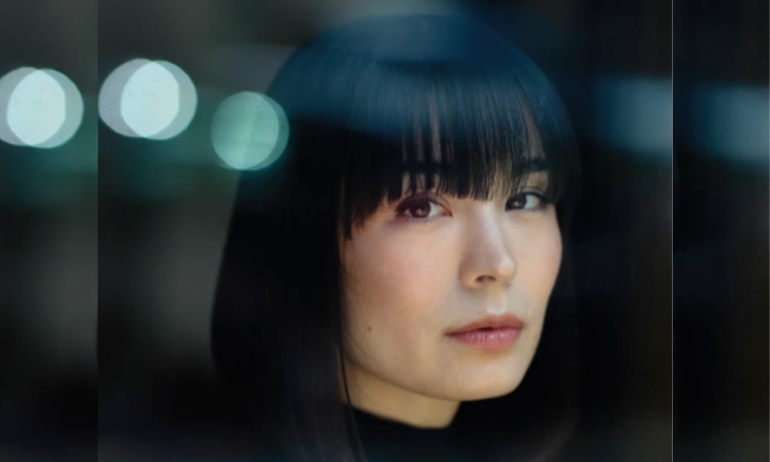

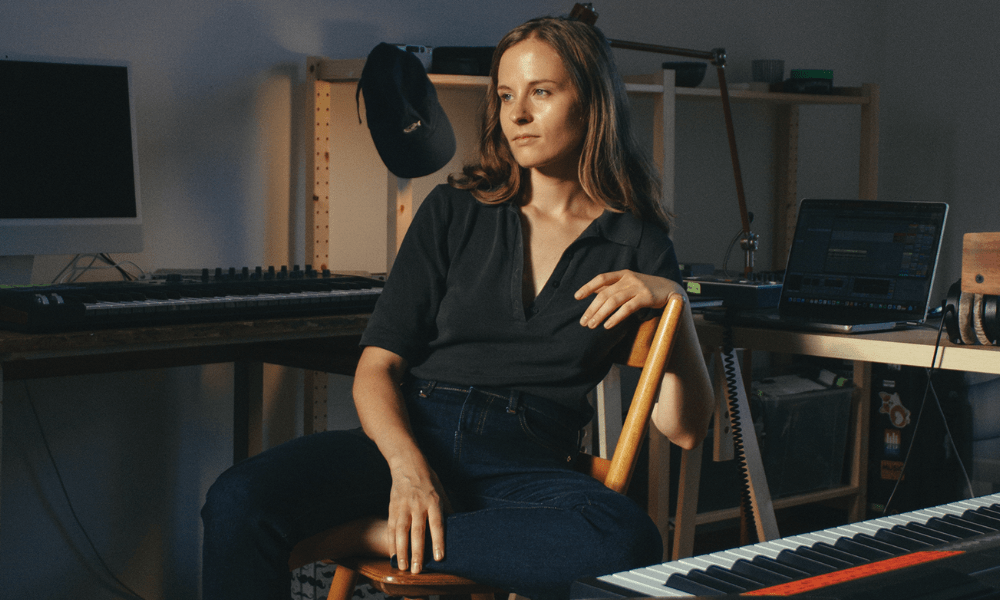
At the Big Ears Music Festival, KGNU’s Monte Dube interviewed composer and pianist Hania Rani about her musical upbringing in Poland, her evolution from classical training into experimental and electronic music, and her global career shaped by Berlin, Iceland, and major recording projects. She also discussed her new orchestral work Nonfiction, inspired by a rediscovered Warsaw Ghetto composer, and reflected on music as a way to create connection, resilience, and a sense of aliveness. (March 2026)
Monte Dube: Hi, this is Monte Dube from KGNU in Boulder, and I am pleased to be on day four of the Big Ears Music Festival in Knoxville, Tennessee, with Hania Rani, who has been active this weekend in two separate concerts.
Hania Rani: True.
Monte Dube: From two different projects.
Hania Rani: Yeah, true.
Monte Dube: All the egos, which we’ll get through in a second.
Hania Rani: Yeah.
Monte Dube: Hania, you’re a composer, a classically trained pianist, an arranger, and I would say a singer, but I heard you in an interview once say you’re not a singer.
Hania Rani: Ah, right.
Monte Dube: But we’ll come back to that. You do sing.
Hania Rani: Yeah.
Monte Dube: And you sing on some of your recordings.
Hania Rani: Yeah, yeah, yeah. Maybe I underestimate myself.
Monte Dube: Well, you’re not formally trained, perhaps.
Hania Rani: Yeah, I’m not trained.
Monte Dube: I’m so happy to have you here. Tell us about your background, your upbringing, and what ultimately led you to Knoxville, Tennessee.
Hania Rani: Well, my upbringing is a long story. It was full of music. My parents are not musicians, but the house was always full of sound and music, and a love for culture and music especially. So it felt very natural when I was sent to music school at age six in Gdańsk, Poland.
In Poland, we still have this amazing music education system—it’s free, and kids just need to pass a test. They check whether you have hearing, rhythm, and musical potential. So I joined the school, and it probably changed my life because I really enjoyed it. My mom chose piano for me, and I loved it from quite early on. Eventually I decided I wanted to become a pianist.
I think my parents didn’t expect that. They thought maybe it would be just the first six years and then I’d do something else, but I realized I really liked it.
Monte Dube: It almost sounds like you had a little piano in your crib—that it started very early and you were passionate about it.
Hania Rani: That’s true. I don’t really know why, because now when I see children that age, I think it was very early to decide I wanted to become a pianist. I remember getting a record of Beethoven sonatas and thinking, wow, if I practice more I can play this amazing music.
At first you play very simple piano pieces, but then you realize that with more experience you can reach incredible repertoire. My dad also brought home a lot of rock and pop—Pink Floyd, Cat Stevens—so the house was always full of music. I just wanted to be part of that. Practicing never felt like a burden; it was something I wanted to do.
Monte Dube: As a teenager, were you exposed to the jazz scene in Gdańsk?
Hania Rani: Yes, that came a bit later, around high school. Gdańsk is quite known for jazz and experimental music. At my school, everyone played different instruments, and some people formed big bands or small jazz groups. It was exciting.
But I didn’t dare improvise. I just watched and was fascinated, but I felt I didn’t have the skills. My training was very rigorous.
Monte Dube: Very rigorous training.
Hania Rani: Yes. It took me many years to realize that everyone can improvise—you just have to develop your own language. It doesn’t have to belong to a specific genre.
Monte Dube: Then you moved from Gdańsk to study at the Chopin University of Music.
Hania Rani: Yes, very famous. Most of the time you study Chopin there, and I was quite obsessed with it. It was very formative because I moved from a small town to Warsaw—a big city with lots of concerts and musicians. It was extremely exciting.
There I began not only performing classical music but also doing arrangements and engaging with more pop culture.
Monte Dube: Which continued when you moved to Berlin.
Hania Rani: Yes. Berlin definitely opened the world for me. I still studied classical music, but the city is so vibrant and different. I was quickly exposed to electronic, experimental music, and experimental theater. I was absorbing everything.
Berlin feels very free and multicultural, almost separate from other parts of Germany. That was very influential.
Monte Dube: And then from Berlin you took an interesting detour—to Iceland.
Hania Rani: Yes, a detour is the right word. The first person I met in Berlin was an Icelandic girl, an opera singer who became my friend. She encouraged me to visit Iceland, and I already knew some Icelandic music—Sigur Rós and others.
We traveled there, and she introduced me to sound engineers. That’s how my first album came to be.
Monte Dube: Your first album?
Hania Rani: Yes, Esja. The name comes from a mountain in Reykjavík visible from almost everywhere in the city. I met a sound engineer who had worked with Björk, and he said, “Come record your album.” So I did.
Monte Dube: And that’s how Esja came to be.
Your music is often described at Big Ears as genre-defying—you hear everything in between.
Hania Rani: Yes, exactly.
Monte Dube: Atmospheric, ethereal—very influenced by natural beauty, the sea, and places like Gdańsk.
Hania Rani: A hundred percent. I think it’s subconscious, but I grew up close to the ocean, and it shaped my perspective. I appreciate the sea in all seasons, especially winter when it’s gray and metallic. That same quality exists in Iceland and Scandinavia.
Monte Dube: Did that subconscious influence help you move from classical rigor into jazz and electronic music?
Hania Rani: I don’t know. Maybe it takes courage to step away from what you know. Some people are settlers, others are always moving—I guess I am the latter.
Monte Dube: Your debut album Esja brought you international attention, especially during COVID when people needed something calming.
Then your second album, Home, followed. In 2022 you released a live performance from Paris that has now been viewed over 10 million times. What does that feel like?
Hania Rani: It’s still mind-blowing. I don’t fully understand it. I was lucky to experience the internet before it became so commercialized.
That concert was very special—it was at a historic venue in Paris, and it happened right after the pandemic when people were eager for music again.
Monte Dube: Then came Ghosts in 2023, which felt very dualistic—life and death, light and dark.
Hania Rani: Yes.
Monte Dube: And in 2024 you released a live piano version recorded in Warsaw.
What do you think nostalgia is? Can you be nostalgic for things that never happened?
Hania Rani: Yes, I’ve heard that idea. Nostalgia is complex. The recording was made in a very special place for me—the Polish Radio studio where I recorded many projects before.
It feels like an “amber-preserved” place, almost like accessing a vanished world. I wanted to photograph it as well as record it. It was empty, snowy, and full of old equipment and tapes. Very special.
Monte Dube: Like going into Abbey Road and seeing Beatles history.
Hania Rani: Yes, exactly.
Monte Dube: Yesterday you performed under your alias Chilling Bambino, and today you premiered Nonfiction with the Knoxville Symphony Orchestra.
How did Nonfiction come to be?
Hania Rani: It was commissioned around 2020 by the Museum of Polish Jews in Warsaw, inspired by the rediscovery of compositions by a young composer who died during World War II in the Warsaw Ghetto.
When I studied her sketches, I realized we shared a similar musical language and influences. I didn’t want to turn it into a museum piece—I wanted to bring it into the present and make it speak to today’s world.
It’s called a piano concerto, but it’s not traditional. The piano isn’t the dominant voice—every instrument has equal importance. I also invited improvising musicians to break classical hierarchy and create something more open.
We recorded it with the Manchester Collective, a young orchestra full of curiosity and energy. It became something really beautiful.
Monte Dube: Having experienced it today, it was incredibly moving—cinematic, almost spiritual.
Hania Rani: Thank you.
Monte Dube: Do you think there’s synchronicity between you and the composer you referenced?
Hania Rani: I don’t think I was a child prodigy.
Monte Dube: You’re being modest.
Hania Rani: No, I was just very hardworking.
What interests me is her confidence. She believed she would become a great composer and that the war would end. That resilience is powerful. I’m interested in that kind of subversive energy—how people stay alive and creative under pressure.
Monte Dube: How do you channel that?
Hania Rani: Through music, art, and connection. The task of life is to stay alive—and to make others feel alive too.
Monte Dube: You also work in film. I recently watched Sentimental Value and was really taken by the score.
Hania Rani: Thank you.
Monte Dube: More film and theater work in your future?
Hania Rani: Yes, I’d love that. After working on projects like that, I want to take my time and do something meaningful. I’m very interested in collaboration and observing other artists’ processes.
Monte Dube: Well, you are an integrator—so that will find its way into your work.
Thank you so much for your time, and welcome to Knoxville.
Hania Rani: Thank you. It was a pleasure.