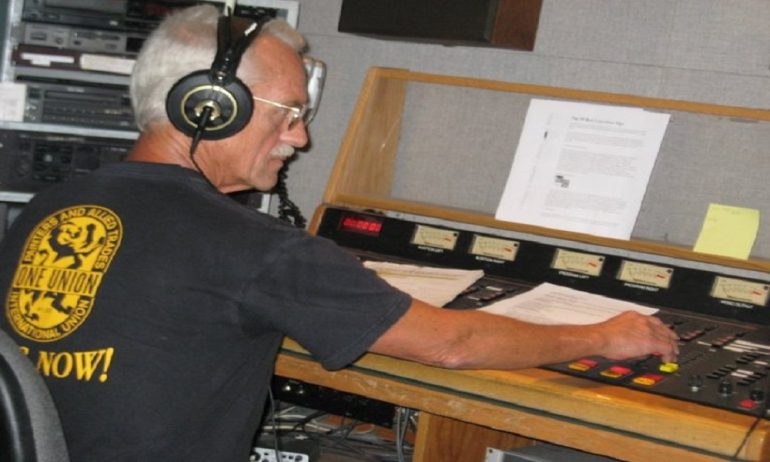


The TRENDS podcast is a collaboration between the Community Foundation of Boulder County and KGNU. It dives deep into the community’s most pressing issues and explores the changes happening throughout Boulder County through the experiences of community members, especially those often rendered invisible by commercial media, to shed light on community challenges, solutions, and pathways forward for the county and the country.
Listen to the Diversity, Inclusion & Equity TRENDS podcast episode below:
-
 play_arrow
TRENDS Podcast: Diversity, Inclusion & Equity Maeve Conran
 Boulder County has a reputation of being a leader in progressive values, but not everyone feels welcome here.
 A survey conducted by the Community Foundation of Boulder County shows that residents here feel we are least open to minorities, immigrants and refugees compared to other groups. And very often, members of those groups feel very unwelcome.
In March 2019 Zayd Atkinson, an African American yoga student at Boulder’s Naropa University was confronted by several police officers, some with weapons drawn, while he was picking up trash in his front yard. Atkinson said that he wasn’t totally shocked that he’d been initially confronted by the police, but he was shocked and how much the situation escalated.
“I’ve been here since the beginning of fall, but I was familiar with the area, so I wasn’t surprised, I was surprised when he pulled out his gun,” said Atkinson.
The gun was pulled by a Boulder police officer who stopped his vehicle to question Atkinson, who was using a trash grabber to pick up garbage from his lawn near Folsom and Arapahoe. He said he feared for his life.
A survey conducted by the Community Foundation of Boulder County shows that residents here feel we are least open to minorities, immigrants and refugees compared to other groups. And very often, members of those groups feel very unwelcome.
In March 2019 Zayd Atkinson, an African American yoga student at Boulder’s Naropa University was confronted by several police officers, some with weapons drawn, while he was picking up trash in his front yard. Atkinson said that he wasn’t totally shocked that he’d been initially confronted by the police, but he was shocked and how much the situation escalated.
“I’ve been here since the beginning of fall, but I was familiar with the area, so I wasn’t surprised, I was surprised when he pulled out his gun,” said Atkinson.
The gun was pulled by a Boulder police officer who stopped his vehicle to question Atkinson, who was using a trash grabber to pick up garbage from his lawn near Folsom and Arapahoe. He said he feared for his life.


“If we can look race in the eye, I think that we can look gender in the eye. I think we can look sexuality in the eye. I think we can look class in the eye, but if we can’t look race in the eye… we’re not really going to be able to hold the gaze and really figure out what is up and how to undo and transform the other ones.”Kayik Wildcat grew up in Arizona and now lives in Boulder. He is a senior at Fairview Highschool and is with AIYLI, the American IndianYouth Leadership Institute. Kayik says that is always aware of the lack of diversity living in Boulder County. “… high school is probably 90% white, I’m pretty sure I’m the only native there. (There is) probably like less than 30 black kids, and then very little of everybody else, you know, but it’s all white and there’s not much to it.”
Related KGNU Coverage:
- Rally Held Supporting Former CU Professor Claiming Discrimination Blocking Tenure
- Latina Research Associate Alleges Tenure Blocking Discrimination at CU
- Celebrating Latino History in Boulder County
- PoCo in BoCo
Kayik says any discussion on diversity must include Native Americans and an acknowledgment that we are on stolen land.
“Land acknowledgments are the acknowledgment of the indigenous people of whose land these belong to. And now that’s right there.”

“When we think of Boulder, we think of a very liberal white paradise and it’s not always been that. And it got that way as a result of violence,” says Romero.We must have all voices part of the conversation if we want to be not just diverse but inclusive. Richard Garcia serves on the Boulder Valley School District School Board. He first ran for the seat to ensure that Latino voices were included and heard. Garcia says diversity is a word that is often used in policy discussions, but not always fully understood. “When I hear the word diversity, that means numbers of people sitting at the table or numbers of people in the school district. So for example, we have 5,000 Latino students in the Boulder Valley School District. So we do have a diverse student population? Now, does that mean that they’re included in terms of inclusion? Are they included in student clubs? Are they included in the sports? …Are they encouraged to participate? Are there fees associated with all of that?” While education opens many doors to communities who have traditionally been excluded, it can also be difficult to be a person of color in higher-level education and on campuses that are predominantly white.


“One of the difficult things for People of Color who live in Boulder is walking into most spaces. You will be the minority, you will not be in the majority. And it isn’t just about that. It’s about all of the history and the baggage of the systems that come with that. And if there’s discomfort with people walking into those spaces, as people often tell me, it’s feeling these kinds of longstanding systems of systemic oppression.”It is something that Shiquita Yarbrough is also aware of. She is the community engagement equity manager for the YWCA of Boulder County. She co-created a group, Families of Color, because of the experiences of her children. “There were some issues with the youth in how they were being called names in schools,” says Yarbrough. The YWCA gives support and provides resources to families in the county. “I think that gives people a little breathing room where they can exhale and say, ‘wow, I’m not alone. Someone here understands what I’m going through.’” There are many conversations about diversity and inclusion happening in Boulder County. Conversations are happening about the impacts of structural racism and implicit bias. The challenge is now to nurture those conversations and move into action to create a community that is inclusive for all.

Story Sources & Resources:
- Ramon Gabrieloff Parish – Core Candidate Assistant Professor of the Diversity Seminar at Naropa University
- Shiquita Yarbrough – YWCA Boulder County’s Manager of Community Engagement and Equity
- Shawhin Roudbari – Assistant Professor at CU Environmental Design Department
- Nikhil Mankekar – Chair of City of Boulder Human Relations Commission
- Ricardo Garcia – BVSD School Board Member
- Kayik Wilcat – Member of the American Indian Youth Leadership Institute (AIYLI)
- Alana Adams – CU student affiliated with Umas and Mexa