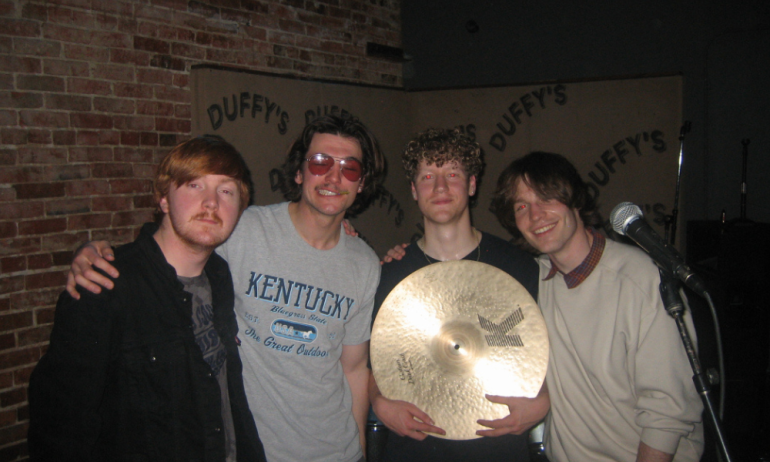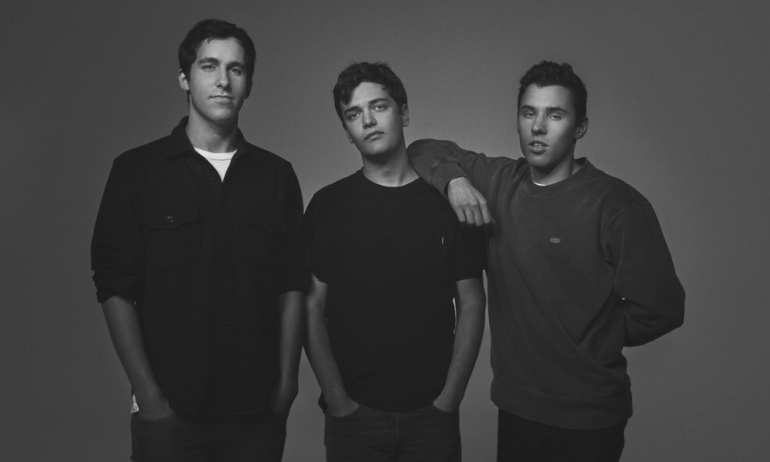

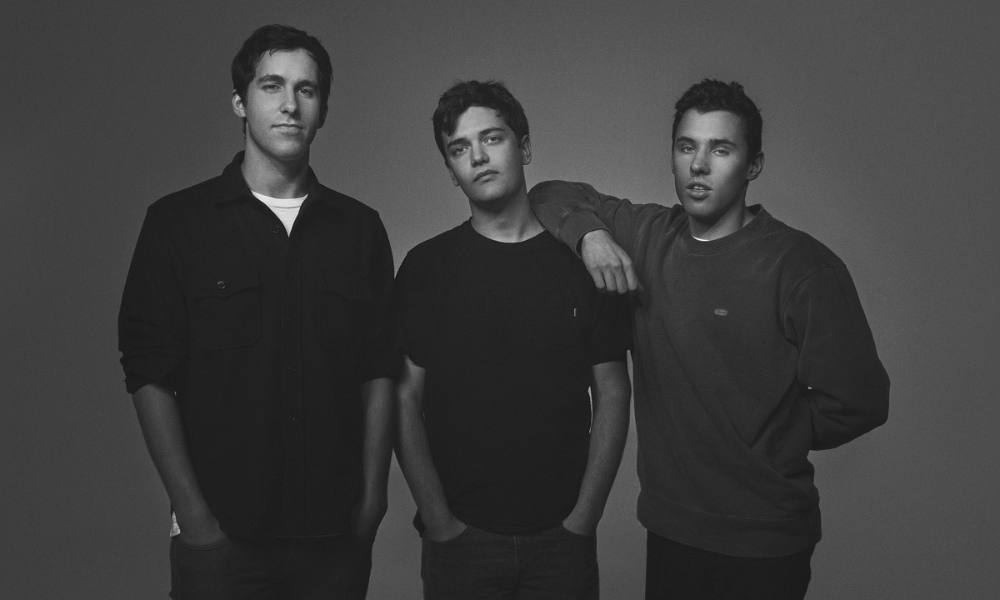
Ahead of their April 29 performance at Summit in Denver, badbadnotgood sat down with KGNU to discuss the band’s musical evolution, the lasting influence of jazz, hip hop, and sampling on their sound, and the importance of collaboration in their creative process. The conversation also explores the changing landscape of the music industry, from AI and streaming to community organizing and independent venues, as well as the role artists can play in supporting one another and engaging with the world around them. The band closes by sharing recommendations for new music, celebrating community radio, and encouraging listeners to support local arts and culture (Air Date 4/28/26).
Listen to the interview here:
Transcript:
Uncle Jam: Today I’m joined by BadBadNotGood.
badbadnotgood: What’s up? What’s going on?
Uncle Jam: A Canadian trio whose work spans the worlds of hip hop, jazz, and electronic music, who’ve carved out an important niche in the contemporary beat scene and music scene more broadly. They’re playing at Summit in Denver tomorrow evening, April 29, with opener Cleo Reed.
To start us off, could you each introduce yourselves, tell us what instruments you play, and share a few of your foundational musical influences or memories?
badbadnotgood: Hey, I’m Chester. I play bass in the band. I was actually just talking about this yesterday, but when I was in my first year of college, I saw the Wayne Shorter Quartet at Massey Hall in Toronto. I still reference it as the best concert I’ve ever been to in terms of the connection between the musicians and the way they played and improvised.
Some of my heroes are James Jamerson, Jaco Pastorius, and Paul Chambers. There are too many to name.
badbadnotgood: Hey, my name is Leland. I play saxophone and guitar. An early musical memory is that I had the privilege of having two older brothers who are also musicians, so getting to watch them get on the scene and play gigs was a big inspiration for me.
Some of my favorite musicians are Wayne Shorter, John Coltrane, and Joe Henderson.
badbadnotgood: Hey, my name is Alex. I play drums in the band. One musical memory that comes to mind is getting to see The Roots in Toronto before the band started. I’ve been a huge Questlove fan ever since I realized the music and drumming I was listening to was played live.
When you play an instrument, you want to connect with people doing the same thing. Sampling and breaks are so incredible and important, but what Questlove was doing in the ’90s, the 2000s, and still today is so beautiful. He’s one of my absolute heroes. I love the records, the performances, and the musical direction he brings.
Chris Dave, Questlove, Steve Gadd, Jeff Porcaro, Ndugu—there are so many great drummers, musicians, and percussionists. It’s a wonderful world.
Uncle Jam: Beautiful. Each of your albums has represented an evolution of your sound. How would you describe your progression to someone who has never heard your music before?
badbadnotgood: In the most literal sense, we started out playing covers. That’s how we got together—playing hip-hop covers and music we were into at the time in college.
As we spent more time together and played more, we began writing music that was very much in that vein. Then we kept sharing music with each other and discovering more through DJs and people we met. From there, the sound expanded into all kinds of different influences: rock, psychedelia, and a bit of everything.
Samples and hearing beats were a huge turning point. We’d hear a groove, a chop, a melody, or a line and think, “Wow, this is incredible.” Then we’d go back to the original records being sampled and realize these were visionary bands with great songs and albums. That made us more interested in becoming a band rather than creating loop-based orchestrations. We wanted to move more toward composition than fully electronic, sampler-driven music.
Uncle Jam: I definitely hear that in your work over the years.
badbadnotgood: Thank you. That’s the goal.
Uncle Jam: More than a decade into your existence as a group, where do you see things going in the future?
badbadnotgood: More growth, more collaborations, more exploration in every capacity—touring, recording, everything. We just want to keep expanding and keep things fresh.
It feels like we’re in a time where making music—whether at home, in a professional studio, or in a community space—is where everything begins. You can really develop the depth of your compositions and recordings there. But taking those songs into a live setting is especially important, particularly in an AI-influenced world.
Uncle Jam: Amen.
You’ve worked with some incredible and influential musicians across pop, alternative, hip hop, and avant-garde jazz, including Arthur Verocai, Brandee Younger, Colin Stetson, Ghostface Killah, Laraji, Kendrick Lamar, Kali Uchis, and Turnstile, among many others.
How do you approach collaboration, and are there any moments or lessons from working with other musicians that stand out?
badbadnotgood: It’s crazy hearing all those names listed together.
Collaboration is really at the core of what it means to play music. Even solo artists are often influenced by other people. It’s special to bring your own ideas into a room where someone else can contribute what makes them unique. You end up creating things you never would have thought of on your own.
The key is listening, being open, and trying to be a good collaborator. That’s really all it takes.
Uncle Jam: In this rapidly evolving music industry—with AI, streaming, and the consolidation of live music into the hands of just a few promoters—what do you see as the future of music? And do you have any advice for young musicians entering this fractured landscape?
badbadnotgood: I don’t know if everyone in the band agrees, but I hope there’s some kind of reset in the broader business landscape. We don’t need corporate greed taking over everything.
Thirty years ago, it was hard to succeed in the arts, but I hope we move back toward a system that’s more in the hands of people who genuinely care—people who want to support artists, build community, put on shows, and help ideas grow. We have some of that now, but we need more independent venues, performances, and community spaces, and less concentrated ownership.
I was actually listening yesterday to a great podcast with Liz Pelly, the author of Mood Machine. She was talking with the founders of United Musicians and Allied Workers about how difficult it is to build community in today’s music industry because everyone has to do everything themselves—they’re their own promoters, graphic designers, and managers.
The industry has convinced people that Instagram and TikTok matter more than real-life community. But social media isn’t a community in the sense of people gathering together in a venue, a café, or a church.
Getting back to those grassroots spaces is so important. It’s refreshing when you play a venue or festival where you can tell the people running it genuinely care about the audience, the artists, and the music.
And I definitely want to echo what Alex said.
Uncle Jam: On a similar note, with UMAW doing important work and the broader reckoning around the music industry’s relationship to systems of oppression, what do you think is the role of artists and musicians when it comes to speaking out or being political?
badbadnotgood: I think everyone has a role to play.
Speaking for the three of us, we grew up with the privilege of not really having to engage with politics because we’re white and we grew up in the suburbs of Canadian cities.
For people in our position, it’s important to find ways to create change—or more importantly, to uplift people who are already doing that work. We should support movements, boycotts, and other efforts that push things forward.
That’s something we’ve been trying to engage with more over the last few years because the world is clearly moving in a more oppressive and fascist direction.
Nina Simone said it’s the duty of artists to reflect their times. I’m probably paraphrasing, but there’s so much incredible music—from Woody Guthrie and Pete Seeger to Sam Cooke and Nina Simone—that genuinely moved people and inspired change.
Today, so many musicians are focused on simply surviving because making a living is difficult. Sometimes you lose sight of the bigger picture.
Uncle Jam: Beautifully said.
Our listeners are always hungry for new music. Are there any underrated or lesser-known musicians you’d recommend?
badbadnotgood: Cleo Reed, who’s opening for us on this tour, is incredible.
They’re a powerhouse artist—from the artwork to the storytelling. They handle the sound design and recording, and they’re an amazing performer. They’re so comfortable in their own presence, and it’s incredibly inspiring to be around them.
Supporting people is also one of the best ways to create change. Letting someone know you heard their work, that you loved it, and that what they’re doing matters can make a huge difference. People can get discouraged when they put so much into something and don’t immediately get the response they hoped for. Encouragement really changes people’s lives.
Uncle Jam: One hundred percent. It’s so important to hold space for each other. In such a lonely time, it’s important to get together, break bread, share records, and make crazy sounds together.
badbadnotgood: And not forget why you’re there in the first place—what brought you to music.
I also want to shout out this station and public radio more broadly. It’s one of the places where people can still discover music and ideas they might not encounter anywhere else. That’s incredibly important right now.
Actually, another recommendation came to mind. We were lucky enough to play in New Zealand about a month ago, and there’s some amazing soul and R&B coming out of there. There’s a label called Manuka Recordings, and artists like Summer V and Tyrone are making beautiful music. I never expected to discover those kinds of sounds from so far away, but the musical world is vast, and it’s exciting to see people creating such inspiring work.
Uncle Jam: Thanks so much. Any last words for our listeners here on KGNU Community Radio?
badbadnotgood: Support your local community radio station, your local library, your local independent movie theater, your local independent bookstore—all of the above.
And come out to the show tomorrow night. It should be really fun.
We’re playing local material, and it’ll be a great local experience.
We also just picked up some local herbs.
Uncle Jam: Cheers to that. Thanks so much, badbadnotgood.
They’re playing tomorrow, April 29, at Summit with Cleo Reed opening.
Maybe we’ll see you there.
badbadnotgood: Yeah, yeah.