
-
 play_arrow
‘We are not at the table’: A Ute elder on water, power and the Colorado River Rossana Longo-Better
The Colorado River is entering another dangerous season. After a dry winter and weak snowpack, the seven basin states still have not reached an agreement on how to use less water, raising the chances of federal intervention as the river continues to shrink. The stakes are especially high for tribes, whose water rights and histories have too often been treated as secondary in the negotiations.
On a recent episode of Storytellers of Color on KGNU, Rossana Longo Better spoke with Donald Whyte, a Ute Mountain Ute elder and retired chief ranger with the National Park Service, after a University of Colorado Boulder presentation that used theater to explore the Colorado River.
For Whyte, water is not simply a policy issue or a resource to divide. It is history, identity and relationship.
“We know that water is life,” Whyte said. “We have a strong relationship to it.”
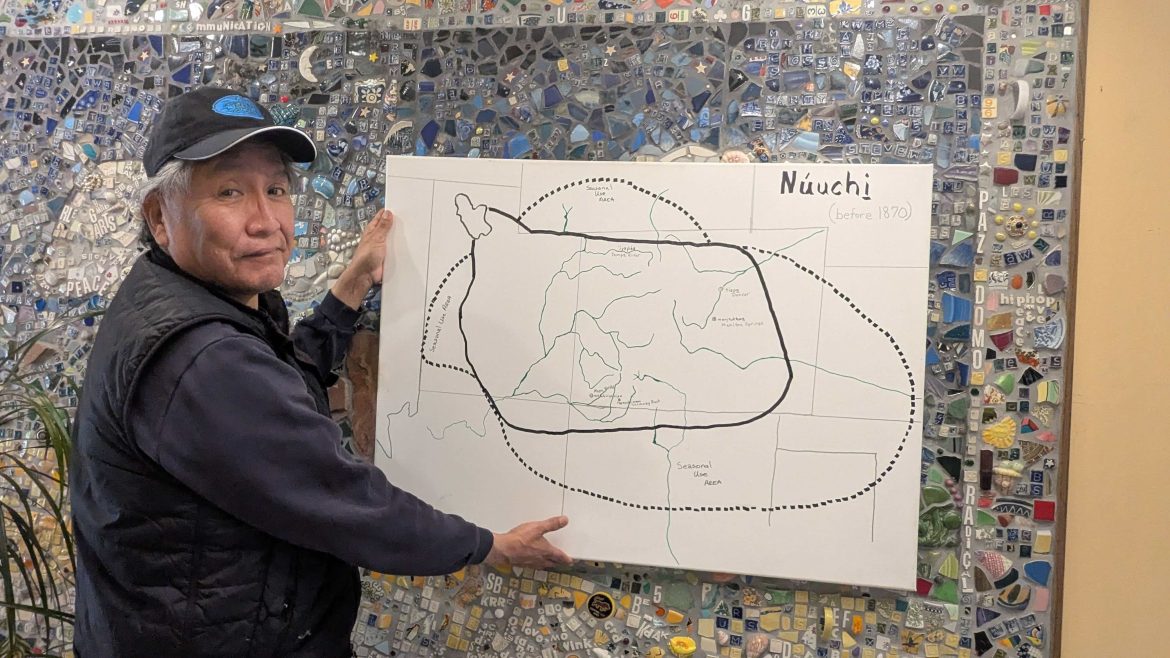
Whyte described a map he created of Ute homelands, tracing waterways across what is now Colorado, Utah and beyond. The map reflects a perspective that predates state lines and political boundaries.
“I had to change my perspective and come up with a different set of words,” he said. “We are the people of the headwaters of the southern Rocky Mountains.”
That perspective matters now, he said, because the modern Colorado River crisis is unfolding on Indigenous homelands. Yet tribal voices, he warned, still do not carry equal weight.
“Tribal voices sit secondary,” Whyte said. “And I think that is not where we belong.”
He spoke of the long history of water promises made to tribes and not fulfilled. On the Ute Mountain Ute Reservation, he said, water scarcity is not abstract. It is immediate and personal.
“My own family members came to me and said, ‘Don, you know this land, where do we have a place where we can have a water source?’” Whyte said. “And I said, ‘It’s not within our reach.’”
That reality comes as climate pressures intensify. Across the West, drought and heat are worsening water shortages, and forecasters have warned that low snowpack this year could put added pressure on reservoirs, agriculture and downstream communities.
Whyte said he has watched those changes unfold over decades, from his fire work in the 1980s to today.
“These intense fires are not the normal fires that I grew up and was aware of in the early ’80s,” he said.
Even so, he returned to the need for cooperation, humility and respect.
“It’s gonna have to be one of community cooperation,” Whyte said. “It’s not just people, it’s plants, it’s animals. You need to make sure that we don’t take more than our fair share.”
And on a deeply personal level, he said hope begins with paying attention to water itself, not as something endless, but as something finite and sacred.
“I have to, in my own way, always try and protect that water,” Whyte said, “because it’s so finite.”