

-
 play_arrow
Updates from Special CO Legislature Session; Ruling on Funding for Sanctuary Jurisdictions Jack Armstrong
Headlines Monday August 25, 2025
Special Session Updates
State lawmakers approved four bills Sunday, the fourth day of their Special Session aimed at reducing a $783 million deficit in the state budget, a deficit brought on by a new federal tax and spending plan.
Those four state bills are headed to Governor Jared Polis for his signature. After giving them approval late yesterday, lawmakers continued debating other measures The Denver Post is calling “priority bills.”
The bills now headed to the governor’s desk include one that will ask Colorado voters to fund food assistance, and another that would use state money for Medicaid reimbursements for reproductive health care providers.
A third bill would identify more countries as tax shelters, while the fourth would require the governor to notify lawmakers when there are large, unexpected budget cuts in the middle of a fiscal year.
A fifth bill is headed back to the state Senate after being amended. It would have taken money from the state’s voter-approved wolf reintroduction program.
Lawmakers continued to debate other key bills to reduce the state budget shortfall, including ending tax incentives for big insurance companies, and permanently ending tax write-offs for high income individuals and businesses.
Sanctuary Jurisdiction Ruling
The Trump administration cannot deny federal funds to Denver because of policies that restrict their cooperation with federal immigration authorities.
U.S. District Judge William Orrick ruled late last week that the executive order that restricted funding for what the administration termed as “Sanctuary cities” unconstitutional. There is no legal definition of a sanctuary jurisdiction, but the Trump administration uses the term to refer to cities, counties and states that limit cooperation with immigration enforcement
The ruling is a win for Denver and more than thirty other cities, including Chicago, Los Angeles, and Boston, according to the Denver Post. The ruling extends a preliminary injunction already in place, which blocks the administration from denying federal funds to places it deems are so-called “sanctuary jurisdictions.”
Wildfires
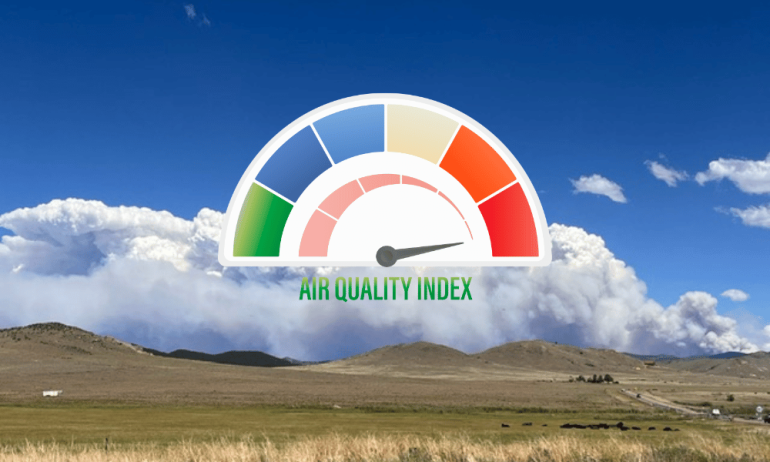
Significant rain is in the forecast for Colorado’s Western Slope, which authorities are hoping will is expecting significant rain to aid with the drought and fires in the region. As of Sunday night, the recent La Plata fire is covering 132 acres with no containment.
Overnight rains over the Weekend rain slowed its growth. The fire is located in the Pike-San Isabel National Forests near Leadville and was started by an abandoned campfire. The Dexter Point and Sunnyside day-use areas within the national forest are currently closed due to the fire.
There was no significant growth in the other five fires in the Western slope over the weekend, and all mandatory evacuations between Meeker and Rifle are officially lifted. The Lee fire is 80% contained.
While these showers bring some relief for fire containment efforts, they also come with flash-flooding risks, strong winds, and lightning.
Cell Phone School Ban
Colorado school districts have just under one year to develop guidelines for implementing a new state law to regulate cell phones in K-12 public schools.
The regulation plan won approval from state lawmakers last April, and Governor Jared Polis has since signed it into law. It gives school districts until July 1st, 2026, to decide how they’ll regulate student cell phone use during the school day.
It won’t be an issue in the Boulder Valley School District, which already has a ban on students using their phones during the entire school day, according to the Denver Post. The BVSD rules, which are among the strictest in the state, have been in effect since 2019.
But the Post says that Denver Public Schools are still weighing their options, as are Englewood schools. Some argue that an outright ban could affect parents, who would be concerned if they aren’t able to reach their kids during the school day.
The Post says that the idea of school cell phone bans is gaining momentum nationwide. Supporters cite research that shows the availability of phones and social media during school hours have a negative impact on students.
National Park Action Day
August 25th Today marks 109 years since the creation of the National Park Service.
Advocates are using the anniversary as an opportunity to raise awareness about the impacts of recent cuts to the park system. Tracy Coppola, The Colorado Senior Program Manager with the National Parks Conservation Association, says the Trump administration has already initiated the most severe cuts in the history of the park service.
“So since January alone, we’ve lost a quarter of permanent staff due to terminations, pressured buyouts and all the deferred resignations and all of the duress that the Park Service has been going through, and that’s about 4,000 employees,” added Coppola.
Coppola says you can see the impact of the cuts in some of the national parks in our region, including in the Black Canyon of the Gunnison. “So it’s unable to fill 24 of the park’s 74 positions, and all custodial staff has been terminated. So other, like higher-graded maintenance employees, are being directed away from their regular duties to perform custodial functions,” she added.
She says the administration is proposing slashing an additional 1 billion dollars from the park service budget for next year.
The National Parks Conservation Association is hosting events around the country to raise awareness and advocate for protecting national parks.