
-
 play_arrow
How one family who lost their home in the Marshall Fire has rebuilt using ‘ecoblox’ KGNU News
*Correction: This post has been edited to reflect the correct name of the neighborhood Mel Glover lives in, Sagamore.
One word to explain the community impacted by the Marshall Fire? Resilient.
KGNU’s Lily Sharp takes a look at how one family who lost their home and pets in the Marshall Fire has rebuilt using adobe-style earth blocks in Superior, Colorado.
Increased temperatures and winds across the country are making it abundantly clear that most conventional project homes are not built to withstand natural disasters, especially raging wildfires.
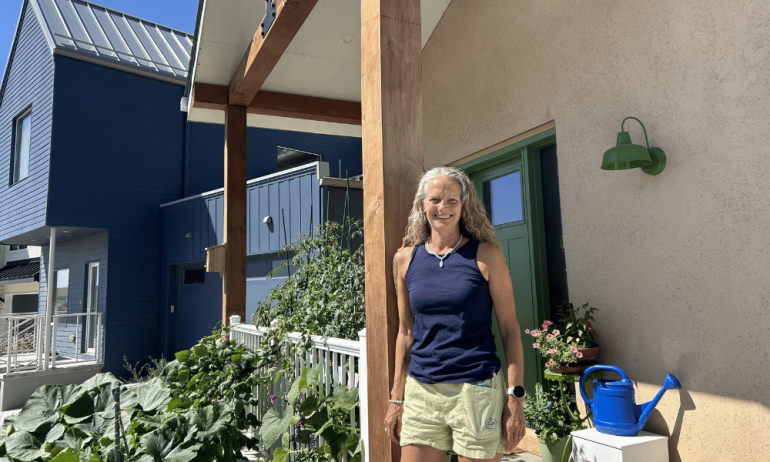
Mel Glover and her family lost their home to the Marshall Fire in December of 2021. The fire snuck into the family’s home – their Christmas tree acting as an accelerant.
Mel was stuck in her car on Highway 36. She was on the phone with her husband Matteo when the blaze entered their home. She recalls hearing their fire alarm sounding and her children screaming.
“We didn’t even get our evacuation phone call until after the house was probably burned down. We didn’t get anything,” Mel said. “And the fire hydrants weren’t working. The fire department had pulled out, and there were still people in the neighborhood.”
Matteo and the couple’s two children took shelter in the home’s mudroom, which the couple had recently redone to make the home accessible for Airbnb reservations.
“If we didn’t have that mudroom, they would be dead. They would be dead. There was nowhere to hide. There was nowhere to go. You couldn’t go outside,” Mel said.
Multiple 911 calls were made from inside the home. Dispatchers were struggling to communicate with the fire department and local police as the Marshall Fire and the Middle Fork Fire rapidly grew.
A police officer passing the neighborhood stopped and rescued the family, including their two dogs. Their cat and two guinea pigs had to be left behind as smoke filled the home.
“You lose everything. You lose, you know, your home, your safe place, all your things, your pets, your just everything. It’s almost harder to deal with than a close family death because it’s so many things all at the same time,” Mel said. “The fire was all subjects, and it’s the trauma of what you experienced. It’s, you know, your children experiencing trauma, and then it’s your neighbors and your neighbors lost and your community. There was no way that we could move back here without doing something very, very different because the houses were so poorly built.”
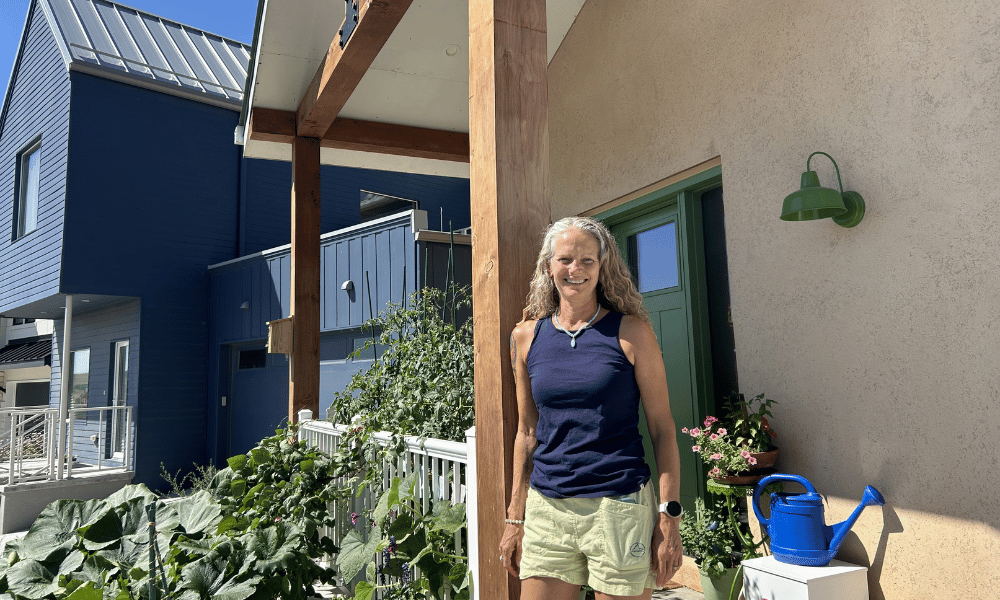
Mel and her family faced a difficult decision: sell the land their home once stood on, along with their perfect view of the Flatirons, or build back safer and stronger than ever.
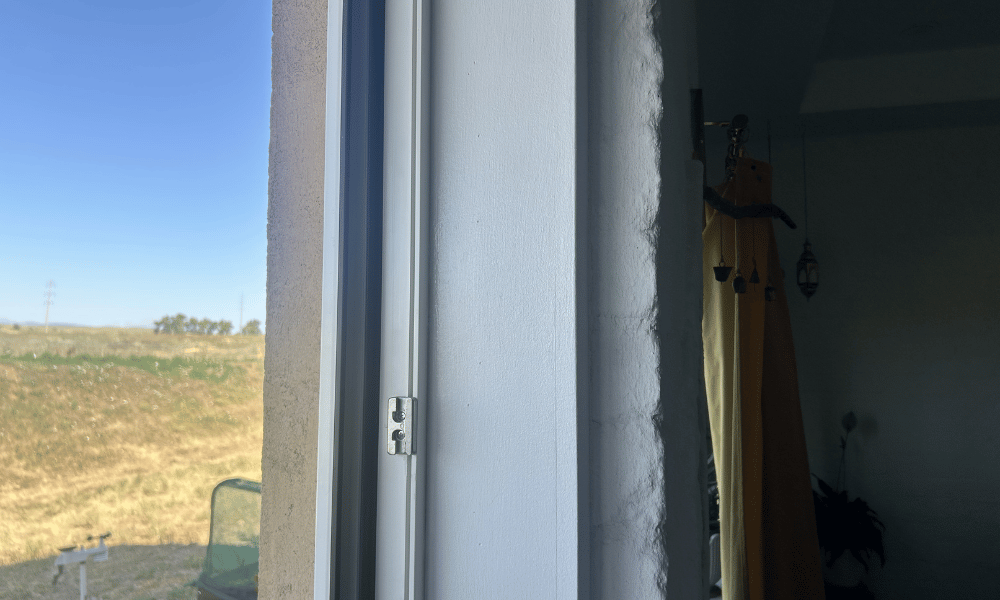
She shared, “ We wanted something that wasn’t leaking energy as well, something that was energy efficient, low carbon footprint, net zero, all of those things. And that was a big priority. And then my father passed away from cancer while I was rebuilding as well, and that had a very big effect on how I rebuilt the home because I wanted to go very low chemical, you know, no off-gassing and natural paints, natural finishes.”
In Mel and Matteo’s research, they came across many green building companies and various solutions, but none to fit all of their needs. Until one day, Mel was driving near Denver and passed a sign for Colorado Earth, a local company specializing in the manufacturing of ‘ecoblox’ and primarily residential project oversight.
Lisa Morrey is the owner and founder of Colorado Earth, which is currently rebranding to Nova Terra.
Lisa said, “ I’m making eco blocks, which is a compressed earth block. So very much kind of in the ethos alignment with adobe and cob and rammed earth. We’re all using a very similar mix design of the raw ingredients, and then just modify the material in a different way. The blocks that I make are completely non-combustible. There’s nothing that actually ignites or is flammable. So they actually get stronger when they’re fired because they, by nature, are an unfired material.”
Mel documented the entire building process on her Instagram and was interviewed by many local news outlets during construction. She says most people wonder about the cost of building an earth block home and its many benefits.
“We ended up at $281 a square foot for this home,” Mel shared. “Cost-effectively, people think it’s gonna be a lot more expensive than it is, and I think that is one of the biggest reasons why people don’t wanna build this way.”
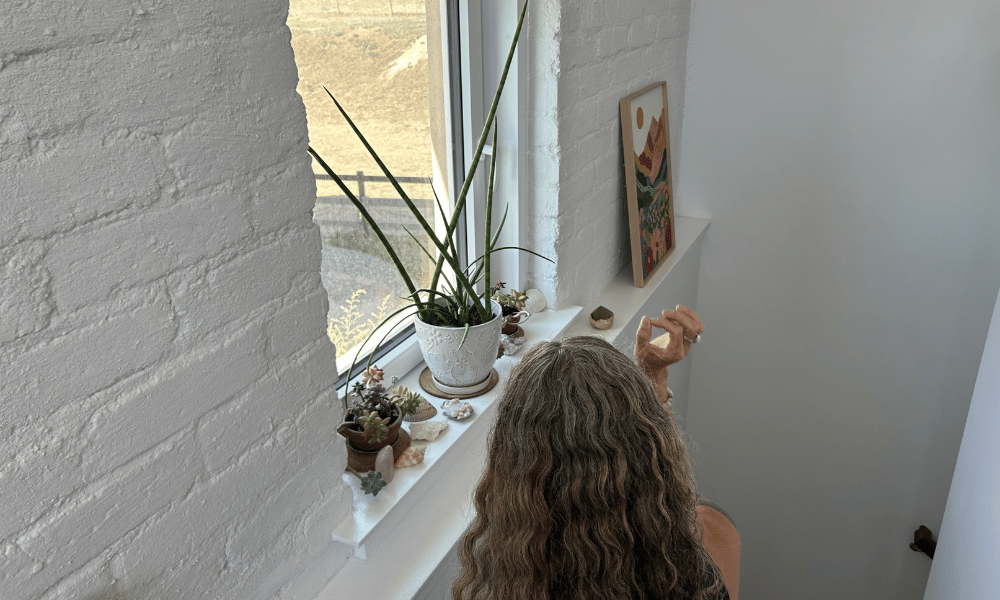
Superior’s Sagamore neighborhood rebuilt in record time, supporting one another through countless losses and challenges. Though the houses have been rebuilt and the neighborhood seems like any other from afar, the trauma of that day will linger long after. Many of Mel’s neighbors are still fighting for a safe home after extreme smoke damage.
Mel says rebuilding her home out of ecoblox gives her and her family peace of mind on windy, hot, and smoky days.
“I want people to know that there is a way, there are different methods of doing things,” she said. “You don’t have to settle. You can fight. You can stand up for yourself, and you can end up with a home that is safe or safer.”
This story aired on the Morning Magazine, KGNU’s weekday morning show featuring in-depth discussions on local news issues. Click here to listen to other episodes of the Morning Magazine.