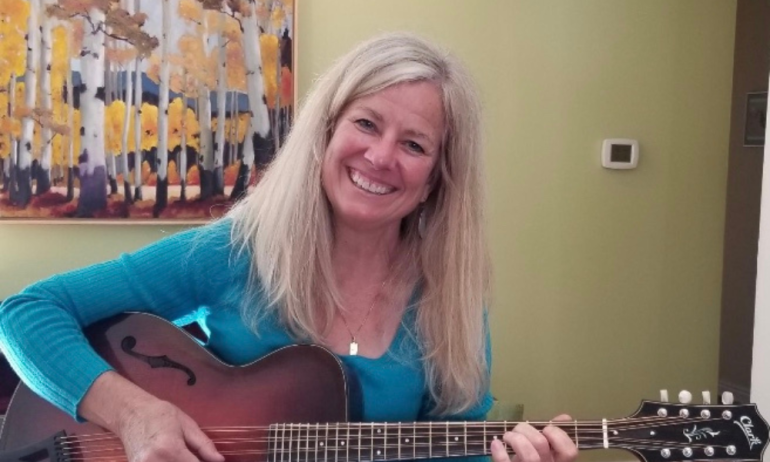


KGNU’s Musica Mundi host Doug Gertner welcomes Denver-area musician and educator Miki Saito for a conversation about her journey from Yokohama, Japan, to New York City and eventually Colorado. Trained as a classical pianist and opera singer, Saito shares how she discovered the traditional Japanese bamboo flute known as the shinobue during the pandemic and began studying the instrument with a master teacher in Japan over Zoom.
The interview features live in-studio performances on several different shinobue flutes, along with stories about Japanese musical traditions, improvisation, and the creation of her upcoming album Tales of Shinobue. Saito also discusses her teaching work, online tutorials, and mission to introduce more people to traditional Japanese music and culture.
Listen to the studio session here:
Transcript:
Doug Gertner: I want to welcome Miki Saito to KGNU Studios. Welcome.
Miki Saito: Thank you so much for having me, Doug.
Doug Gertner: I’m so glad you’re here.
Miki Saito: It’s my pleasure.
Doug Gertner: I think I want to play this in the background. That was so beautiful.
Miki Saito: Thank you.
Doug Gertner: I wonder if we could start with your origin story. Before Denver and Aurora, where do you come from, and where are you living these days? What’s your path to this studio tonight?
Miki Saito: I was born and raised in Yokohama, Japan.
Doug Gertner: Yeah.
Miki Saito: I actually started out playing piano at age four, and I really loved music.
Doug Gertner: I assume it’s common in Japan for people to start early on instruments. We think of the Suzuki method of teaching. Since that comes from Japan, was it just part of growing up that at a certain age it was time to pick up an instrument?
Miki Saito: I don’t think it’s as popular now, but back in the ’60s and ’70s, when I was growing up, it was kind of a hip thing for moms to bring their kids to piano lessons. I really loved the piano, so my mom got one for me, and that’s how I started when I was four.
Doug Gertner: Okay.
Miki Saito: By the time I was 12, I was accepted to a music school in Japan as a pianist. I spent six years there studying all kinds of music theory and performance. Then I started thinking I’d like to come to America and attend college here.
Doug Gertner: So as a teenager you were already thinking, “I’d like to go to college in the U.S.” Keep going. I’m transfixed. I love this story.
Miki Saito: In Japan, I never really felt like I fit in. I was too strange and creative. Especially back then, it was very conformist, particularly for girls.
Doug Gertner: I hear that. We traveled there last summer, and the ethos of respect sometimes seems like it could dampen self-expression.
Miki Saito: Exactly.
Doug Gertner: For an artist or musician, your desire to come to the U.S. in the ’60s and ’70s aligns with this idea that artists get to look how they want, behave how they want, and make art along the way. So did you get to go to the U.S. for college?
Miki Saito: Yes.
Doug Gertner: Oh!
Miki Saito: I graduated from high school in Japan and came to the States for college. I did all my studies here.
Doug Gertner: Where did you land?
Miki Saito: I actually started in New York City because I had a family friend there.
Doug Gertner: That fits. Tokyo, Osaka, and Kyoto are huge cities, so you landed in one of the biggest cities imaginable.
Miki Saito: Exactly. In the States, I studied piano and voice. My master’s degree ended up being in opera, so I’m actually an opera singer.
Doug Gertner: Oh my goodness. I saw in your e-signature that you’re a musician and educator, so you definitely have the credentials. At what point did the shinobue come into this?
Miki Saito: I taught voice in college for a long time.
Doug Gertner: You were a college teacher?
Miki Saito: Yes, teaching college voice.
Doug Gertner: And all this from an opera singer.
Miki Saito: Exactly. I love pop music too. I taught R&B singers, heavy metal singers, all kinds of students. Since I’m Japanese and a musician, people started asking, “Can you do Japanese music?” At first I’d play Japanese lullabies on piano or keyboard and sing them. But I always thought, “I’d really love to share traditional Japanese music with everyone.”
Then the pandemic happened. I stopped teaching in person, and suddenly I had time on my hands. I thought, “This is a great opportunity to stay home and practice like a music student again.” So at age 54, I picked up the shinobue for the first time in my life.
Doug Gertner: Just five or six years ago? That’s incredible. Did you already have one sitting around?
Miki Saito: No, I ordered one online.
Doug Gertner: Of course.
Miki Saito: Then I found a teacher in Japan through Zoom. Later I visited and met him in person. He’s a fabulous teacher from Aomori Prefecture who even played Carnegie Hall.
Doug Gertner: You found the best teacher in Japan while you were stuck here during the pandemic.
Miki Saito: Exactly. Every shinobue is different because they’re made of bamboo. They come from nature. There’s no exact standard measurement, so you order one online and whatever bamboo flute they send is the one you get.
Doug Gertner: You don’t know exactly what you’re getting. I’m not a musician, but I’m curious how the scale compares to instruments people might know.
Miki Saito: You can specify the key, but every shinobue is still unique. It’s like marrying someone without meeting them first.
Doug Gertner: It also reminds me a little of Harry Potter wand shops. Every wizard has to find the right wand, and you’ve got a whole collection of magic wands here. Could you play something for us and tell us what we’re hearing?
Miki Saito: Sure. Shinobue comes in different keys. This particular one is in G major.
Doug Gertner: I’m looking at a bamboo flute. Unlike a recorder, you blow across it like a metal flute, and it has simple finger holes.
Miki Saito: Right. This is shinobue, spelled S-H-I-N-O-B-U-E.
[Miki plays]
Miki Saito: That was improvisation. I’m actually releasing an album soon with eight tracks, and everything started as improvisation. Even “Zen Awakened,” which we heard earlier, began that way. I created the background pad with my synthesizer, then improvised over it and recorded it.
Doug Gertner: So your fully produced tracks all began as improvisation, then evolved through synthesizers and production.
Miki Saito: Exactly. The background music is all from my synthesizer, and it’s all me.
Doug Gertner: Do you have a title for the album?
Miki Saito: Tentatively, it’s called Tales of Shinobue.
Doug Gertner: Beautiful.
Miki Saito: I want people to learn about the shinobue because it’s a wonderful gateway into Japanese culture.
Doug Gertner: You fully believe people can learn this instrument.
Miki Saito: Absolutely. I actually teach it. I have a YouTube channel full of tutorials, and people send me videos saying, “This is how I sound now, thanks to your free lessons.”
Doug Gertner: Wonderful. One place to go is saitomusic.com. That’s S-A-I-T-O music.com.
Miki Saito: Yes.
Doug Gertner: People can also find you on YouTube, Spotify, Instagram, and TikTok under Breathe Bamboo.
Miki Saito: Exactly. The website also has free information about shinobue and recommendations for buying your first flute.
Doug Gertner: If I were learning, I’d definitely want you in the room helping me with finger placement.
Miki Saito: Do you want to try one? I have a clean plastic shinobue.
Doug Gertner: I appreciate the offer, but my experience with piano lessons at age four didn’t go the way yours did.
Miki Saito: Fair enough.
Doug Gertner: Could you play another one for us?
Miki Saito: Sure. This one is more bare and primitive. It’s basically just bamboo with holes drilled into it. Someone could have gone into a bamboo forest, cut it down, and made this flute. That’s really how the instrument started.
Doug Gertner: Once again, Miki Saito on a different shinobue bamboo flute.
[Miki plays]
Doug Gertner: Beautiful. Is there anywhere people can hear you perform live?
Miki Saito: I’ve played locally, but right now I’m very focused on finishing the album.
Doug Gertner: Do you have a target release date?
Miki Saito: Hopefully next month or April.
Doug Gertner: We’ll definitely get a copy at KGNU and put it into heavy rotation. We should also introduce you to Hiroya Tsukamoto when he comes through town. He’s a fingerstyle guitarist originally from Kyoto.
Miki Saito: I’d love to meet him.
Doug Gertner: Before we go, anything else you’d like to play?
Miki Saito: This might be the biggest flute I brought. The bigger the flute, the lower and deeper the sound.
Doug Gertner: It’s almost two feet long.
Miki Saito: Exactly.
[Miki plays]
Doug Gertner: Beautiful. That’s the low end of the shinobue, the traditional Japanese bamboo flute, played by Miki Saito, our guest here in the Denver studio today. A local musician whose journey stretches from Yokohama through New York City and now to the Denver area.
Again, saitomusic.com is the place to start. Thank you so much for coming by today.
Miki Saito: Thank you so much, Doug.
Doug Gertner: I’m glad Musica Mundi could have you in. As always, we’re about to pivot hard musically — from meditative bamboo flute music to psychedelic African music from the ’70s with Saxon Lee and The Shadows International.
You’re tuned to KGNU’s Musica Mundi. Miki, thank you so much.
Miki Saito: Thank you so much, Doug.