
-
play_arrow
In a shifting outdoor economy, businesses consider how — or if — to adapt KGNU News
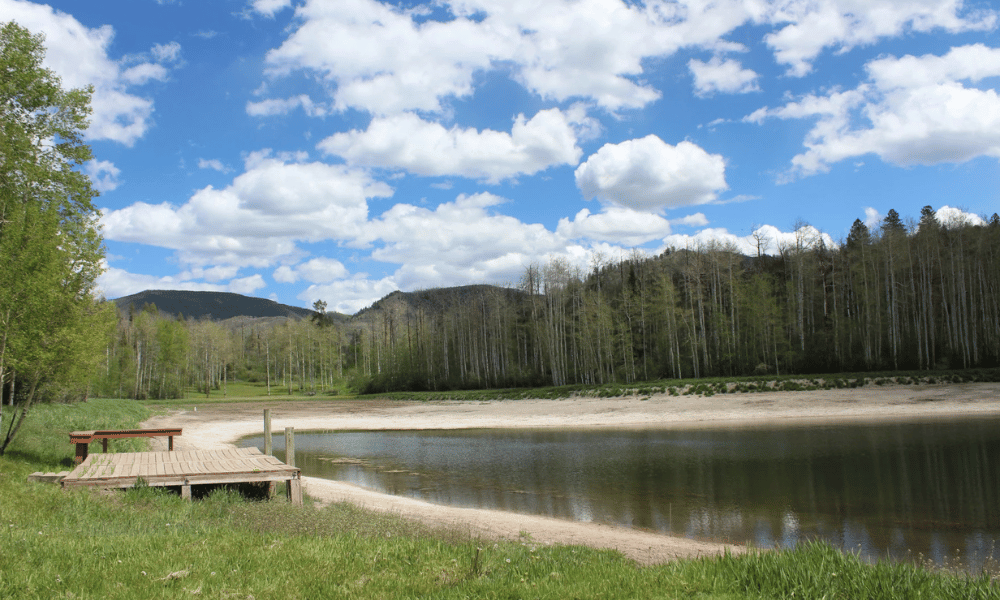
Coulter Lake Guest Ranch is a cozy collection of green-trimmed red cabins at the edge of a small lake north of Rifle. It’s been through a lot in its 125 years, but last winter was unique.
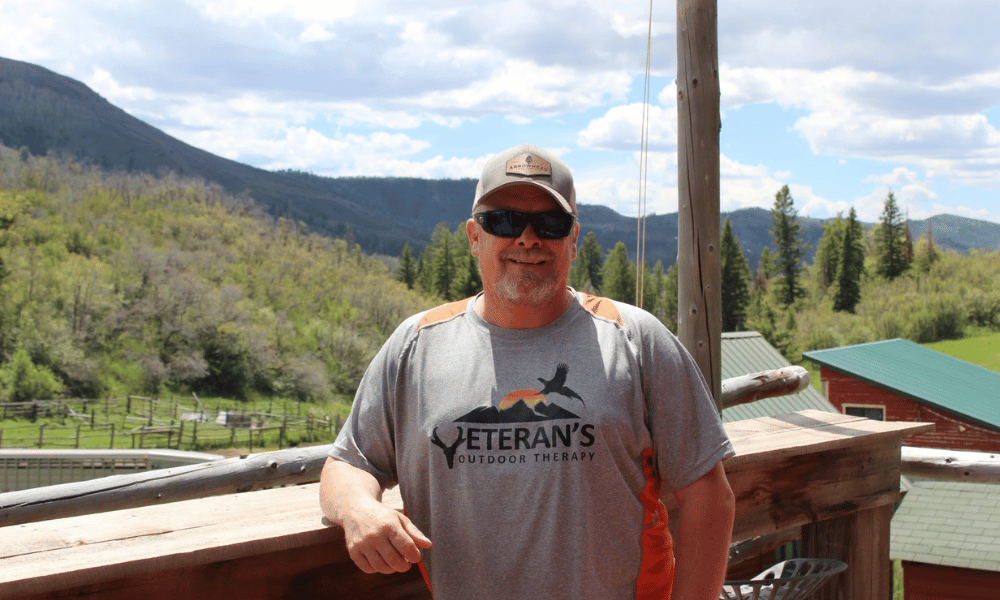
“I’ve lived here my entire life,” said Forest Keith, the guest ranch’s owner and everyman. “Fifty-two years, and that’s the worst winter that I can remember.”
At the ranch, Keith and his wife cook dinner, make beds, and take guests out on horseback or snowmobile rides, depending on the season.
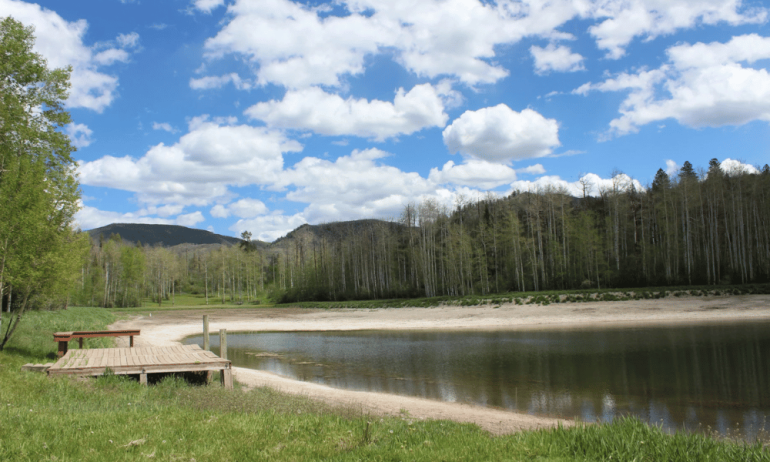
But in late May, the dock hung over empty space. The lake’s surface was surrounded by sand and rock that’s typically underwater this time of year.
Keith said the ranch lost as much as 90% of its typical business this winter.
“Normally, we’ll do a dozen to 15 groups of snowmobilers,” he said. “This year, we did one. … Everybody I know is affected somehow, whether it be you didn’t get your skiing in this year, or you’re financially dependent on tourism or the weather.”
Keith has seen multiple cancellations this summer too, because the lake’s water levels are so low.
And he’s been fielding concerns from couples who want to book the guest ranch for their weddings.
“The brides are looking for a lakeside wedding, and it’s kind of tough when the lake is a quarter of what it normally is,” he said.
Other potential guests have questions about the looming El Niño and the monsoon rain it might bring.
It doesn’t put Keith off — at least not yet.
“I don’t think the people in this sort of business are gonna be swayed by just one year,” Keith said, referring to the low-snow winter. “If we had five years of this, 10 years of this, or something, that would be a different thing altogether.”
Businesses of all sizes in the region have to grapple with if — or how — to adapt their operations as the climate shifts.
The region’s largest employer, Aspen One, is the parent company of Aspen Skiing Company. More than a quarter of the jobs in Pitkin County fall under its umbrella.
The resorts are a big draw for tourists, and visitors to the upper valley generate $2 billion in economic activity.
Aspen One and SkiCo leadership told the Aspen City Council in a public meeting in June that this winter was a setback, but they fared better than other Colorado ski resorts. For much of the winter, the company displayed a banner on its website touting that Aspen Snowmass had a higher percentage of terrain open than any other resort in the state.
But ski visitation still dropped 21.5% in Aspen last winter compared to the previous ski season, slightly better than the statewide average of 24%. This downward trajectory is part of a three-year decline in skier visits at Aspen Snowmass’s four mountains, leadership said.
Aspen One CEO Dave Tanner told Snowmass Village’s town council on June 15 that the trend is concerning for the ski business beyond this past winter.
“We’re managing in the very short term, but the trend lines are not good,” he said.
Tanner and his colleagues spoke to pressures on the industry from all sides: rising costs, a dwindling skier base, traffic and housing issues for employees and visitors, and shrinking winters due to climate change.
Aspen Skiing Company CEO Geoff Buchheister said the lack of natural snowfall has a significant impact on the industry.
“Obviously, after closing Buttermilk twice this year and feeling like I almost needed to close Snowmass on Christmas Day, it’s a real situation for us,” he said.
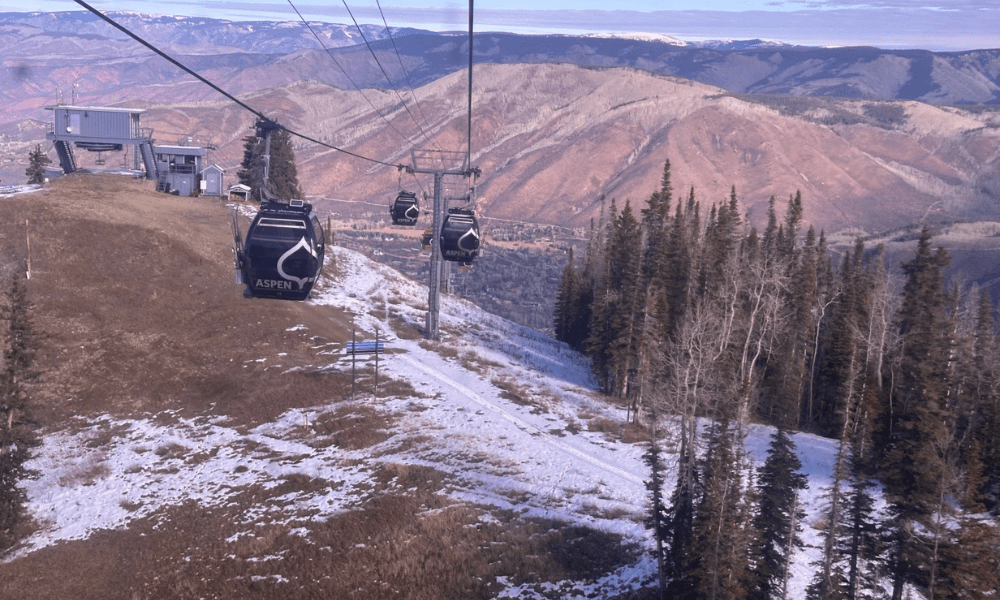
SkiCo is investing $6 million in snowmaking this year, Buchheister told Snowmass’ council. But Buchheister said snowmaking only works if temperatures dip below freezing.
In addition to the millions in snowmaking and other investments around Aspen, the company is also expanding outside the Roaring Fork Valley. Aspen One is building luxury hotels under its hospitality arm in places like New York City and Charleston, South Carolina. It’s also expanding its Ventures arm, starting with its apparel brand Aspen Collection.
“The only way to make the investment in these mountains and the staffing levels and the support for the communities and the employees we have is to actually grow outside the valley,” Tanner said during the meeting with Snowmass Village’s Town Council.
Aspen One and SkiCo leadership said this evolution is necessary — skiing can’t support the business on its own anymore.
“We’re trying to keep it in the DNA, but the alternative is this thing shrivels and dies over 10 to 15 years,” Tanner said.
Aspen One has declined to discuss details of the financial impact of last winter or do a follow-up interview for this story about its recent presentations to local governments.
Aspen One’s strategy of diversification is less accessible to many small businesses in the region, but many of them see a need for change too.
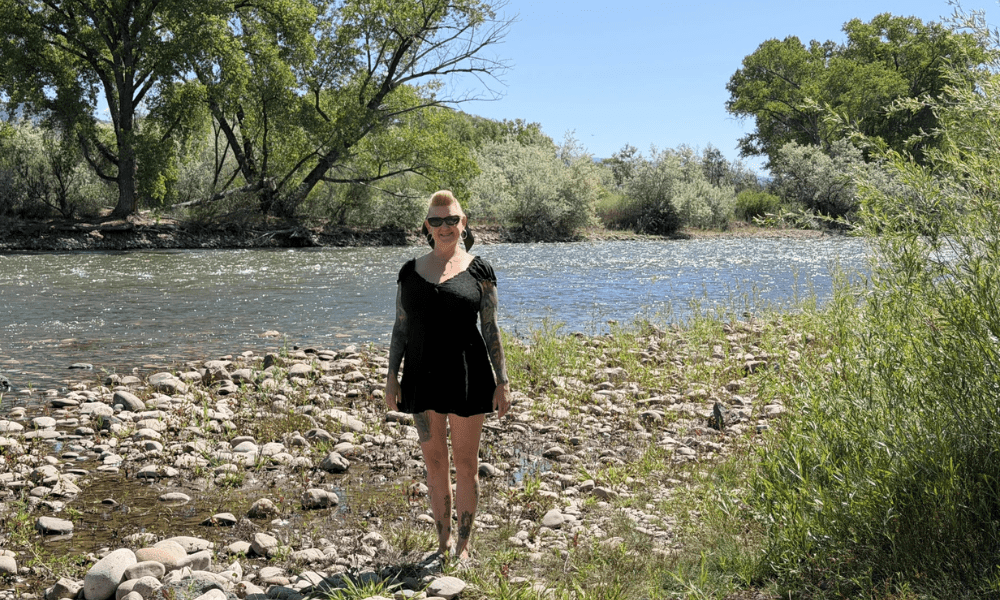
At the boat ramp in Silt in early June, Deirdra Harcourt flipped over flat stones along the edge of the Colorado River, looking for the carcasses of different species of flies.
“The mayflies came really early; a lot of species were really confused this season,” she said.
Harcourt is a fly fishing guide — the carcasses tell her what fish are eating and what fishing flies she should use. But her main business is River Shuttles.
“I transport vehicles for fly fishing guides, rafters, and kayakers on the Roaring Fork and Colorado River,” Harcourt said. “So, when they put their boat in the water, I take their truck and trailer to their destination. I’ve been doing this since 1999.”
Harcourt has a spiritual connection to the Colorado — “sacred waters,” she calls it, but her business also depends on the river.
“If there’s no snow, then there’s no water,” she said. “And if there’s no water, then there’s no fishing. And if there’s no fishing, then there’s no economy, so all of that’s pretty basic math.”
The parking lot of the boat ramp was empty. Harcourt said there’d typically 10 times as many cars and boat trailers this time of year.
Most of Harcourt’s income comes from her shuttle work — nearly every day from Easter to Thanksgiving.
“Without the financial security of knowing that I’m going to have 15, 20 shuttles a day, I don’t know what that’s going to look like.”
Harcourt picks up other jobs in the winter, but her life revolves around the river in the summer. It’s hard to think about diversifying without leaving her business behind, but she’s also concerned about the impact of climate change on the river she loves.
“We’ve had winters that were low snow impact, but then it came back the next year, or the previous year was okay,” she said. “We’ve been on an extended drought for a really long time.”
After the record-breaking winter, she sees this as kind of a reckoning point.
The outdoor world — the cycle of summer and winter — is shifting. And maybe, she said, we shouldn’t just keep pushing through.
“It doesn’t mean we can’t be out there,” she said. “We can still enjoy. There’s beautiful birds to look at. It’s a beautiful time, but I think we need to renegotiate our relationship with the water.”
Harcourt said she’s not exactly sure what it looks like on a broad scale. She’s grappling with it on a personal and business level.
“There’s much bigger cycles that happen that I can’t see in my lifetime, so there’s always hope,” she said. “I’m not super gloom, gloom, doom, but I want to try to find the silver lining. I’m just not sure what that is right now.”
Forest Keith, the guest ranch owner, is a little more optimistic. Even after a devastating season last winter, he’s not worried.
“I just don’t see it repeating, and if it does, then I think we’re all gonna find something else to have fun doing in the mountains,” he said.
He runs another business, Flat Tops Adventures, that’s less tied to snow and water, leading hunting tours and other outdoor excursions.
But he said owning and operating the ranch is a dream job — the peace of being up in the mountains, the proximity to hunting, fishing and other outdoor sports — even if his livelihood is at the mercy of Mother Nature.
This story was reported by Sage Smiley for Aspen Public Radio. This story was shared with KGNU via Rocky Mountain Community Radio, a network of public media stations in Colorado, Wyoming, Utah, and New Mexico, including Aspen Public Radio.
This story aired on The Morning Magazine, KGNU’s weekday morning show featuring local news and community members. Click here to listen to other episodes of The Morning Magazine.
So what is optics? Here’s FRCC student Sen Castro to explain. So Optics are kind of used in a lot of different, um, fields. There’s a lot of them in health, um, military. There’s a lot of them in, uh, like what, what, what other fields are there? aerospace is a big one. Um, in your phones, cameras, and, uh, entertainment, all, all sorts of things. Basically anything that uses a lens is optics, and it’s pretty important to have precision ones for a lot of the things we do. Sen is 23 years old and from Texas. He’s going into his second year of the Associate of Applied Science in Optics, Quantum, and Laser Technology at FRCC and I love it. Super fun. so yeah, This, this machine is- Basically a fancy ruler. The machine he’s pointing to is an interferometer, which splits a beam of light in two and compares how the waves overlap. it, it uses, it uses light, um, like very precise light to reflect off of reflective optics and uses the difference in the reflections to the- Could It uses the difference in the reflection to the wavelength scale, which is in the scale of like nanometers. Super, super tiny amounts. And it uses those tiny differences to be able to measure the surface to, like the smallest scale of like five, two nanometers or so. Sen graduated from Texas A&M with a bachelor’s in electrical engineering and I moved to Colorado after my partner got a job at CU Boulder, um, in one of the research labs. And I was kind of floating around for a bit. I didn’t really have a easy time finding a job. Not a lot of people wanna hire straight-out-the-gate graduates anymore, especially if they didn’t have any sort of specialized internship pro- knowledge or experience. I got in and immediately s- loved it. It was fantastic. I loved the hands-on learning experience of it. And the teachers especially are very… It’s very personal. They’re very small classrooms. You get to know everybody pretty well, and that’s a very nice environment to be in for learning. Sen says the bachelor’s program he went to was huge, but because of small class sizes at FRCC, he gets a lot of advice and help that he normally wouldn’t get otherwise. but but at this school, I feel like I was able to get a lot more in a lot less time because of how small and close-knit everyone is. Yeah, it actually is pretty diverse. There’s a decent number of just got out of high school, and then there’s also a decent number of I’m, I’m been doing a job for a while and decided to take a change. So there’s, there was a couple of people who were maybe in their 30s, 40s, um, but we were all there learning the same thing, so it, Chris McGillivray is the Academic Dean for the School of Manufacturing, Skilled Trades, and Applied Technology. We look at the talent pipeline report from 2025, and we know optics, fiber optics, quantum is, um, in demand. Colorado is leading the nation in this effort, and we pay attention to the salary placements. We wanna make sure that we’re helping our students not just get jobs, but that these are jobs that pay above poverty and are sustainable wages, and that’s something that we’re really proud of, particularly in our optics, laser, and technology program, One thing Front Range Community College is especially proud of is their partnership with the rock band 📍 Metallica. Through their foundation, All Within My Hands, they partner with the American Association of Community Colleges to offer the Metallica Scholars Initiative and Metallica, the rock band, I didn’t realize it, but they are really into skilled trades . Um, and so the biggest thing is when you are partnering with the largest, most recognizable rock band ever, that helps you. And so we’ve been able to leverage that band, particularly around increasing the adult learners into our program. Here’s Sen again i’m also really grateful for the Metallica scholarship program specifically because I was very broke starting out in this program. I was having to ask my parents to help me pay for rent, and it was not going well. Sun received about $2,000 from the Metallica program and that was incredible. Like I, it, it really changed like the ability of me to actually go to school because otherwise it would’ve been way too expensive. I feel like there’s a lot of opportunities for moving up. In fact, he’s already been hired by Particle Measuring Systems. It’s a company that develops technology for monitoring contaminants like in the pharmaceutical and semiconductor industries. I actually started in, an assembly position, and I’ve already moved up to the production technician line, so it’s a pretty nice, uh, company, and I, I expect to stay there for a good while. I’m really grateful to have gotten into this program, i- just in general. I feel like before this, I was very lost. I didn’t know where I was gonna end up in life, and coming to join this program really got me that sense of community and the help from others that I wouldn’t have gotten otherwise. 📍 For KGNU, I’m Malia Walker So what is optics? Here’s FRCC student Sen Castro to explain.
So Optics are kind of used in a lot of different, um, fields.
There’s a lot of them in health, um, military. There’s a lot of them in, uh, like what, what, what other fields are there? aerospace is a big one. Um, in your phones, cameras, and, uh, entertainment, all, all sorts of things. Basically anything that uses a lens is optics, and it’s pretty important to have precision ones for a lot of the things we do.
Sen is 23 years old and from Texas. He’s going into his second year of the Associate of Applied Science in Optics, Quantum, and Laser Technology at FRCC
and I love it. Super fun.
so yeah, This, this machine is- Basically a fancy ruler.
The machine he’s pointing to is an interferometer, which splits a beam of light in two and compares how the waves overlap.
it, it uses, it uses light, um, like very precise light to reflect off of reflective optics and uses the difference in the reflections to the- Could
It uses the difference in the reflection to the wavelength scale, which is in the scale of like nanometers. Super, super tiny amounts. And it uses those tiny differences to be able to measure the surface to, like the smallest scale of like five, two nanometers or so.
Sen graduated from Texas A&M with a bachelor’s in electrical engineering
and I moved to Colorado after my partner got a job at CU Boulder, um, in one of the research labs. And I was kind of floating around for a bit.
I didn’t really have a easy time finding a job. Not a lot of people wanna hire straight-out-the-gate graduates anymore, especially if they didn’t have any sort of specialized internship pro- knowledge or experience. I got in and immediately s- loved it. It was fantastic. I loved the hands-on learning experience of it. And the teachers especially are very… It’s very personal. They’re very small classrooms. You get to know everybody pretty well, and that’s a very nice environment to be in for learning.
Sen says the bachelor’s program he went to was huge, but because of small class sizes at FRCC, he gets a lot of advice and help that he normally wouldn’t get otherwise.
but but at this school, I feel like I was able to get a lot more in a lot less time because of how small and close-knit everyone is.
Yeah, it actually is pretty diverse. There’s a decent number of just got out of high school, and then there’s also a decent number of I’m, I’m been doing a job for a while and decided to take a change. So there’s, there was a couple of people who were maybe in their 30s, 40s, um, but we were all there learning the same thing, so it,
Chris McGillivray is the Academic Dean for the School of Manufacturing, Skilled Trades, and Applied Technology.
We look at the talent pipeline report from 2025, and we know optics, fiber optics, quantum is, um, in demand. Colorado is leading the nation in this effort, and we pay attention to the salary placements.
We wanna make sure that we’re helping our students not just get jobs, but that these are jobs that pay above poverty and are sustainable wages, and that’s something that we’re really proud of, particularly in our optics, laser, and technology program,
One thing Front Range Community College is especially proud of is their partnership with the rock band 📍 Metallica.
Through their foundation, All Within My Hands, they partner with the American Association of Community Colleges to offer the Metallica Scholars Initiative
and Metallica, the rock band, I didn’t realize it, but they are really into skilled trades
.
Um, and so the biggest thing is when you are partnering with the largest, most recognizable rock band ever, that helps you. And so we’ve been able to leverage that band, particularly around increasing the adult learners into our program.
Here’s Sen again
i’m also really grateful for the Metallica scholarship program specifically because I was very broke starting out in this program.
I was having to ask my parents to help me pay for rent, and it was not going well.
Sun received about $2,000 from the Metallica program
and that was incredible. Like I, it, it really changed like the ability of me to actually go to school because otherwise it would’ve been way too expensive.
I feel like there’s a lot of opportunities for moving up.
In fact, he’s already been hired by Particle Measuring Systems. It’s a company that develops technology for monitoring contaminants like in the pharmaceutical and semiconductor industries.
I actually started in, an assembly position, and I’ve already moved up to the production technician line, so it’s a pretty nice, uh, company, and I, I expect to stay there for a good while.
I’m really grateful to have gotten into this program, i- just in general. I feel like before this, I was very lost. I didn’t know where I was gonna end up in life, and coming to join this program really got me that sense of community and the help from others that I wouldn’t have gotten otherwise. 📍 For KGNU, I’m Malia Walker So what is optics? Here’s FRCC student Sen Castro to explain. So Optics are kind of used in a lot of different, um, fields. There’s a lot of them in health, um, military. There’s a lot of them in, uh, like what, what, what other fields are there? aerospace is a big one. Um, in your phones, cameras, and, uh, entertainment, all, all sorts of things. Basically anything that uses a lens is optics, and it’s pretty important to have precision ones for a lot of the things we do. Sen is 23 years old and from Texas. He’s going into his second year of the Associate of Applied Science in Optics, Quantum, and Laser Technology at FRCC and I love it. Super fun. so yeah, This, this machine is- Basically a fancy ruler. The machine he’s pointing to is an interferometer, which splits a beam of light in two and compares how the waves overlap. it, it uses, it uses light, um, like very precise light to reflect off of reflective optics and uses the difference in the reflections to the- Could It uses the difference in the reflection to the wavelength scale, which is in the scale of like nanometers. Super, super tiny amounts. And it uses those tiny differences to be able to measure the surface to, like the smallest scale of like five, two nanometers or so. Sen graduated from Texas A&M with a bachelor’s in electrical engineering and I moved to Colorado after my partner got a job at CU Boulder, um, in one of the research labs. And I was kind of floating around for a bit. I didn’t really have a easy time finding a job. Not a lot of people wanna hire straight-out-the-gate graduates anymore, especially if they didn’t have any sort of specialized internship pro- knowledge or experience. I got in and immediately s- loved it. It was fantastic. I loved the hands-on learning experience of it. And the teachers especially are very… It’s very personal. They’re very small classrooms. You get to know everybody pretty well, and that’s a very nice environment to be in for learning. Sen says the bachelor’s program he went to was huge, but because of small class sizes at FRCC, he gets a lot of advice and help that he normally wouldn’t get otherwise. but but at this school, I feel like I was able to get a lot more in a lot less time because of how small and close-knit everyone is. Yeah, it actually is pretty diverse. There’s a decent number of just got out of high school, and then there’s also a decent number of I’m, I’m been doing a job for a while and decided to take a change. So there’s, there was a couple of people who were maybe in their 30s, 40s, um, but we were all there learning the same thing, so it, Chris McGillivray is the Academic Dean for the School of Manufacturing, Skilled Trades, and Applied Technology. We look at the talent pipeline report from 2025, and we know optics, fiber optics, quantum is, um, in demand. Colorado is leading the nation in this effort, and we pay attention to the salary placements. We wanna make sure that we’re helping our students not just get jobs, but that these are jobs that pay above poverty and are sustainable wages, and that’s something that we’re really proud of, particularly in our optics, laser, and technology program, One thing Front Range Community College is especially proud of is their partnership with the rock band 📍 Metallica. Through their foundation, All Within My Hands, they partner with the American Association of Community Colleges to offer the Metallica Scholars Initiative and Metallica, the rock band, I didn’t realize it, but they are really into skilled trades . Um, and so the biggest thing is when you are partnering with the largest, most recognizable rock band ever, that helps you. And so we’ve been able to leverage that band, particularly around increasing the adult learners into our program. Here’s Sen again i’m also really grateful for the Metallica scholarship program specifically because I was very broke starting out in this program. I was having to ask my parents to help me pay for rent, and it was not going well. Sun received about $2,000 from the Metallica program and that was incredible. Like I, it, it really changed like the ability of me to actually go to school because otherwise it would’ve been way too expensive. I feel like there’s a lot of opportunities for moving up. In fact, he’s already been hired by Particle Measuring Systems. It’s a company that develops technology for monitoring contaminants like in the pharmaceutical and semiconductor industries. I actually started in, an assembly position, and I’ve already moved up to the production technician line, so it’s a pretty nice, uh, company, and I, I expect to stay there for a good while. I’m really grateful to have gotten into this program, i- just in general. I feel like before this, I was very lost. I didn’t know where I was gonna end up in life, and coming to join this program really got me that sense of community and the help from others that I wouldn’t have gotten otherwise. 📍 For KGNU, I’m Malia Walker