
-
 play_arrow
Here’s what to know about fishing while Colorado is in drought KGNU News
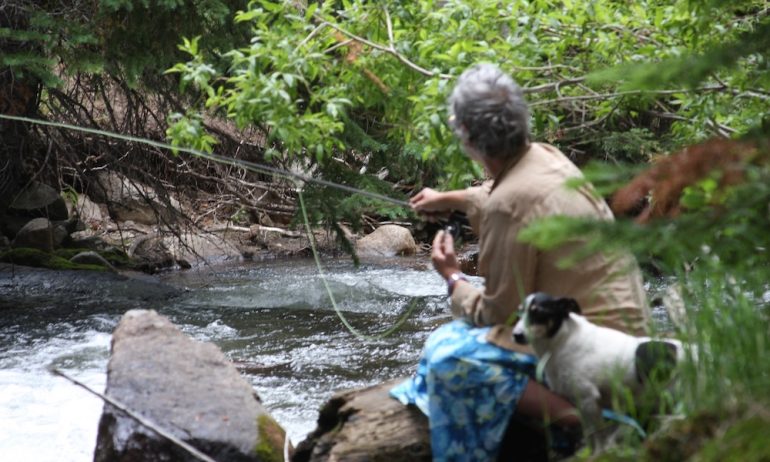
Widespread drought conditions in Colorado this year mean low streamflows, something which affects the state’s fisheries. Colorado Parks and Wildlife (CPW) reports that angling brings in over $1 billion a year in the state. They’re in charge of regulating fishing in 6,000 miles of Colorado streams and over 1,300 lakes and reservoirs.
To find out more about how CPW is thinking about fisheries and fishing regulations amidst the drought, KGNU’s Joanne Cole spoke to Kara Van Hoose, Public Information Officer with CPW, to ask how the state plans to educate locals and tourists alike about preserving Colorado’s fisheries during drough, and whether it will implement fishing restrictions.
“That’s a common question that a lot of people who enjoy fishing are having, especially with this year. The short answer is we don’t know,” said Van Hoose.
She said precipitation and water levels are looking slightly better than was originally predicted. “It’s not gonna pull us out of the drought, but it helps us be in a better position than we thought we were going to be in. So we’re going to take fishing closures and any sort of restrictions there kind of on a week-by-week or a month-by-month basis, and it’s going to be something that’s going to be specific to each water body,” said Van Hoose.
There has never been a statewide mandatory fishing closure in Colorado. But there have been some drought-related fishing closures. “But no, we’re kind of in uncharted territory now,” she said.
CPW has joined Colorado’s drought task force, where it will convene with the Department of Natural Resources, Colorado Department of Agriculture, the Department of Local Affairs, and the Division of Homeland Security and Emergency Management. The task force’s webpage says it will “meet monthly to help the state better understand and elevate the local, regional, and sector-specific impacts and complexities of worsening drought conditions.”
Cole also spoke to Kirk Klancke is President of the Colorado River Headwaters chapter of Trout Unlimited. He lives in Fraser, Colorado , and has dealt with water issues on the Fraser River for three decades.
“It is education that saves rivers,” said Klancke. He said the Headwaters chapter will invest thousands of dollars in trying to educate locals and visitors about fishing during a drought.
With low water levels, stream temperatures are extra vulnerable to high air temperatures. “So we really worry we’re gonna see stream temperatures higher than we’ve ever seen, which is gonna make it really hard on the trout.” Trout can suffocate in warm stream temperatures.
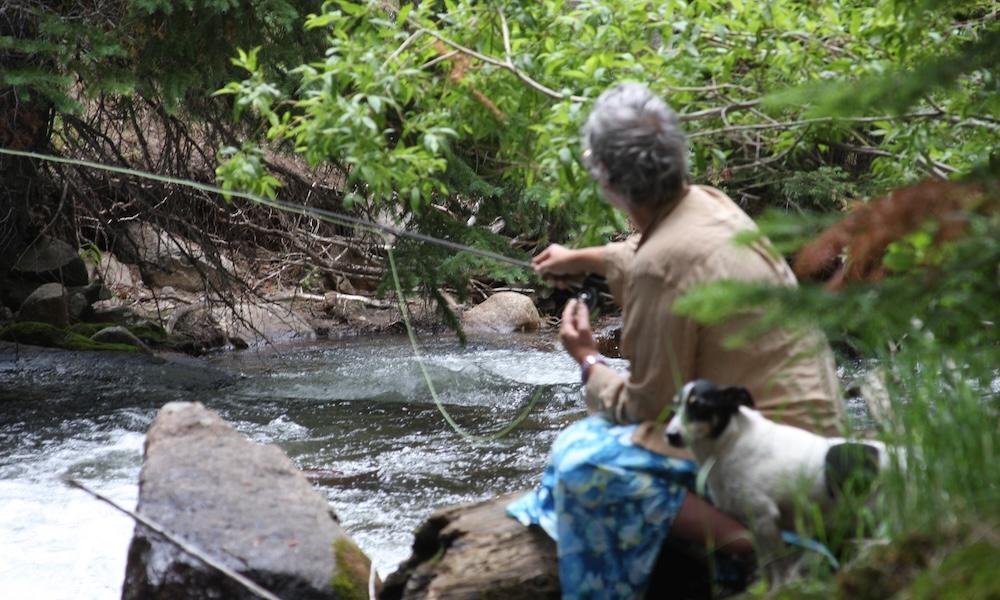
“I think it’s better if we leave them alone,” said Klancke. If you do still fish and catch and release, said Klancke, use a thermometer, and quit fishing at when the water temperature rises to 68°F.
“We’re trying to convince everybody to fish with a thermometer, and as soon as it hits 68, walk away from the river. Even if you came all the way from the Midwest to fish,” Klancke said.
His main message? “All the fishermen out there, be kind to your fishery, because we need it for generations to come.”
This story aired on the Morning Magazine, KGNU’s weekday morning show featuring in-depth discussions on local news issues. Click here to listen to other episodes of the Morning Magazine.