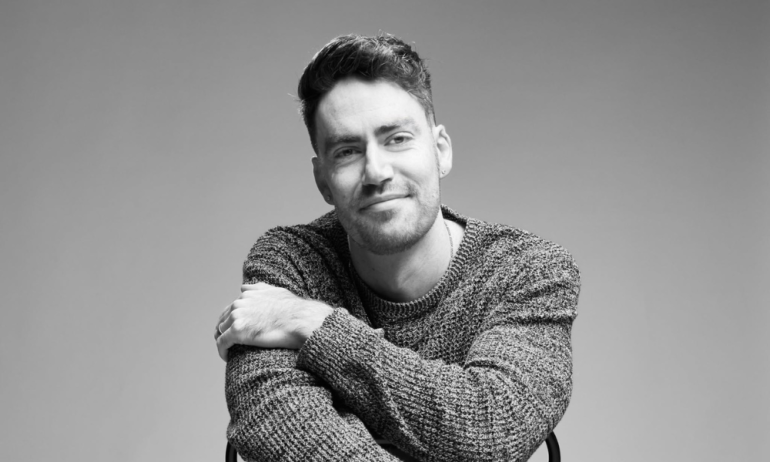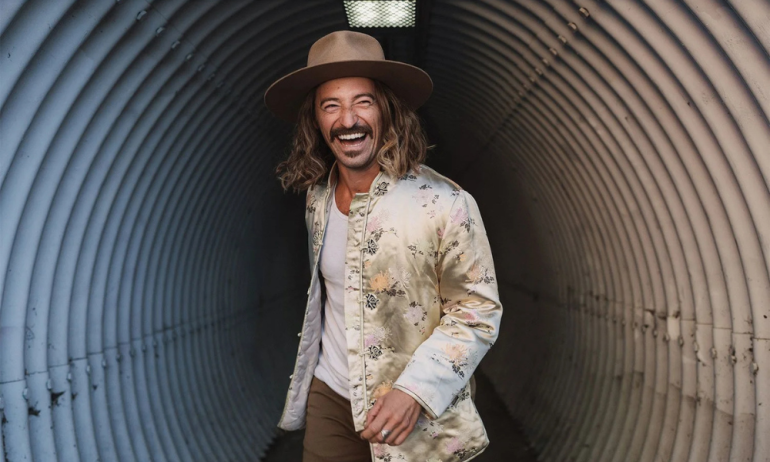

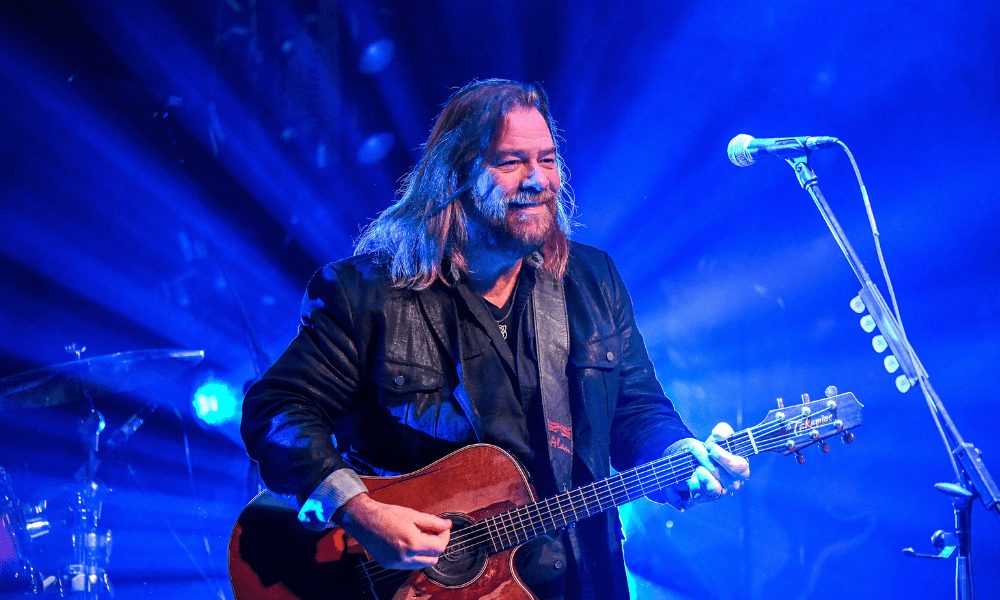
KGNU’s Karl Kumli sat down with Canadian singer-songwriter Alan Doyle ahead of his Boulder Theater performance to talk about his latest tour, life after Great Big Sea, and the creative freedom he’s found as a solo artist. Doyle reflects on growing up in a musical family in Newfoundland, embracing artistic risk later in life, and why live music should always contain something unique that “only happens tonight.” The conversation also touches on touring through Colorado, the enduring connection between Canadian and American audiences, and, naturally, a little hockey talk along the way. (Air Date 5/6/26)
Listen to the interview here:
Transcript:
Karl Kumli: Well, mad props to Adam for putting us together. That’s very much appreciated, and he did a great job for you. Amazing. I’m anxious to hear, as a longtime Great Big Sea fan, you being the fountain of affection and instrument of joy personified, tell us about what people who know you through the GBS days and haven’t seen you since then should expect on this tour.
Alan Doyle: It’s a great review of my musical life so far, to be honest. There’s a lot of Newfoundland traditional music, and then a bunch of the songs that Great Big Sea recorded, including some of those Newfoundland traditional ones and some of our own songs that me and Sean and Bob and Darrell did.
Then some of the songs from my own catalog, and of course, a few songs from the brand-new record that we have out. So it’s a really great fun night. We’ve been testing it out. We did a whole great Canadian run across the country, and we’ve done a few shows here in the US already, and what fun we’re having. It’s absolutely fantastic.
Karl Kumli: You’ve got a big, long tour. You are up and down the Northeast coast. You’re out to Michigan and Minnesota and Wisconsin before you show up in the Rocky Mountains on your way, and you’re playing the famous Troubadour in West Hollywood. Is that an exciting venue for you?
Alan Doyle: It’s legendary, of course, in every kind of music. So much of the folk music revival of the ’70s went on there, and then it became famous in the glam rock world. It’s just one of those legendary places.
I know I played there once with Great Big Sea probably somewhere in the neighborhood of 20 years ago. It might even be 21 or 22 years ago. It’s one of those boxes that you check if you play in a band for a living. You just want to get there.
In all honesty, and I’m not just saying it, it was like getting to Boulder. The first time I went with Great Big Sea, Boulder was like a mecca. Because I’m from the ocean, the chance to get to the mountains, to go to Alberta or Colorado, was like going to the moon. It was only something I ever saw on television. I had no experience with it.
I remember when we got to go to Denver and Fort Collins and Boulder and Breckenridge and a few other places. Man, I just love it. I love getting any chance to go to Colorado, and it feels like I’m still in the game. I still get the chance to do it.
Karl Kumli: Well, we are excited to have you at a show on May 10th, Mother’s Day evening in Boulder. Hopefully lots of people will be bringing their moms and grandmas and the other significant women in their life.
Alan Doyle: It’s a great mom show. It is. We do well for the moms, I’ll tell you right now.
Karl Kumli: Perfect. Tell us a little bit about your backing band on this tour.
Alan Doyle: Same gang that’s been with me since day one. Chris, of course, from Great Big Sea has been playing drums with us. A bunch of the Great Big Sea gang and my team are still with us. Then we have the mighty Kendall Carson playing violin, who people will recognize from playing with many bands. She’s been with us forever.
Cory Tetro plays guitar, both acoustic and electric. Todd Lumley plays piano and accordions. Then it’s all rounded out with Shahab on bass guitar. It makes for a band that can play almost any kind of music.
We take people through quite a range. We do some traditional Newfoundland music and all the Great Big Sea songs, but some of my records lean really rock and roll, some lean really country, and others are kind of singer-songwriter style. It’s a real variety night and a real stretch for the band, but they’re up for it.
Karl Kumli: Do you feel like your own musical path is broadening out? Are there roots and branches that you’re exploring now that you haven’t touched before?
Alan Doyle: Oh, yes. One of the cool things about being a solo artist is that you’re not writing songs for a band anymore. With Great Big Sea, we were always trying to come up with songs that suited the skill sets of the guys in the band, and that’s totally reasonable.
But when you’re a solo artist, you can just dream it up. You can say, “I’d like to do a torchy ballad song, just me and a piano,” and you can do it. Or a song that lends itself toward musical theater. It’s a total open book and a fresh palette every time, and that’s one of the most fun things about it for me.
Karl Kumli: That is something I never think of with an artist like yourself who has such a catalog and such a history and so much identification with one group. When you decide to make that change and be on your own, that’s got to be a little bit terrifying, but also creatively really inspiring.
Alan Doyle: That’s exactly the way I would define it. In one respect, there’s that great comfort of a mothership where you do these things and you do them really well, and you know you can count on them. If you’re not careful, you could fall into the habit of only doing those things because it works and because people love it.
Personally, the thing that I love doing, especially as I get a little bit older, is doing stuff I don’t know how to do. I love being terrified when you start a project or a song or a play or a musical or a book. Starting something where I have no idea if I can do it or not—I love that.
Some of the songs and projects I’ve been involved in lately are so outside the skill set I would have had even 12 years ago. It’s a real fun thing. Full credit to my lovely fans who thankfully follow me wherever I go, and I’m so grateful for that.
Karl Kumli: And there are lots of them. You mentioned your career, and there aren’t that many people who can claim they are a several-times-published author, a movie star, multiple Juno Award winner, part of a fabulous internationally renowned band, and a solo artist. You must have terrified yourself a number of times along the way.
Alan Doyle: That’s right, and I love it. There’s something I’ve become really enchanted with lately, and I call it “embracing uncertainty.” I love the idea that as we get older, we could become so careful and so set in our ways that it becomes a crutch.
I’m really excited, at least some of the time, to try things that I really don’t know if they’re going to work or not. I love exploring that. When I look back at the last two or three decades in the arts, that attitude has served me very well.
Not because everything has been excellent—quite the opposite. Some of the stuff was terrible, or you shagged it up, or it was a terrible song. But you have to be willing to do that, at least I do.
Karl Kumli: When you are in the middle of your own creative process, do you have a sense that this puppy’s coming together, that you feel pretty good about what you’re doing? Or do you sometimes have projects that you’ve waved off and come back to later and realized they were much better than you thought initially?
Alan Doyle: I’ve rediscovered songs that I thought were garbage. Maybe they were garbage when I wrote them at 35, and I came back to them in my early 50s and realized the only thing wrong with the song was that it was in the wrong key, or the third verse wasn’t finished.
I encourage people to do that. There’s a temptation to think you’re beyond the notes or beyond editing. But I’m always really happy and eager to try to make whatever I’m doing 1% better.
Luckily, I’m surrounded by the band that people will see when they come check us out. They continuously push me and each other to try to make every instrumental section of every song 1% better. We all love that pursuit, that idea that we can squeeze one more thing out of this.
It’s fun to ebb and flow and change things, and that’s one of the cool things about being a live band—an honest-to-God live band.
Karl Kumli: There’s an old traditional music book called Last Night’s Fun, and one of the things they talk about is how every concert, every session, every house party has something different and unique about it. Is that part of the magic for you?
Alan Doyle: There’s a wonderful band in Canada called The Tragically Hip. Gord, the lead singer, sadly passed away a couple years back. Gord said something to me once when Great Big Sea was opening for The Tragically Hip at some big festival in Canada.
He said, “Alan, it’s live. You know what makes it live? Something has to happen tonight that only happens tonight. And if that’s a good thing, great. If that’s a terrible thing, also great.”
Because if something doesn’t happen tonight that only happens tonight, what’s the point of going? I love that idea—that you go to a concert or a show and something amazing could happen, and something terrible could happen too. That’s the cool thing about it.
Karl Kumli: That really is a life lesson. I know you’re putting it in the arts context, but for all of us, the fact that what happens tonight only happens tonight is great to keep front and center.
Alan Doyle: It is. Well said.
Karl Kumli: You mentioned going back several decades. When did you know, in your earliest musical career, that you had something unique to offer and that this was truly a lifelong calling for you?
Alan Doyle: I think I knew very early in life that I wanted to do this for a living. I was lucky to be born into the band. My mom and dad and my uncles—we were the band in Petty Harbor. There’s still a family band in almost every little fishing village that plays for the dances and churches and weddings and funerals and festivals and garden parties, and the Doyles in Petty Harbor were that band.
I was just born into it. My parents and uncles were all semi-professional musicians. They made a little bit of money on the weekends playing at the club or the dance.
I started doing that kind of incidentally. I always say people talk about learning lessons the hard way, but I learned mine the easy way. I didn’t even know I was learning them because I was just in the band.
One of my uncles didn’t want to play the Sunday matinee, and suddenly I became the guitar player in the band, playing clubs and pubs in downtown St. John’s when I was 17, 18, and 19 years old. I paid my way through university doing that.
I always said if an opportunity came along where I could really take a shot at only playing music for a living, I would never forgive myself if I didn’t give it 18 months to see if I could do it.
As soon as I graduated from university, Sean and Bob and Darrell asked me to join Great Big Sea. That was in the last days of 1992, and we got together in 1993. I gave myself 18 months to make a living in the music business, and it’s 2026.
Karl Kumli: Huge congratulations. You’ve got hundreds of thousands of people the world over who are very grateful that you did.
I do need to ask you one tough question. Is this tour different because of the current odd situation between Canada and the States at the international level?
Alan Doyle: That’s kind of a tough question. Of course there’s an odd vibe and some nervousness coming to the border because the media and the internet completely exaggerate the state of affairs every now and again.
We rolled across the border three days ago, and it was exactly the same as it always was. It’s impossible to live in this world and not be aware of it, but there have been other administrations in Canada that Americans weren’t particularly fond of, and administrations in the United States that Canadians didn’t particularly like either.
I remember playing in Great Big Sea in Jackson, Mississippi, when our prime minister at the time stood up in Parliament and said we weren’t going into Afghanistan with the US government, and it was a huge deal. I remember being there in a bus with a Canadian flag on it.
Going back and forth across the border between Canada and the US during times of harmony has been a great blessing, and there have also been times when there’s tension between governments. But it’s never been something I’ve felt among the people.
That’s just something that happens between countries with democratic governments. They’re going to disagree every now and again, and administrations are not always going to be aligned.
But that has nothing to do with whether me and the people who want to come see me in Boulder are going to have a great Saturday or Sunday night together. As a matter of fact, there’s never been a time when we need to make sure the people of our countries stay united. I think we should sing together and have a good time because we are so much more alike than we are different.
Karl Kumli: That’s a great approach.
You have been very generous with your time already, but I can’t let you off the air without asking what you are expecting in the run-up toward the Stanley Cup this year. In Colorado, the Quebec Nordiques have become very popular as the Avalanche.
Alan Doyle: I know. I’ve gone to see a couple hockey games. Because the closest teams to Newfoundland when I grew up were in Montreal, I’m a Canadiens fan.
Of course, the biggest rivalry in hockey history was probably Montreal and Quebec City. Then Patrick Roy left and went to Colorado, so there’s a long history there.
Colorado, on paper, had the best team in the league this year, no doubt about it. The Habs are a very young upstart team, and it would be super cool for Canadians to see at least one Canadian team get into the final again.
The Edmonton Oilers have been there a few times in the last five years, and the Habs got there against Tampa Bay during the pandemic. Man, I’m a hockey nut, and that’s one of the reasons I love being in the Denver area—they love hockey too. Again, it reminds me how connected we all are.
Karl Kumli: We don’t have Patrick Roy, but there is a Nick Roy who was a trade deadline acquisition for the Avs, and he scored the winning goal in Game 2 against the Kings.
Alan Doyle: It’s a torturous time to be a Montreal Canadiens fan when you’re touring because you go on stage just when the third period starts. There’s a game tonight, so I can’t wait to get to the West Coast where the games start at three o’clock in the afternoon.
Karl Kumli: Very good. Alan Doyle is coming to Boulder, Colorado, at the Boulder Theater on Sunday, Mother’s Day evening, May 10th. Thank you so much for spending a great amount of time with us. We’re really grateful. Have a safe and amazingly successful tour, and we’ll see you in a couple weeks.
Alan Doyle: See you soon. Thanks so much.
Karl Kumli: Take good care, Alan. Have a great day.
Alan Doyle: You too. Bye now.