

-
 play_arrow
Coyote coexistence tips from a coyote advocate Abby O'Brien
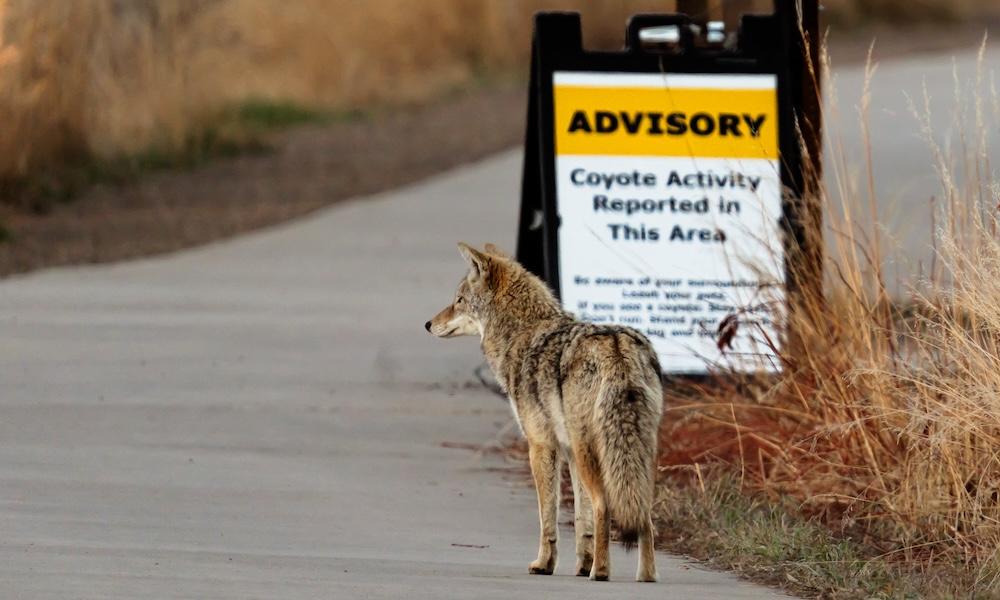
This week is Coyote Awareness Week – an annual event created by Project Coyote, an advocacy group for coyotes and other wild carnivores. Mark Surls is their Colorado and Northern Rockies Coordinator.
Surls, a professional wildlife photographer, became an advocate for coyotes because he loved photographing them so much.
“One of the things that drew me to have an interest in coyotes is just that I love dogs,” said Surls. “When you see a wild animal that displays so many of the characteristics that our dogs at home have, I mean, you can’t help but connect with that animal.”
Surls frequently photographs the coyotes in Crown Hill Park, which he has gotten to know so well that he has nicknames for them. “The dad is like super chill. I call him Kool Keith. And then mom is a little more, you know, on edge and alert all the time.”
This is Project Coyote’s third annual coyote awareness week. They want to educate the public about living with coyotes, especially those of us with children or pets.
If you have a small dog, said Surls, use common sense when letting it out, especially in the evening.
“Make sure you turn the lights on, scan the yard, go outside with the dog. It’s a lot like wearing a seatbelt. Most of the time, or 99% or more, you’ll never have an issue, but it only takes one time for you to let your small dog out unsupervised, and a coyote be there, to break your heart.”
Another way to minimize conflict with coyotes in urban and suburban settings is to remove things that will attract them. Just like bears, coyotes can be attracted by garbage and compost that’s not secured. You should never feed your pets outside and leave the food behind.
Surls said it’s also good for people who live near coyotes to be familiar with basic coyote behavior. For instance, coyotes might view large dogs as a threat, especially during pup-rearing season, which lasts from the end of April through July. If you’re walking a large dog near a coyote den, the male coyote might follow you, a behavior known as escorting.
“Just like I have a young daughter, if some guy was walking around my yard, I would be like, what are you doing here? You need to leave. And I would make sure my eyes were on him until he left,” said Surls.
In addition to educating the public, Project Coyote also works in policy reform to try and address prevalent poisoning, trapping, and shooting of coyotes.
A bill that would restrict rodenticides, which can cause sickness and death in coyotes and other rodent-eating predators, passed out of the Colorado Senate yesterday.
On the hunting and trapping side, Colorado Parks and Wildlife (CPW) is currently considering a petition to prohibit the commercial sales of the fur of 17 furbearing species, including coyotes, who currently don’t have the same protections as game animals like elk and deer.
The petition is getting major pushback from hunters and trappers, even though it wouldn’t ban the killing of furbearers, just fur sales. CPW has also been discussing possibly limiting the number of furbearing animals hunters and trappers could kill per day, something that’s also currently not regulated in Colorado.
“No matter what we’ve thrown at them, they persevere,” said Surls. “And why should they be punished for that?”
You can find even more coyote awareness and coexistence information at projectcoyote.org.
This story aired on The Morning Magazine, KGNU’s weekday morning show featuring local news and community members. Click here to listen to other episodes of The Morning Magazine.