

-
 play_arrow
07_14_25_am_headlines Ainsley Coogan
Western Colorado wildfires
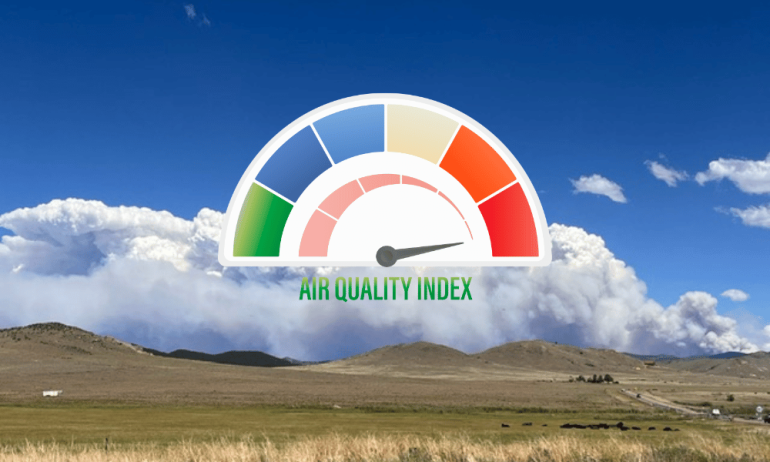
Dry and windy weather conditions are hampering the efforts to fight four uncontained wildfires in Western Colorado.
As those fires burn, another group of wildfires are burning in Douglas County, south of Denver. The size and cause of the Douglas County fires is not yet known, but officials say one of them has burned at least 20 acres in Chatfield State Park.
Governor Jared Polis issued a disaster declaration on the Western fires yesterday. Those are the South Rim fire on the Black Canyon of the Gunnison, the Sowbelly fire in Montrose, Delta, and Mesa counties; the Turner Gulch and Wright fires in Mesa County and the Deer Creek fire.
A fifth fire in Utah is nearing the Colorado state line.
The governor’s disaster declaration activates State Emergency Operations and Resource Mobilization Plans, which include emergency personnel that directly support county emergency managers.
Altogether, the western fires have burned more than 5,800 acres, according to the Denver Post and fire officials. All of them were started by lightning from a storm last Thursday.
Nearly 200 firefighters are on the ground or in the air, according to the Post. Mandatory evacuations were issued in threatened areas, and remain in effect. The Post says that people who were evacuated have been safely relocated. Evacuations of livestock are also underway.
In a daily update, fire officials said that crews are also working to protect a dam and a power center, as well as National Park Service buildings and cultural sites.
Paramedic charged
A paramedic has been charged with manslaughter in connection with the death of a thirty-six-year-old man.
The death happened late last year, but the investigation has just been completed, according to a press release from the Boulder County District Attorney’s office.
That statement said Boulder and University of Colorado police responded to 911 calls about a “suspicious person” at CU Boulder’s Center for Innovation & Creativity, and arrested the suspect, identified as Jesus Lopez Barcenas. Investigators say when they arrived, Barcenas was making “nonsensical statements” and attempting to damage property. The officers confronted him and he resisted arrest. They forced him to the ground, and held him face down.
Paramedics were called, and paramedic Edward McClure injected Barcenas with a sedative without doing a proper medical assessment. The press statement said McClure also used restraints to put Barcenas on a gurney. Barcenas died two days later. The cause of death was ruled to be sudden cardiac arrest, brought on by a physical altercation, the sedative injection, the restraints, and the toxic effects of methamphetamine.
Boulder County investigators said that law enforcement officers used only the necessary amount of force to detain Barcenas. Paramedic Edward McClure acted contrary to protocol, and has been fired by American Medical Response, according to Boulder Reporting Lab.
Immigrant rights group presses for ICE probe
The Colorado Immigrant Rights Coalition, or CIRC, is pressing Colorado Attorney General Phil Weiser to investigate any possible violations of the state law that prohibiting information sharing with federal immigration officials.
The petition, which had over CIRC gathered more than 2,000 petition signatures, and delivered them to Weiser’s office last Thursday. The petition asks Weiser office to ensure that local law enforcement and government agencies are educated on the state’s law against sharing personal information in immigration related cases, unless the information is needed for a criminal investigation.
This follows a Denver judge blocking Gov. Jared Polis from ordering a state employee to hand over information requested by ICE in a subpoena last month. Scott Moss, the employee from the Colorado Department of Labor and Employment, said that the information could not be given as it did not pertain to a criminal investigation. That’s according to Colorado Newsline.
The petition also calls for Weiser to investigate an incident in which a Utah college student was arrested by ICE in Mesa County. It happened after local law enforcement used a Signal group chat to share personal information about the student, and led to her detainment at a traffic stop.
The petition also expresses concern of Flock Safety security cameras being used to assist immigration enforcement. Loveland’s flock Data was searched on the behalf of ICE six times back in April, as 9News found.
Federal funds for Colorado River
$4 million of federal funding that was frozen in February has been released. The funds will be used to continue restoring lands and streams in the Upper Colorado River Basin and around Grand Lake.
$761,000 has been released to help with the Kawuneeche Valley Restoration Collaborative in Grand County. The valley has been damaged by drought, failing irrigation systems and overgrazing wildlife. It is a critical piece of the Colorado River’s upper watershed.
The remaining $3.3 million has been released through the U.S Forest Service to aid in watershed restoration efforts of the Grand Lake area following the East Troublesome fire that happened in 2020. It burned nearly 200,000 acres.
Former Grand Lake mayor Steve Kudron said that the restoration efforts are critical as they will allow for sufficient cleanup. Parts of the forest had been closed to the public as a result of a lack of funding. That’s according to the Colorado Sun.
Wildfires and water study
A new study shows that contaminants from wildfires can have an impact on water quality for years after a fire.
The study by CU Boulder researchers shows that contaminants like organic carbon, phosphorus, and nitrogen from a wildfire can stay in water for up to eight years after a fire, according to the Daily Camera.
The findings are based on more than 100,000 water samples from 500 watersheds across the western United States. About half of those samples were from areas where a wildfire had already burned, while the rest were from places where there had not been any wildfires.
One researcher said that previous studies had shown that wildfires affect water quality immediately after a fire. The new study is showing long-term effects.