
-
 play_arrow
RISE Collective clinic is continuing Boulder’s long abortion legacy Abby O'Brien
By Jack Armstrong and Abby O’Brien
A new abortion provider for a new era
This past May, Boulder made national headlines, when Boulder Abortion Clinic (BAC) permanently closed its doors. It happened suddenly, when the clinic’s director, Dr. Warren Hern, announced his retirement after 50+ years. BAC’s closing left a gap in abortion access — not just in Boulder, but in the United States, since it meant even fewer places you could go if you needed an abortion in the later part of pregnancy. So the very same day it closed, 13 BAC staff members got together to create something new: RISE Collective.
“We got together the night after we saw the last patient and had margaritas and said, who’s interested in continuing forward to close this gap in care?” said Alicia Moreno, RISE’s director.
Less than six months later, they saw their first patient at RISE, which stands for Reproductive health, Inclusive care, Support, and Empowerment. RISE is entirely owned by those 13 co-owners, who all have an ownership stake to varying degrees. Moreno said each co-owner has the same level of authority, and they each get one vote when it comes to strategic and management questions.
“That gave us an opportunity to bring a different kind of equity into this space,” said Moreno.
Karen Middleton, Executive Director of the Colorado reproductive rights organization Cobalt, said BAC’s closing left a hole in the national abortion landscape. “We are really grateful to the RISE Collective for opening the clinic and continuing this kind of care, which is really both unique and really needed. For the people who need it, it is lifesaving that we have the clinic open here in Boulder again,” said Middleton.
BAC was, and RISE is, one of the few abortion providers in the country that performs abortions later in pregnancy, particularly in the third trimester. Moreno estimated that 75% of RISE’s patients are getting abortions at 24 weeks or later. These procedures make up a tiny percentage of the total abortions performed each year in the US, and are often due to serious medical complications on the part of the mother or the fetus. Only a handful of physicians in the country are trained to perform them.
“We would like to try to help change that and get some more physicians trained, so that people either don’t have to wait this long, or that there’s more help available as earlier care. The lines get longer,” said Moreno. “If you find out earlier on that you are coming in for abortion care, but the clinic says it’s gonna be seven weeks until we see you, you’ll be over that line. There’s very few opportunities for you to get that care.”
This comes at a time when it’s increasingly difficult to get an abortion in the United States, let alone get any kind of specialized abortion care. In 2022, the Dobbs v. Jackson Women’s Health Organization decision by the US Supreme Court overturned Roe v Wade, and abortion was no longer federally protected.
A year prior, Texas passed a state law SB 8, which banned abortion after approximately six weeks of pregnancy, before many know they’re pregnant. The law also incentivized people to bring lawsuits against people who provide abortion care or assist someone in obtaining an abortion in violation of the ban. That law took effect Sep. 1, 2021.
In 2022, Colorado passed the Reproductive Health Equity Act (RHEA), that guaranteed the right to reproductive healthcare, including abortion, free from government interference. And in 2024, the right to abortion was added to the state constitution.
For all these reasons, around 30% of patients getting an abortion in Colorado come from out of state, with by far the biggest portion of those being from Texas. Middleton said that when the Dobbs decision was passed, the volume of abortion patients reaching out to Cobalt tripled overnight.
The worker-owned model is on the RISE
In neighboring New Mexico, another worker-owned abortion clinic recently came on the scene. Opened in late 2024, Valley Abortion Group (VAG) is one of the only other abortion clinics that specializes in later-in-pregnancy procedures. It was also formed by employees that worked together at another clinic. They claim they are the first queer and BIPOC-led abortion clinic in the country.
Jas and Andrea, two of the worker-owners at VAG, asked that their last names not be used in this story. Jas is an abortion doula, or acompañante. “For the past six years, we’ve walked alongside people, to care for them, for offering grief support, advocacy, and a presence for people that are ending their pregnancies,” said Jas.
Andrea, Director of Patient Services at VAG, said the employee-owned model is an opportunity to take care of both patients and staff. “We knew we wanted VAG to be a supportive and collaborative environment where people were paid more than a living wage to be able to provide care for people in their most vulnerable times,” said Andrea. “This work can often be really heavy, really draining and really emotional. And being that we are the first point of contact and oftentimes the end of the road for a lot of the people that are seeking abortion care, it is really special.”
“When patients walk through the doors, they’re welcomed by the same people who shape the systems and the policies and the decisions of how this clinic runs,” said Jas. “We’ve done the groundwork, we’ve been here, and we’ve been the patient as well. So now we get to care for the people that also look like us.”
Likewise, Moreno expressed how proud she and the other founders feel to be operating their collectively owned clinic. “Nobody in this ownership group could ever have imagined that one day that they would own a company, let alone own an abortion clinic,” said Moreno. She said many of the co-owners came from humble means, and many from deeply religious backgrounds. She herself is from South Texas.
RISE has already attracted Colorado’s anti-abortion protestors
On top of running a business, RISE’s co-owners are dealing with a fresh wave of stigma and misinformation about the services they provide. For instance, even the commonly-used phrase “late-term abortions” can contribute to that misinformation.
“A term pregnancy is 40 weeks, so late term would be over 40 weeks. So there is no such thing as a late term abortion,” said Moreno. “The people that we see that come in for later care run everywhere from a 10-year-old that’s been assaulted by her stepfather [to] a person that has gotten a fetal anomaly diagnosis.”
Abortion at any stage in pregnancy is legal in Colorado. In 2020, Colorado voters rejected a ballot initiative that would have prohibited abortion after 22 weeks. In fact, Colorado voters consistently vote to protect abortion. In the 2000s alone, voters rejected over 50 pieces of proposed legislation that would ban or restrict abortion in some way. Instead, Colorado has some of the strongest protections for abortion in the US.
RHEA was particularly important in 2022 because it was signed into law just a few months ahead of the Dobbs decision. “At a time when we were seeing the right to access abortion removed from the federal landscape, the state had explicit statutory protection, really just in the nick of time,” said Middleton.
Although abortion has won consistent support from Colorado voters over the years, there are some vocal opponents to abortion in the state, like the group of protestors who gathered outside of RISE in December.
One of them was Dr. Catherine Wheeler, a retired OBGYN from Salt Lake City and president of the Colorado chapter of the American Association of Pro-Life OBGYNs.
“We believe most people aren’t aware of the harms to women,” said Wheeler. “We believe that the state would actually start to regulate and license and to try to assure safety for women, and that people would also be concerned if they were aware.”
One thing the activists want is stricter regulations for abortion clinics in particular. The Colorado Department of Public Health and the Environment (CDPHE) regulates hospitals, but not necessarily other types of clinics, like abortion clinics, dental clinics, or plastic surgery clinics. For those, Colorado allows services to be performed by a provider who is licensed by the state’s Department of Regulatory Agencies, and is acting within the scope of that license. Legislation introduced in Colorado to add additional regulations to abortion clinics has not been successful.
Sean Beedle is the reproductive justice reporter for the Colorado Times Recorder. Over the years, he’s covered several attempts by Colorado’s anti-abortion activists to try and get more restrictions passed.
“The argument that they make is that abortion is not regulated, that it’s this unlicensed kind of Wild-West landscape where anyone can just put out a shingle and start doing abortions,” said Beedle. “If you want to talk about statistics about who’s getting harmed and who’s dying, people die from complications related to dental procedures at a higher rate than people die from abortions.”
Beedle referenced a 2015 report on dental deaths in the Dallas Morning News after Texas passed a law requiring the release of information about dental-related deaths. It found that, in the five-year span between 2010 and 2015, Texas received at least 85 death reports from dentists.
Dr. Tom Perille, a retired internal medicine and hospital medicine physician and president of an anti-abortion group called Democrats for Life of Colorado, was another one of the organizers of the protest against RISE. “We have to get the real facts out there so that women are actually making informed choices and don’t feel pressured or coerced because the medical establishment or because of their finances or because of their partners,” said Dr. Perille.
Beedle said exaggerating the risks associated with thid-trimester abortions, and abortion in general, is a longstanding tactic of anti-abortion activists, especially among faith-based abortion groups trying to change the minds of those outside their religious group.
The Center for Disease Control tracks the number of people who have died from getting an abortion across the US each year. In 2021, there were five deaths related to induced abortions nationally.
Beedle pointed out that in 1972, the year before Roe v. Wade, between 24 and 29 women died from causes known to be associated with legal abortions, and 39 died as a result of known illegal abortions.
“Abortion today statistically is safer than it’s ever been. And the problems that are arising from abortion, you know, any medical procedure carries with it a risk of complication, right? Anything. You get your gallbladder out, routine things, complications happen, pregnancy especially so,” said Beedle.
Abortion restrictions, like those in Texas, can exacerbate these medical risks in patients for whom abortion requires extra waiting and travel out of state.
“So this argument that we need to more firmly regulate abortion or ban abortion to save people is just not being born out,” said Beedle.
Plus, states with abortion bans and restrictions could experience a drain of abortion providers, if OBGYNs move to other states where they can provide the full spectrum of care in their practice.
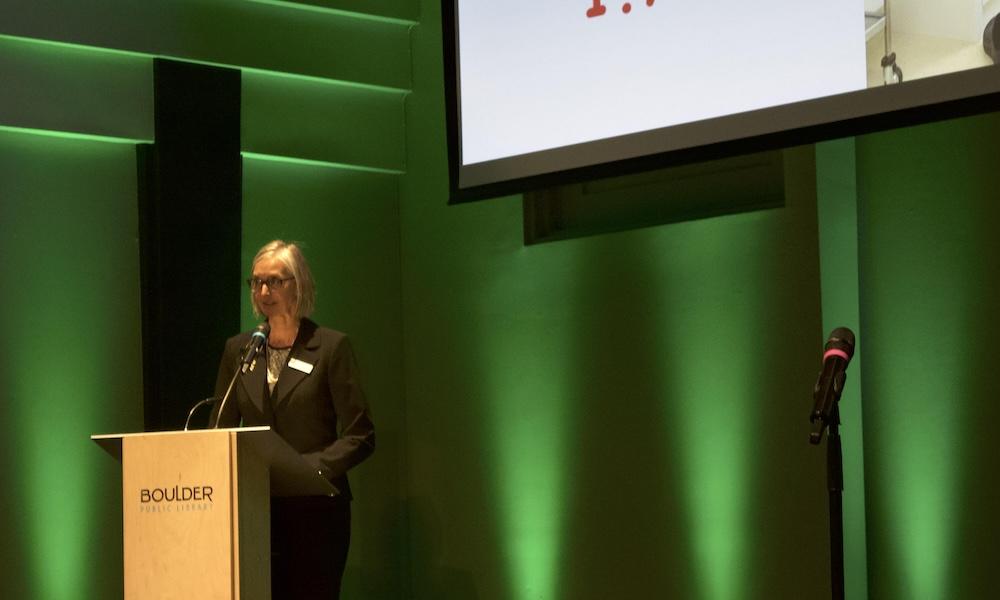
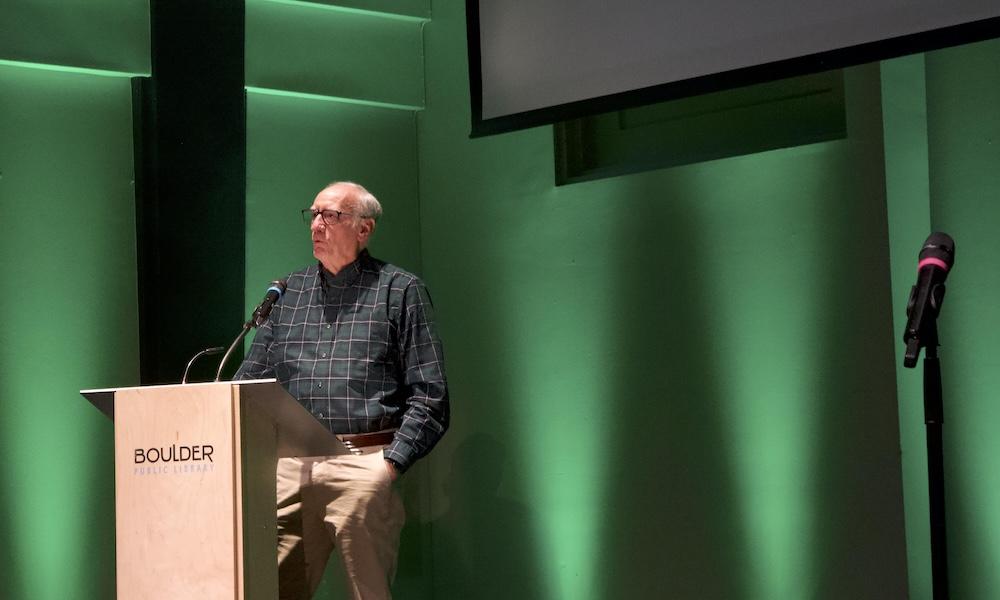
In early December, anti-abortion activists from around the state, including Drs. Wheeler and Perille, held an event at the Boulder library titled “Challenges to the Health and Safety of Boulder Women.” They created a website to promote the event, called boulderwomenshealth.com.
“The issue of abortion as an an electoral issue is overwhelmingly popular and, and motivating for voters. And so one of the tactics that you see with these anti-abortion groups is that people will travel,” said Beedle. “This is their passion issue. They will travel from Mesa County to the Denver Capitol to testify. They will travel from Colorado Springs to Boulder. They will go where they need to be to kind of take part in these things. So it’s certainly not necessarily an upswell of local voices.”
Abortion providers are going forward with courage
While it’s true that the consistent failure of anti-abortion legislation in Colorado shows us that the majority of Coloradans don’t want more restrictions on abortion, that doesn’t necessarily make it easy to be an abortion provider in Colorado.
Beedle notes that RISE is entering into a legacy of providers who are especially vilified, and tend to deal with traumatic situations that require a lot of pathos.
“I’ve never seen anyone who’s come in for a third trimester abortion for whom it was an easy decision,” said Moreno.
She says among the range of patients she has seen are many women with wanted pregnancies, including surrogates who come in with the intended parents, people who have a children at home who require extra care, domestic violence situations, and people experiencing homelessness. RISE keeps a food pantry stocked on site for situations like that.
Moreno is grateful for the opportunity to be able to serve her community. “I was in the military for over 25 years, and when I retired I thought, oh my gosh, how am I gonna continue to serve?” she said. “And being able to find my new space has been personally and professionally really gratifying for me.”
Andrea from VAG said she would love for people to talk about abortion more, because even if anti-abortion activists are the minority, they are often more vocal. She said it can be deeply empowering for someone who has had an abortion to tell their story.
Finally, we asked Middleton and Moreno what it’s like to do this work which can attract so much stigma, and even put personal safety at risk.
“I am just grateful to be someone who will help keep the doors open in Colorado, open clinics like RISE, and keep pushing forward in a moment where, yes, there are people who are gonna try to tell us no, and I just won’t take no for an answer,” said Middleton.
Moreno said she feels there are a lot of fears right now about where we’re going. “And so how do we deal with them? We are a part of them to the degree with that we can be. We use our time or our talent or our treasures, or all of those if you’ve got all of them, to shape community in the way that’s important to us,” she said. “If you stop and you think about it for too long or too hard, it’s scary. But it’s more scary to not do anything. To just let it happen around you.”
This story aired on A Public Affair, KGNU’s weekday morning show featuring in-depth discussions on local news issues. Click here to listen to other episodes of A Public Affair.