
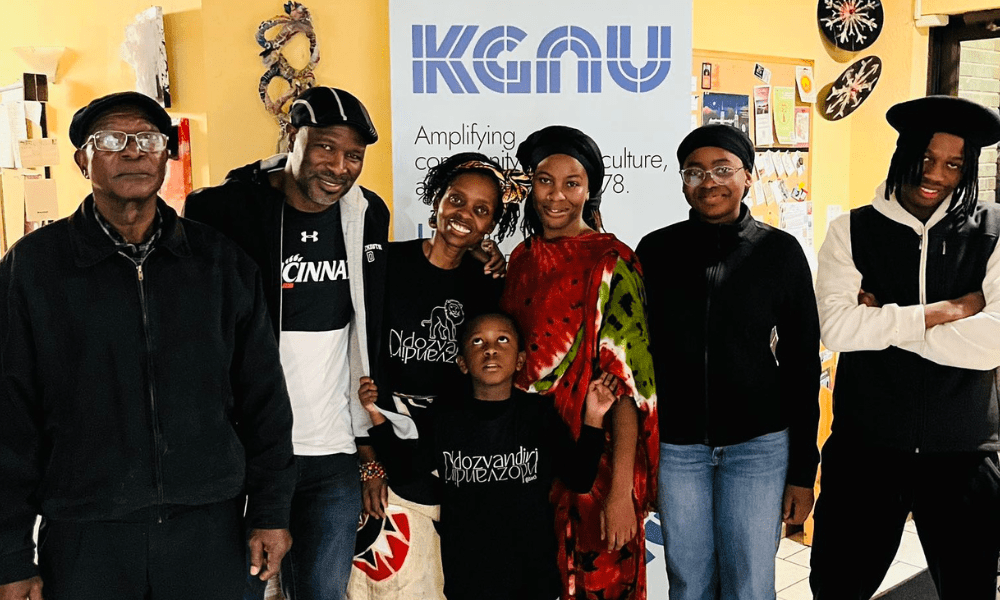
DJ BLED welcomes the Chihera Family Band into the KGNU studio for a special live session celebrating Zimbabwean music, tradition, and family. Spanning three generations, the family performs traditional mbira music and shares the cultural meanings behind each song, explaining how music is used to welcome communities, celebrate milestones, and connect with ancestors. Throughout the interview, the band reflects on the importance of passing musical traditions down through family, the role of music in everyday life across Zimbabwe, and how African music fosters unity and healing. The session highlights the power of community, heritage, and storytelling through sound, offering listeners a rare and intimate look into a living musical tradition (November 29, 2025).
https://on.soundcloud.com/zq7HyNl8g4UwZCqJYv
DJ BLED: Ladies and gentlemen, I have the Chihera Family in the house. Woo! Yeah! Hi guys, how are you?
The Chihera Family Band: Doing great.
DJ BLED: Say hi to the listeners. Let’s start by everyone introducing their names so listeners can get to know you. Let’s go from my right.
Albert Chihera: My name is Albert Chihera.
DJ BLED: Nice.
Edward Chihera: My name is Edward Chihera.
DJ BLED: Edward Chihera, the great one.
Rai Chihera: Hello, I’m the one and only Rai Chihera.
Chi: Hello, my name is Chi.
Chia: This is Chia.
Mandy Repi: Hello, my name is Mandy Repi.
DJ BLED: Welcome to the show, everyone. This is a family that plays music together, but before we go deeper into conversation, they’re going to play some music live from the studio. They’ll be playing mbira and singing their first song. Chipo, do you want to tell me the name of the first song?
Chipo: It’s called Amal.
DJ BLED: We’ll talk about that after. This is music from Zimbabwe. Take it away.
Song plays
DJ BLED: Ladies and gentlemen, that is the Chihera Family. Could you feel the heartbeat of Africa? I’d love for listeners to know what that song is about. Albert, can you help us?
Albert Chihera: Amal is a song played to welcome people to a party or village. It’s about coming together and celebrating with family.
DJ BLED: What a beautiful opening. Welcome to the African Roots Show, live on KGNU. Let’s talk to Chi. We see three generations here—grandfather, father, and you. How does that feel?
Chi: It’s amazing. Not many people get to play music like this with their family. I feel honored to share music from Zimbabwe with the world.
DJ BLED: That’s incredible. What are you studying right now?
Chi: I’m attending school in Fort Collins, majoring in data science with a concentration in computer science.
DJ BLED: Shout out to Fort Collins. We’re live there too on 98.7 FM. Let’s play another song and then talk more about African traditions.
Song plays
DJ BLED: Give it up for the Chihera Family. Chipo, tell us about that song.
Chipo: The translation is “taking down the bull.” It’s one of the first songs you learn when playing mbira. It helps you understand how the keys move and leads you to other songs.
DJ BLED: Mandy, as the mother of this family, what does it mean to you to play music together?
Mandy Repi: Playing as a family is very important to us. It brings us together and keeps us united. It helps pass down our traditions from Zimbabwe to the next generation.
DJ BLED: That’s beautiful. How was Thanksgiving?
Chi: It was great. We got to see family and eat a lot of food.
DJ BLED: Is Thanksgiving similar to traditions back home?
Albert Chihera: Yes. We always gather family when we celebrate. Music brings everyone together, even with busy lives.
DJ BLED: I want to dedicate the next song to Grandpa, who’s here today.
Song plays
DJ BLED: These are the sounds of the legendary Oliver Mtukudzi. Let’s talk about African music and unity.
Albert Chihera: African music is diverse, but we share similar struggles and approaches, which brings us together across the continent.
Mandy Repi: Music is part of every occasion—funerals, weddings, work, daily life. It’s deeply connected to our upbringing.
DJ BLED: Chipo, what’s the next song?
Chipo: Nhema Sasa.
DJ BLED: What does it mean?
Chipo: It’s about creating a home. People sing it when they find a place to settle. It’s like a housewarming song.
Song plays
DJ BLED: That was Nhema Sasa. The instrument you’re hearing is the mbira, sometimes called the African thumb piano. Can you explain it?
Chi: It’s made of metal keys on wood. It can be placed in a gourd to make it louder.
Chipo: The buzzing sound invites ancestors to join the celebration.
DJ BLED: I asked the family for their top songs. Here’s one they chose.
Song plays
DJ BLED: This has been a blessing. African Roots airs weekly from 4–6 PM. This is my final show of 2025, but I’ll be back in 2026. Before we close, Grandpa, how does it feel bringing this music to the U.S.?
Grandfather: I feel good. I never imagined playing this music here, but my son encouraged me.
DJ BLED: Three generations in the studio today. Where can people see you next?
Albert Chihera: Colorado Springs on December 6, and Lafayette Library on December 14.
DJ BLED: The next song is Ura. What does it mean?
Chipo: It means “change.”
Song plays
DJ BLED: Let’s go around the room and share one final message.
Albert Chihera: This music brings people together. Anyone can join and add to it.
Grandfather: I’m happy to play mbira music in America.
Rai Chihera: Music lifts people up and brings them together.
Chi: Our family represents where we’re from and spreads happiness.
Mandy Repi: Music is therapeutic and keeps traditions alive.
Chipo: Music moves the soul. Put on music during the holidays.
DJ BLED: I’m moved. This was the Chihera Family Band on KGNU. Follow them online and see them live.