
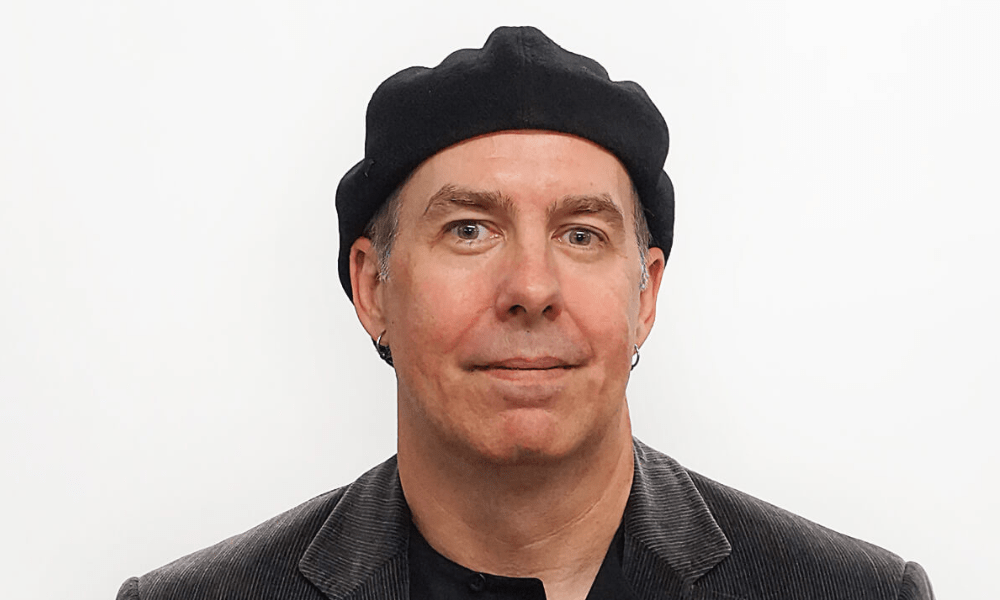
KGNU host Jessica Numbers sits down with DJ and music industry veteran Peter Wohelski to discuss the roots and resurgence of ambient house, chill-out culture, and community radio. Wohelski reflects on the early rave era, highlighting influential artists such as Future Sound of London, The Orb, and The Shamen, and explores how experimental electronic music bridged dance floors and listening spaces.
The conversation also traces Wohelski’s work with Detroit techno pioneer Carl Craig and Planet E Communications, including the Inner Zone Orchestra and the Geology compilations. Looking ahead, Wohelski shares his perspective on the renewed interest in vinyl, long-form DJ sets, intentional listening, and non-commercial radio as meaningful alternatives to algorithm-driven music culture.
(Air Date: 1/24/26)
Listen Here:
Transcript:
Jessica Numbers:
If you’re just joining us, you’re listening to KGNU FM 88.5 Boulder and 1390 Denver. I’m Jessica Numbers, and I’m thrilled to be here with our special guest, Peter Wohelski, who just played an incredible vinyl set and will be back with more music shortly.
Peter, tell us what we just heard.
Peter Wohelski:
We opened with Future Sound of London’s Cascade, parts three and four, followed by Higher Intelligence Agency from Colourform. After that was Maurizio’s Battersea Is an Island of Mud, mixed by The Orb, from Excursions in Ambience. We also heard The Shamen’s “Possible Worlds,” and we wrapped up with Ether’s “Spirit Tool.”
Those are all tracks from an early era that’s still very close to my heart.
Jessica Numbers:
You can really hear how formative that period was. That sound—ambient house, chill-out—was such a defining part of early rave culture and labels like Astralwerks.
Peter Wohelski:
Absolutely. That music grew out of earlier influences like Brian Eno and Steve Hillage, but artists like The Orb and Future Sound of London blended those ideas with techno and dance music, slowing things down and creating space and atmosphere.
In the U.S., dance music had largely disappeared after disco’s backlash in the late ’70s. In Europe it never went away, but here it returned through rave culture in the late ’80s and early ’90s. What made those artists special was that they appealed to experimental and indie audiences. It was dance music for people who didn’t think they liked dance music.
Jessica Numbers:
And that experimental side feels very relevant again right now.
Peter Wohelski:
It really does. We’re seeing a renewed interest in chill-out rooms, intentional listening, and more horizontal experiences—spaces where people gather to listen rather than just consume.
That connects directly to community radio. Radio is about curation and trust, not algorithms. I started my career in radio, so being here at KGNU, in my adopted hometown of Denver, is a real honor. Community radio is an essential service.
Jessica Numbers:
We’ll be saving that quote for the pledge drive.
Peter Wohelski:
Fair enough.
Jessica Numbers:
I also want to touch on your work with Planet E and Carl Craig. When people talk about Detroit techno, Carl Craig is absolutely central to that story.
Peter Wohelski:
I was very fortunate to work closely with Carl. I signed his Inner Zone Orchestra album Programmed just before leaving Astralwerks, and then I joined Planet E as label manager.
Planet E was very much a family operation, and my role was helping guide releases and build the catalog. I also curated the Geology compilations, which highlighted the depth of the label.
We toured with Inner Zone Orchestra, played the Montreal Jazz Festival, and ended that run at the very first Coachella. It was an incredible moment in time.
Carl’s influence is massive—not just in techno, but even in the foundations of drum and bass. I feel incredibly lucky to have been around that level of creativity.
Jessica Numbers:
It really shows in the music you’ve selected tonight. And it ties into a bigger conversation about where electronic music is now.
Peter Wohelski:
I think people are looking for something more meaningful. Smaller, intentional experiences. DJs telling a story over several hours instead of playing short, disposable sets.
There’s a renewed interest in vinyl, books, Bandcamp, and non-commercial radio. People want connection again. That gives me a lot of hope for where the culture goes next.
Jessica Numbers:
That’s beautifully said. We’re going to share photos, records, and information about the Trip Magazine complete collection on the KGNU Electronic Air Facebook page.
Peter, thank you so much for being here and for sharing these stories.
Peter Wohelski:
Thank you for having me. It’s been a real pleasure.
Jessica Numbers:
All right—let’s turn it back over to the one and only Peter Wohelski for more music here on KGNU.