So what is optics? Here’s FRCC student Sen Castro to explain. So Optics are kind of used in a lot of different, um, fields. There’s a lot of them in health, um, military. There’s a lot of them in, uh, like what, what, what other fields are there? aerospace is a big one. Um, in your phones, cameras, and, uh, entertainment, all, all sorts of things. Basically anything that uses a lens is optics, and it’s pretty important to have precision ones for a lot of the things we do. Sen is 23 years old and from Texas. He’s going into his second year of the Associate of Applied Science in Optics, Quantum, and Laser Technology at FRCC and I love it. Super fun. so yeah, This, this machine is- Basically a fancy ruler. The machine he’s pointing to is an interferometer, which splits a beam of light in two and compares how the waves overlap. it, it uses, it uses light, um, like very precise light to reflect off of reflective optics and uses the difference in the reflections to the- Could It uses the difference in the reflection to the wavelength scale, which is in the scale of like nanometers. Super, super tiny amounts. And it uses those tiny differences to be able to measure the surface to, like the smallest scale of like five, two nanometers or so. Sen graduated from Texas A&M with a bachelor’s in electrical engineering and I moved to Colorado after my partner got a job at CU Boulder, um, in one of the research labs. And I was kind of floating around for a bit. I didn’t really have a easy time finding a job. Not a lot of people wanna hire straight-out-the-gate graduates anymore, especially if they didn’t have any sort of specialized internship pro- knowledge or experience. I got in and immediately s- loved it. It was fantastic. I loved the hands-on learning experience of it. And the teachers especially are very… It’s very personal. They’re very small classrooms. You get to know everybody pretty well, and that’s a very nice environment to be in for learning. Sen says the bachelor’s program he went to was huge, but because of small class sizes at FRCC, he gets a lot of advice and help that he normally wouldn’t get otherwise. but but at this school, I feel like I was able to get a lot more in a lot less time because of how small and close-knit everyone is. Yeah, it actually is pretty diverse. There’s a decent number of just got out of high school, and then there’s also a decent number of I’m, I’m been doing a job for a while and decided to take a change. So there’s, there was a couple of people who were maybe in their 30s, 40s, um, but we were all there learning the same thing, so it, Chris McGillivray is the Academic Dean for the School of Manufacturing, Skilled Trades, and Applied Technology. We look at the talent pipeline report from 2025, and we know optics, fiber optics, quantum is, um, in demand. Colorado is leading the nation in this effort, and we pay attention to the salary placements. We wanna make sure that we’re helping our students not just get jobs, but that these are jobs that pay above poverty and are sustainable wages, and that’s something that we’re really proud of, particularly in our optics, laser, and technology program, One thing Front Range Community College is especially proud of is their partnership with the rock band 📍 Metallica. Through their foundation, All Within My Hands, they partner with the American Association of Community Colleges to offer the Metallica Scholars Initiative and Metallica, the rock band, I didn’t realize it, but they are really into skilled trades . Um, and so the biggest thing is when you are partnering with the largest, most recognizable rock band ever, that helps you. And so we’ve been able to leverage that band, particularly around increasing the adult learners into our program. Here’s Sen again i’m also really grateful for the Metallica scholarship program specifically because I was very broke starting out in this program. I was having to ask my parents to help me pay for rent, and it was not going well. Sun received about $2,000 from the Metallica program and that was incredible. Like I, it, it really changed like the ability of me to actually go to school because otherwise it would’ve been way too expensive. I feel like there’s a lot of opportunities for moving up. In fact, he’s already been hired by Particle Measuring Systems. It’s a company that develops technology for monitoring contaminants like in the pharmaceutical and semiconductor industries. I actually started in, an assembly position, and I’ve already moved up to the production technician line, so it’s a pretty nice, uh, company, and I, I expect to stay there for a good while. I’m really grateful to have gotten into this program, i- just in general. I feel like before this, I was very lost. I didn’t know where I was gonna end up in life, and coming to join this program really got me that sense of community and the help from others that I wouldn’t have gotten otherwise. 📍 For KGNU, I’m Malia Walker So what is optics? Here’s FRCC student Sen Castro to explain.
So Optics are kind of used in a lot of different, um, fields.
There’s a lot of them in health, um, military. There’s a lot of them in, uh, like what, what, what other fields are there? aerospace is a big one. Um, in your phones, cameras, and, uh, entertainment, all, all sorts of things. Basically anything that uses a lens is optics, and it’s pretty important to have precision ones for a lot of the things we do.
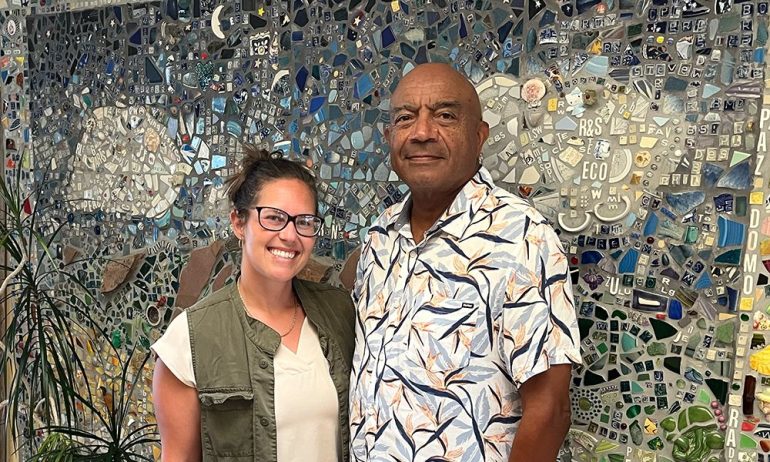
Sen is 23 years old and from Texas. He’s going into his second year of the Associate of Applied Science in Optics, Quantum, and Laser Technology at FRCC
and I love it. Super fun.
so yeah, This, this machine is- Basically a fancy ruler.
The machine he’s pointing to is an interferometer, which splits a beam of light in two and compares how the waves overlap.
it, it uses, it uses light, um, like very precise light to reflect off of reflective optics and uses the difference in the reflections to the- Could
It uses the difference in the reflection to the wavelength scale, which is in the scale of like nanometers. Super, super tiny amounts. And it uses those tiny differences to be able to measure the surface to, like the smallest scale of like five, two nanometers or so.
Sen graduated from Texas A&M with a bachelor’s in electrical engineering
and I moved to Colorado after my partner got a job at CU Boulder, um, in one of the research labs. And I was kind of floating around for a bit.
I didn’t really have a easy time finding a job. Not a lot of people wanna hire straight-out-the-gate graduates anymore, especially if they didn’t have any sort of specialized internship pro- knowledge or experience. I got in and immediately s- loved it. It was fantastic. I loved the hands-on learning experience of it. And the teachers especially are very… It’s very personal. They’re very small classrooms. You get to know everybody pretty well, and that’s a very nice environment to be in for learning.
Sen says the bachelor’s program he went to was huge, but because of small class sizes at FRCC, he gets a lot of advice and help that he normally wouldn’t get otherwise.
but but at this school, I feel like I was able to get a lot more in a lot less time because of how small and close-knit everyone is.
Yeah, it actually is pretty diverse. There’s a decent number of just got out of high school, and then there’s also a decent number of I’m, I’m been doing a job for a while and decided to take a change. So there’s, there was a couple of people who were maybe in their 30s, 40s, um, but we were all there learning the same thing, so it,
Chris McGillivray is the Academic Dean for the School of Manufacturing, Skilled Trades, and Applied Technology.
We look at the talent pipeline report from 2025, and we know optics, fiber optics, quantum is, um, in demand. Colorado is leading the nation in this effort, and we pay attention to the salary placements.
We wanna make sure that we’re helping our students not just get jobs, but that these are jobs that pay above poverty and are sustainable wages, and that’s something that we’re really proud of, particularly in our optics, laser, and technology program,
One thing Front Range Community College is especially proud of is their partnership with the rock band 📍 Metallica.
Through their foundation, All Within My Hands, they partner with the American Association of Community Colleges to offer the Metallica Scholars Initiative
and Metallica, the rock band, I didn’t realize it, but they are really into skilled trades
.
Um, and so the biggest thing is when you are partnering with the largest, most recognizable rock band ever, that helps you. And so we’ve been able to leverage that band, particularly around increasing the adult learners into our program.
Here’s Sen again
i’m also really grateful for the Metallica scholarship program specifically because I was very broke starting out in this program.
I was having to ask my parents to help me pay for rent, and it was not going well.
Sun received about $2,000 from the Metallica program
and that was incredible. Like I, it, it really changed like the ability of me to actually go to school because otherwise it would’ve been way too expensive.
I feel like there’s a lot of opportunities for moving up.
In fact, he’s already been hired by Particle Measuring Systems. It’s a company that develops technology for monitoring contaminants like in the pharmaceutical and semiconductor industries.
I actually started in, an assembly position, and I’ve already moved up to the production technician line, so it’s a pretty nice, uh, company, and I, I expect to stay there for a good while.
I’m really grateful to have gotten into this program, i- just in general. I feel like before this, I was very lost. I didn’t know where I was gonna end up in life, and coming to join this program really got me that sense of community and the help from others that I wouldn’t have gotten otherwise. 📍 For KGNU, I’m Malia Walker So what is optics? Here’s FRCC student Sen Castro to explain. So Optics are kind of used in a lot of different, um, fields. There’s a lot of them in health, um, military. There’s a lot of them in, uh, like what, what, what other fields are there? aerospace is a big one. Um, in your phones, cameras, and, uh, entertainment, all, all sorts of things. Basically anything that uses a lens is optics, and it’s pretty important to have precision ones for a lot of the things we do. Sen is 23 years old and from Texas. He’s going into his second year of the Associate of Applied Science in Optics, Quantum, and Laser Technology at FRCC and I love it. Super fun. so yeah, This, this machine is- Basically a fancy ruler. The machine he’s pointing to is an interferometer, which splits a beam of light in two and compares how the waves overlap. it, it uses, it uses light, um, like very precise light to reflect off of reflective optics and uses the difference in the reflections to the- Could It uses the difference in the reflection to the wavelength scale, which is in the scale of like nanometers. Super, super tiny amounts. And it uses those tiny differences to be able to measure the surface to, like the smallest scale of like five, two nanometers or so. Sen graduated from Texas A&M with a bachelor’s in electrical engineering and I moved to Colorado after my partner got a job at CU Boulder, um, in one of the research labs. And I was kind of floating around for a bit. I didn’t really have a easy time finding a job. Not a lot of people wanna hire straight-out-the-gate graduates anymore, especially if they didn’t have any sort of specialized internship pro- knowledge or experience. I got in and immediately s- loved it. It was fantastic. I loved the hands-on learning experience of it. And the teachers especially are very… It’s very personal. They’re very small classrooms. You get to know everybody pretty well, and that’s a very nice environment to be in for learning. Sen says the bachelor’s program he went to was huge, but because of small class sizes at FRCC, he gets a lot of advice and help that he normally wouldn’t get otherwise. but but at this school, I feel like I was able to get a lot more in a lot less time because of how small and close-knit everyone is. Yeah, it actually is pretty diverse. There’s a decent number of just got out of high school, and then there’s also a decent number of I’m, I’m been doing a job for a while and decided to take a change. So there’s, there was a couple of people who were maybe in their 30s, 40s, um, but we were all there learning the same thing, so it, Chris McGillivray is the Academic Dean for the School of Manufacturing, Skilled Trades, and Applied Technology. We look at the talent pipeline report from 2025, and we know optics, fiber optics, quantum is, um, in demand. Colorado is leading the nation in this effort, and we pay attention to the salary placements. We wanna make sure that we’re helping our students not just get jobs, but that these are jobs that pay above poverty and are sustainable wages, and that’s something that we’re really proud of, particularly in our optics, laser, and technology program, One thing Front Range Community College is especially proud of is their partnership with the rock band 📍 Metallica. Through their foundation, All Within My Hands, they partner with the American Association of Community Colleges to offer the Metallica Scholars Initiative and Metallica, the rock band, I didn’t realize it, but they are really into skilled trades . Um, and so the biggest thing is when you are partnering with the largest, most recognizable rock band ever, that helps you. And so we’ve been able to leverage that band, particularly around increasing the adult learners into our program. Here’s Sen again i’m also really grateful for the Metallica scholarship program specifically because I was very broke starting out in this program. I was having to ask my parents to help me pay for rent, and it was not going well. Sun received about $2,000 from the Metallica program and that was incredible. Like I, it, it really changed like the ability of me to actually go to school because otherwise it would’ve been way too expensive. I feel like there’s a lot of opportunities for moving up. In fact, he’s already been hired by Particle Measuring Systems. It’s a company that develops technology for monitoring contaminants like in the pharmaceutical and semiconductor industries. I actually started in, an assembly position, and I’ve already moved up to the production technician line, so it’s a pretty nice, uh, company, and I, I expect to stay there for a good while. I’m really grateful to have gotten into this program, i- just in general. I feel like before this, I was very lost. I didn’t know where I was gonna end up in life, and coming to join this program really got me that sense of community and the help from others that I wouldn’t have gotten otherwise. 📍 For KGNU, I’m Malia Walker


 play_arrow