
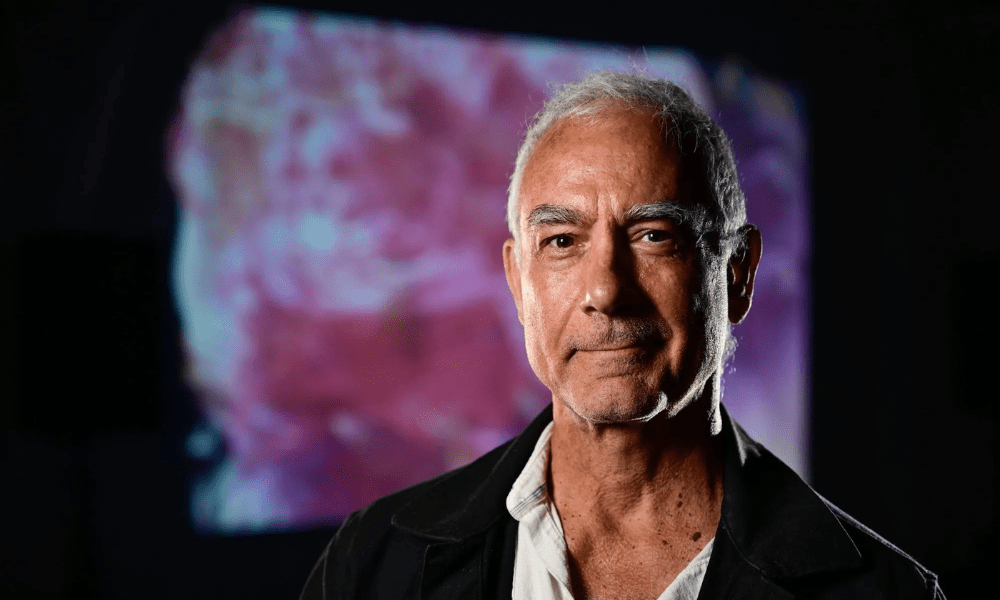
KGNU is a proud sponsor of the Lafayette Electronic Arts Festival (LEAF). David Fodel — artist, curator, sound designer, and Director of the Lafayette Electronic Arts Festival — joined KGNU’s Jessica Numbers to discuss the festival’s 10th anniversary, the evolution of experimental electronic and media arts on the Front Range, and this year’s lineup of local, national, and international performers and installations.
In the conversation, Fodel reflects on the origins of LEAF, the importance of accessible and community-centered experimental art, and the festival’s mission to showcase “art that needs to be plugged in” — from immersive sound performances and video art to interactive installations and avant-garde electronic music.
The 2026 Lafayette Electronic Arts Festival runs May 26–31 in Lafayette, Colorado, with performances, exhibitions, film screenings, and free public events throughout the week. More information and tickets are available at https://leafcolorado.org/. (Air Date 5/20/2026).
Listen to the interview here:
Transcript:
Jessica Numbers: Right now I am in the Denver studio with LEAF founder and curator David Fodel. Welcome, David.
David Fodel: Hey, Jessica. Thanks for having me.
Jessica Numbers: Thanks so much for being here. Before we talk about the upcoming festival and all the amazing music and art listeners will see, let’s take a minute and have you tell listeners who you are, your background, how you became involved with LEAF, and I know you were one of the co-founders of KGNU’s Electronic Air show, which is so cool.
David Fodel: Yep. It feels nice to be in the studio again, and this is actually my first visit to the Denver studio, so it’s pretty cool to see the setup down here. It’s exciting to have watched KGNU grow over the years. Very nice to be here. Thanks again for inviting me.
Jessica Numbers: Yeah.
David Fodel: In terms of my history, I’ve been involved in electronic media for most of my adult life — noise music, electronic music, electronic art, video art.
Prior to the Lafayette Electronic Arts Festival, I was one of the co-founders and curators of the MediaLive Festival put on by the Boulder Museum of Contemporary Art. I eventually backed away from that because I had a lot going on and was no longer able to fully participate.
At that time, Melissa Fathman, who was then the director of the Center for Musical Arts and Colorado Music Festival and is now the director of the Dairy Center for the Arts, asked me if I would be interested in doing something like MediaLive in Lafayette.
I thought, “I would love to do that.” The venue is walking distance from my house, and she was interested in giving me free license to curate the festival however I wanted. That was really the birth of LEAF.
At the same time, I had just finished my MFA in electronic media, so I was really focused on my own practice and wanted to provide a showcase for people doing serious work with media, particularly in the performative realm. That was the beginning of LEAF.
Jessica Numbers: Really cool and really impressive background. You’re also an artist yourself, and I think you have an art or light installation as part of this year’s festival?
David Fodel: Yeah, that’s true. From time to time we try to include publicly accessible work that people can experience even if they don’t know about the festival.
In the past, we’ve projection-mapped buildings. Every other year we do a visual arts exhibition in collaboration with the Collective Community Arts Center, run by the City of Lafayette’s Arts and Cultural Resources Department, which is a major supporter of the festival.
The visual arts aspect is a big part of LEAF. The festival really leans into the fine arts angle while bridging that with the electronic music world.
Jessica Numbers: That starts to answer my next question. I’m sure there are many listeners who already know what LEAF is and have attended, but there are also plenty who don’t.
I was talking to a friend this weekend who grew up in Lafayette and is really into music. When I mentioned LEAF, he was blown away and said, “That’s so cool that it’s in my hometown.”
David Fodel: That reaction happens a lot. We do our best to get the word out, and we fill the venues, so we’re fortunate to have an audience, but it’s still common to meet people who say, “I can’t believe I didn’t know about this.”
That’s partly why we like coming on KGNU and other places — to let more people know about it.
Jessica Numbers: For people who haven’t heard of LEAF, can you give a brief overview of what it is? And listeners can also go to leafcolorado.org to find out more.
David Fodel: Generally speaking, LEAF is an experimental music and art festival focused on media arts and electronic media — basically, art that needs to be plugged in.
That includes video art, installation work, sculptural work, and artists exploring obsolete analog media as a way of reviving technologies that have been left behind. All of that falls within the scope of the festival.
The other major component is music. We showcase artists working with traditional instrumentation, augmented instrumentation, or unique approaches to traditional instruments using new media.
That might mean looping systems, sonifying satellite data, or combining traditional instrumentation with nontraditional processing techniques.
Jessica Numbers: Really cool. So it’s art that needs to be plugged in, combined with traditional instruments, visual art, and experimental music — a really robust festival.
David Fodel: I think so. We run events across multiple days and sometimes include film screenings.
This year we’re screening Nam June Paik: Moon Is the Oldest TV. Nam June Paik is considered the grandfather of video art, and the film traces his life and work. That’s happening Tuesday the 26th, along with our opening reception event.
That’s a free event — people just need to register on our website.
We also have the visual arts component this year, including two installations. One of them is on Public Road, Lafayette’s main thoroughfare, inside an old florist building.
I’m collaborating with artist Brian Kane from Loveland. We’ve installed automated lighting systems and some strange low-tech elements that create a beautiful display visible from outside through the greenhouse-style windows.
We’ve had some wonderful moments with rain reflecting off the road and through the windows, and even a little snow recently. It’s been really beautiful. That installation is up through the end of May.
Jessica Numbers: I’m glad you mentioned the free aspect because that’s such an important part of the festival. There are ticketed events and free events, like the film screening.
David Fodel: Absolutely. We’ve always tried to make as much of the festival free as possible to lower the barrier for people who may be curious but aren’t sure what to expect.
Instead of asking them to take a financial risk on something unfamiliar, we let them experience it first and decide whether they want to attend ticketed events afterward.
Jessica Numbers: If someone has never attended LEAF or experienced experimental electronic or ambient music before, what would you tell them to expect?
David Fodel: I’d say come with open ears and an open heart. Let your curiosity guide you.
If something isn’t connecting with you, you can step out for a moment — the evening will evolve and change. We try to program contrasts and complementary performances that challenge audiences in interesting ways.
There’s usually a little something for everyone, but being open-minded is key to enjoying it.
Jessica Numbers: Before we started talking, I played music from M Sage, who will be on air tomorrow with Indra Raj. We also heard local artist Spices Peculiar and New York artist Kaa Baird.
It seems like LEAF, much like KGNU, really emphasizes local, national, and even international artists.
David Fodel: Absolutely. That’s always been part of the curatorial process — highlighting what’s happening here in the Denver metro area while also bringing in artists doing exciting work from elsewhere.
We often tap into networks of artists who may already be in the country for another reason, like a university lecture or workshop. It’s much more affordable to bring someone from Los Angeles than from Finland or Barcelona.
Programming local artists also helps bring in their audiences and exposes people to artists they may not know. At the same time, visiting artists see that there’s a supportive community here for this kind of work.
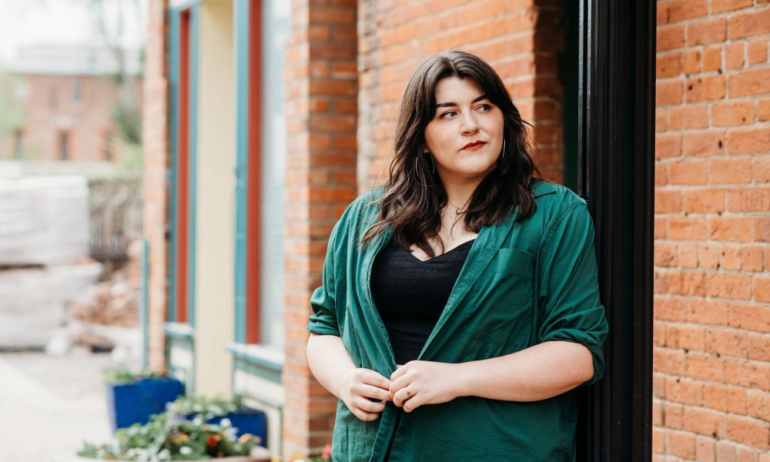
Jessica Numbers: Let’s talk a little about Thursday night, May 28. That lineup includes local artists M Sage and Spices Peculiar, along with Kaa Baird from New York.
David Fodel: Kaa Baird’s work is especially interesting because people often assume experimental electronic music means someone sitting behind equipment turning knobs.
Their work is deeply embodied and performative. They use their voice as the primary instrument, with embedded electronics attached to parts of the body that manipulate the sound through movement and gesture.
The electronics aren’t foregrounded — it’s much more immediate and physical than what many people expect from an electronic music performance.
Jessica Numbers: Listeners can visit leafcolorado.org to see video snippets and descriptions of all the artists. The website is beautifully organized and easy to navigate.
I’d also be remiss not to mention that this is the 10th anniversary of LEAF, so congratulations.
David Fodel: Thank you.
Jessica Numbers: Looking back over the years — with artists like Laraaji, Lisa Bella Donna, Martin Sabatella, and Negativland — do any moments stand out as favorites?
David Fodel: The Martin Sabatella show was incredible. I think he had just turned 90 when he performed in Lafayette.
We also had Robot Cowboy, a fascinating artist deeply connected to the DIY and open-source software community.
Onyx Ashanti, an Afrofuturist artist from Detroit, performed with self-built prosthetic instruments integrated into a wearable sound system. That was a fantastic performance.
Another standout was Alberto Novello, an Italian artist who presented a laser performance where light and sound were tightly integrated. It was noisy, intense, and beautiful.
Jessica Numbers: Is there anything you’re especially looking forward to this year?
David Fodel: Honestly, all of it. Mostly just seeing everyone again.
Every time I walk into a full room with good energy and see people supporting the festival, it feels great.
Jessica Numbers: If you’re just joining us, I’ve been speaking with David Fodel, founder and curator of the Lafayette Electronic Arts Festival, which begins May 26.
Listeners can visit leafcolorado.org to see the full schedule, buy tickets, and learn more about the free events.
In honor of the festival, we’re giving away two tickets to the Friday night event featuring Augur’s Wand, a Montreal-based visual music duo; Denver electroacoustic trio Field Theory; and Denver sibling duo Eliza and Isaiah Miller.
David Fodel: I’m particularly excited about Eliza and Isaiah Miller because this will be the first time they’ve performed together.
And the Augur’s Wand performance should be really special too. It’s another example of tightly integrated light and sound, with custom-built tools controlling the experience.
Jessica Numbers: I think listeners now have a good sense of what LEAF is all about. It’s not really a dance music festival — it’s an experimental music and media arts festival, and it’s really special that we have something like this in Colorado.
Thank you so much for being here, David.
David Fodel: Thank you again for having me.
Jessica Numbers: Any final thoughts for listeners?
David Fodel: I hope people feel inspired or at least curious after hearing about the festival, and I hope to see them there.
Jessica Numbers: I hope to see you there too. We’ll get the music started again in just a moment, and we’ll take the second caller to win free tickets to LEAF’s Friday night event.