
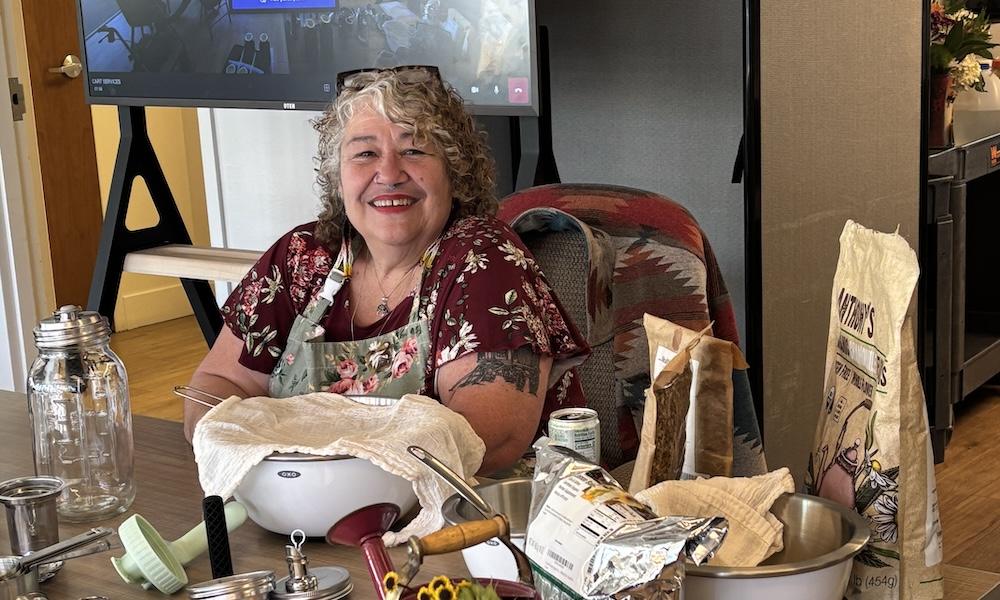
As Colorado braces for another hot and smoky summer, Boulder communities are organizing desde abajo — not waiting for disaster, but preparing for it together.
On a recent episode of Connections hosted by KGNU’s Rossana Longo Better, community leader Isabel Sanchez spoke about the Mapleton Resilience Hub and the growing movement around climate preparedness inside mobile home communities and working-class neighborhoods.
The project recently received more than $576,000 through Boulder County’s Climate Equity Fund as part of a larger $2 million county investment supporting 15 grassroots climate resilience projects across the region.
The funding, awarded to Clean Energy Action in partnership with the Mapleton Housing Association, will help provide emergency preparedness resources, solar-powered generators, resilience gathering spaces and neighborhood training programs designed to help residents respond colectivamente during climate emergencies.
“The difference between being prepared and not prepared is huge,” Sanchez told KGNU.
-
 play_arrow
Connections_2026-05-15 Rossana Longo-Better
Sanchez said the work builds on years of community-led preparedness trainings that have already reached more than 300 residents through hands-on workshops focused on emergency response, neighborhood organizing and climate resilience.
And this is not theoretical.
Boulder County is already facing increasing threats from extreme heat, wildfire smoke, flooding and power outages, risks that disproportionately affect low-income families, seniors, immigrant communities and residents living in manufactured housing communities.
One thing Sanchez emphasized repeatedly during the conversation: resilience starts with relationships.
“We are our brothers’ and sisters’ keepers,” she said. “Si tú estás bien, yo estoy bien.”
Listeners called into the show asking practical questions about emergency kits, solar energy, evacuation plans and how to protect mascotas and elders during climate emergencies.
The conversation also highlighted something often overlooked during disasters: language access.
Preparedness information is only useful if communities can actually understand it and trust it — en el idioma del corazón.
That’s why organizers say multilingual communication and community radio continue to matter deeply, especially during emergencies when internet or cell service may fail.
Years ago, during one of the preparedness training sessions for the mobile home community, residents opened emergency kits containing battery-powered radios — a reminder that in moments of crisis, radio waves still travel even when everything else shuts down.
The Mapleton Resilience Hub is now becoming a model for how climate resilience can grow from the community itself — vecino a vecino, block by block.