
-
 play_arrow
Michelle Simpson on community, creativity, and finding home on the radio dial KGNU News
As part of KGNU’s Radio Week celebration, longtime listener and host Michelle Simpson reflects on discovering the station through reggae music, her journey from listener to broadcaster, and why community radio still matters.
For nearly five decades, KGNU has served as a space for local news, eclectic music, and community-driven programming across Boulder, Denver, and the greater Colorado Front Range.
This week, the station is celebrating Radio Week, recognizing the impact of independent community media and the creative culture that has grown around it over the years, especially as KGNU prepares to move into a new building in Boulder.
For longtime host and listener Michelle Simpson, the station’s story is deeply personal.
More than 40 years ago, Simpson had recently returned to the United States after living in Montego Bay, Jamaica. Alone in a Boulder apartment and unfamiliar with the city around her, she began scanning through the radio dial when she heard something unexpected: reggae music.
The experience immediately caught her attention.
At the time, KGNU was still a relatively new station. But hearing reggae unexpectedly transported Simpson back to a place that already felt far away. What began as a moment of homesickness gradually turned into a long relationship with community radio.
Over the years, Simpson remained connected to KGNU as a listener, member, and occasional guest. She never expected that one day she would become a host herself.
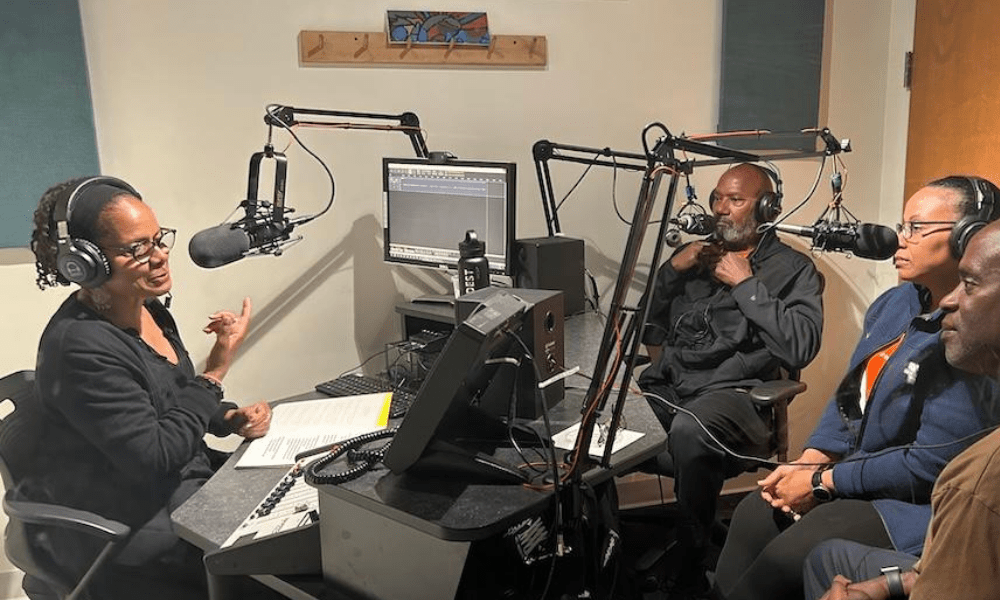
That changed during the pandemic, when she was approached by the then-president of the Boulder NAACP about hosting a radio show connected to the organization and its community work. The program eventually became Black Talk, a show centered on conversations surrounding local events, issues, and community voices.
Simpson says one of the things that immediately stood out to her about KGNU was the amount of creative freedom the station offered.
Rather than being heavily controlled or narrowly structured, the environment felt collaborative and supportive. That freedom eventually allowed her to reshape and expand the show into Talking Black, broadening the conversations beyond Boulder-specific programming and allowing space for a wider range of topics and guests.
That sense of openness is something Simpson believes still defines community radio.
Unlike commercial broadcasting, where programming is often driven by advertising or algorithms, community radio creates room for experimentation, personality, and conversations that feel more human and less transactional.
For Simpson, that flexibility also extends to how interviews themselves are conducted.
One of her earliest Black Talk episodes was recorded in someone’s backyard while children played nearby. It was unconventional, but it worked because the guest felt comfortable there. Simpson believes those environments often lead to better conversations and more authentic radio.
As KGNU prepares for its next chapter in Boulder, Simpson says she still sees the station as something larger than broadcasting alone.
A place for connection. A place for discovery. And sometimes, a place that helps people feel a little less alone.
Michelle Simpson hosts Talking Black on KGNU on the second Thursday of every month during A Public Affair.
This story aired on the Morning Magazine, KGNU’s weekday morning show featuring in-depth discussions on local news issues. Click here to listen to other episodes of the Morning Magazine.