
-
 play_arrow
The power of digital storytelling: how Naim Aburaddi tells Gaza’s story KGNU News
By Jaci Collins-Falcon
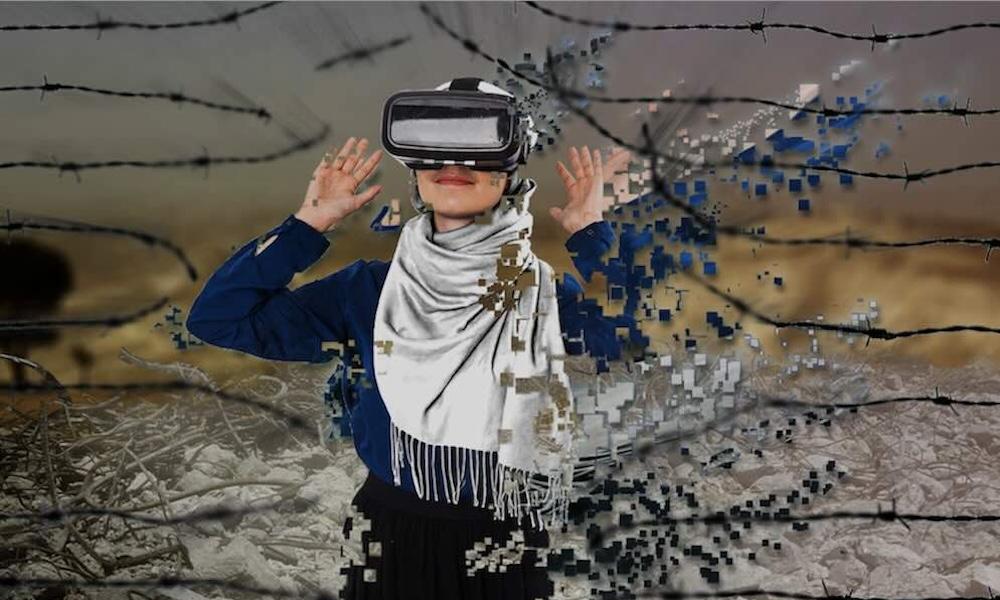
What began as a way to collect memories of his home country before it was lost, turned into a project dedicated to giving people across the world the ability to immerse themselves into the 3D world of Gaza before and after its destruction.
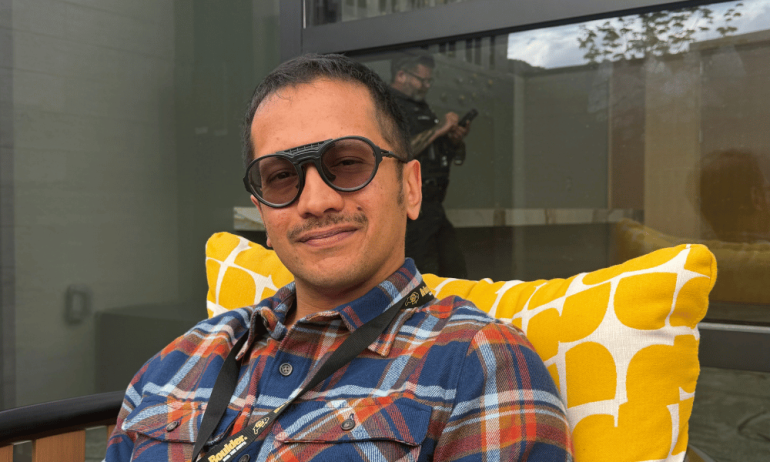
Naim Aburradi is a Ph.D. student at the University of Colorado Boulder who focuses on how immersive media, such as virtual reality and 3D cameras, are used to document history.
Using 3D cameras and a team of journalists in America and Gaza, Aburradi created an entirely digital archive of Gaza that could be experienced through VR.
Aburradi immigrated to the U.S. from Gaza in 2015 and has not been able to return since. Missing home, he used his knowledge of technology to create a digital experience that allowed him to visit the places he loved most.
“I just wanted to see, like, how this technology– if–whether this technology is gonna help me to be immersed in that environment again, revisit the memories, the landscapes, the locations that I was forced to leave behind,” Aburradi said.
In 2021, Aburradi sent a 3D camera to a photographer in Palestine, and the more footage he was sent, the more he wanted to see and share with others. He began a project called The Phoenix of Gaza XR.
Aburradi wanted to use his work to transform the negative perceptions Americans had about Gaza. He said that Americans tend to view Gaza as a place of war and violence. The Phoenix of Gaza XR uses VR to show the human side of Gaza and how Palestinians enjoy their lives despite the blockade.
He says that with VR, “You forget your surroundings and your physical space, and you’re just immersed in that specific location, which is very powerful in many ways.”
Professor and journalist, Angelica Kalika, Ph.D., audits Aburradi’s VR and AI course. Although she’s typically skeptical about VR ethics, Kalika views Aburradi’s work as something that highlights valuable, unseen stories and shares them with the world. “What he’s doing is taking a piece of himself and his lived experience, and going back to really help tell his community’s story in a way that really no one would have ever seen if it wasn’t for him and his team,” she said.
Aburradi views this 3D experience as a replacement for physical access people are not able to have. “We cannot go to Gaza. So this is the only way right now to be immersed in that environment, see it, and also think about next generations,” he said.
Aburradi’s team encountered many hardships in their work. Most notably, the death of photojournalist Yahya Sobeih in an Israeli airstrike.“It was tough to handle,” he said, “we stopped the work for a while, just, you know, trying to process. So it was–it’s not easy work, you know, when you just work with someone who could get killed at any moment.”
Aburradi’s work isn’t only for Palestinians. He says it represents marginalized communities across the world and creates pathways for them to document their history using technology.
Rania Al Namara, Ph.D., is a Palestinian immigrant who met Aburradi in an academic seminar. She also specializes in digital storytelling at CU Boulder and her work is centered around the stories of marginalized women throughout the Middle East. She said that highlighting these stories, “makes these local stories global,” and that digital storytelling enables global conversations surrounding them.
To Aburradi, VR is one of the most powerful educational and storytelling tools. He hopes that students take the time to learn about the technology so that they too, could join the world of immersive storytelling. Both Al Namara and Kalika agree that VR digital storytelling is a very powerful tool. Al Namara said that digital storytelling creates solidarity that humanizes communities.
Aburradi’s work serves as a blueprint for the future of digital storytelling and immersive technology. The Phoenix of Gaza XR is a testament to his passion for preserving his homeland during a time where physically being there isn’t possible. With a 3D camera and a headset, he has invited the world to witness the power of digital storytelling.
This story aired as part of a special KGNU Radio Week spotlight on student journalists. Click here to listen to more special content on the Morning Magazine.